
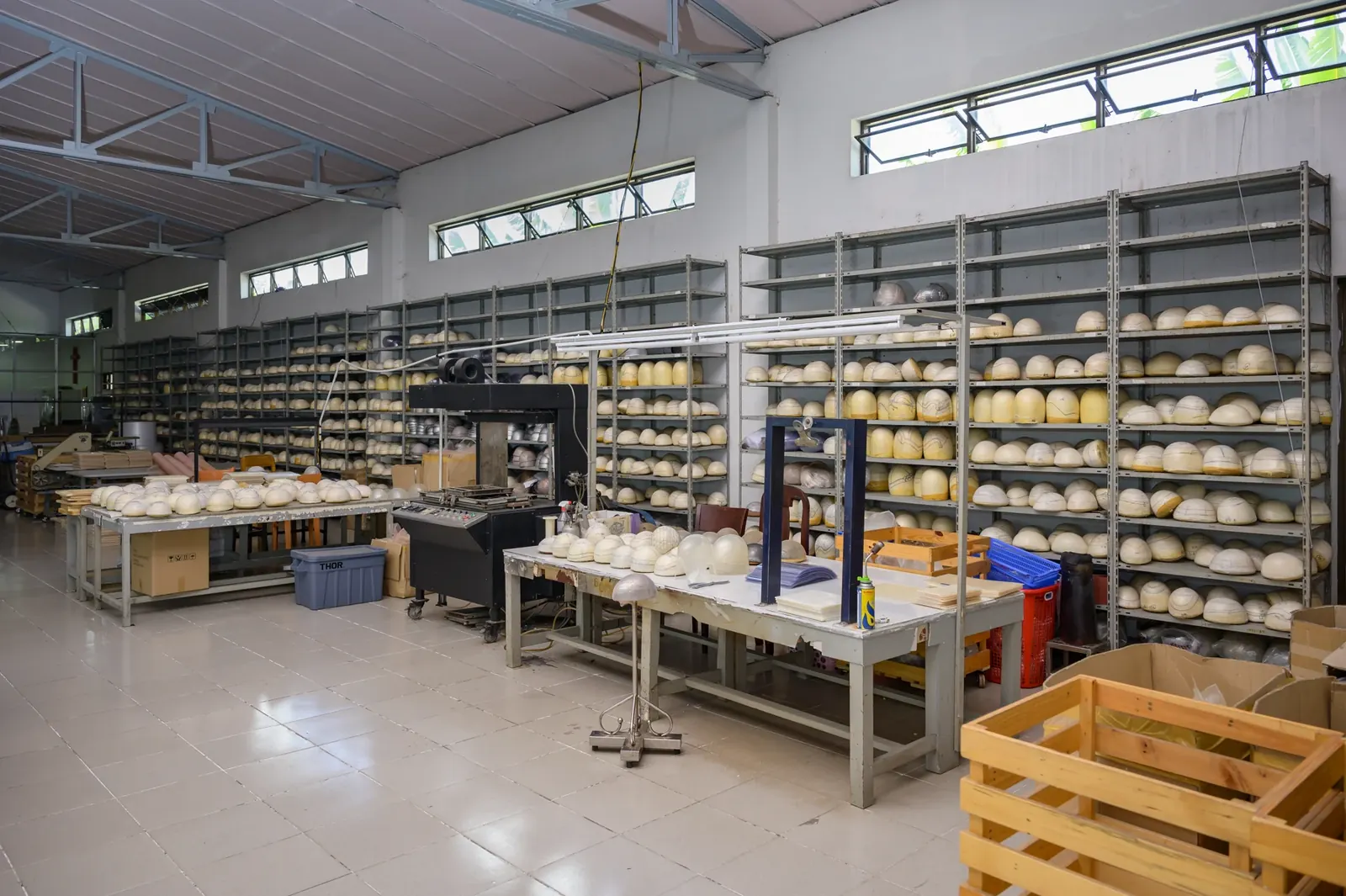
Two hair systems can share a base size and hair colour yet behave quite differently after cutting. The difference often starts in production: how the hair was prepared, where it was attached and which direction the roots follow. This guide follows those decisions from the order brief to inspection, with the checks a salon buyer can actually make before approving a sample.
Start with a complete production brief
The first stage is agreement on what the factory will make. Record base measurements, contour, hair length, colour, grey percentage, density and preferred parting. Include the attachment approach because tape, adhesive and clips can require different construction details. A photograph communicates the desired look, but cannot reliably describe the underside of the product.
Translate the intended hairstyle into specifications
Identify which details are essential and which allow adjustment. For example, an exposed front hairline may need a different combination of base and ventilation from a style worn forward. Ask the supplier to flag any incompatible requirements before production begins. Save the confirmed version rather than relying on scattered messages.
Build the base and prepare the hair
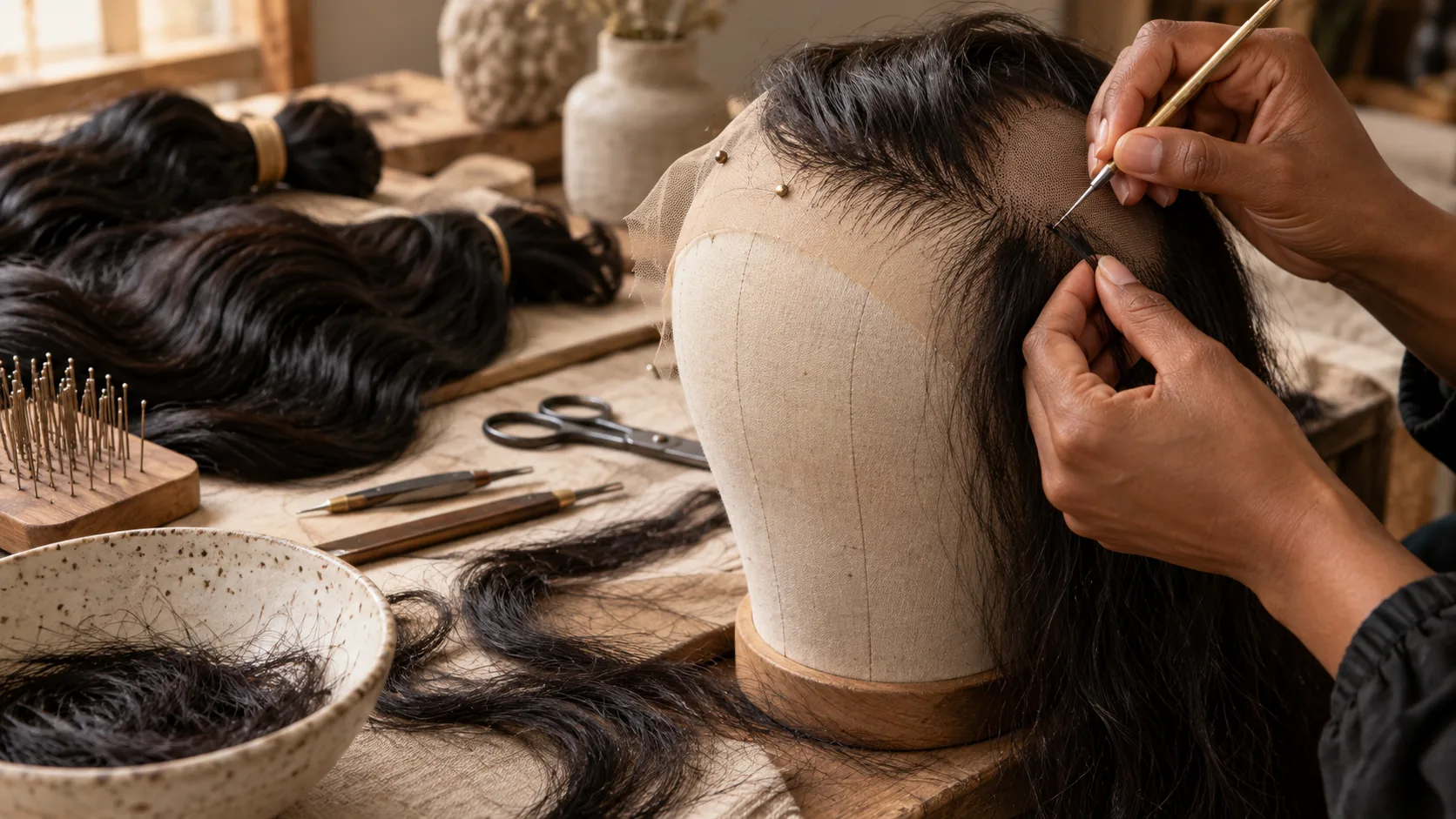
Lace, skin and monofilament bases offer different combinations of appearance, handling and attachment possibilities. Hybrid constructions can place materials in different zones. Buyers should request an underside diagram showing transitions and perimeter widths, since a product name alone may hide important differences. A template helps communicate shape as well as dimensions.
Review materials as a complete design
Hair is sorted for the ordered length, colour and texture before ventilation. Ask whether colouring, lightening or curl-setting is needed, and whether the original root-to-tip orientation is retained. These are separate questions: a geographical hair label does not describe its processing history. For customer-supplied hair, record the received weight and agree which treatments require written approval.
For purchasing teams, organise the brief in the same order as the manufacturing decisions. Put the base drawing first, followed by hair specifications, directional notes and finishing requests. This makes dependencies visible: a new haircut can prompt a ventilation discussion, while an attachment change may require a different perimeter. Review the combined design before placing the order.
Ventilate, finish and compare
During ventilation, hair is attached to the base using a method appropriate to the construction. Knotted lace and methods used on skin produce different root appearances. Direction is also important: a crown pattern, side part or backward style should be specified deliberately. More hair does not automatically create a more natural result.
Hair direction matters as much as quantity
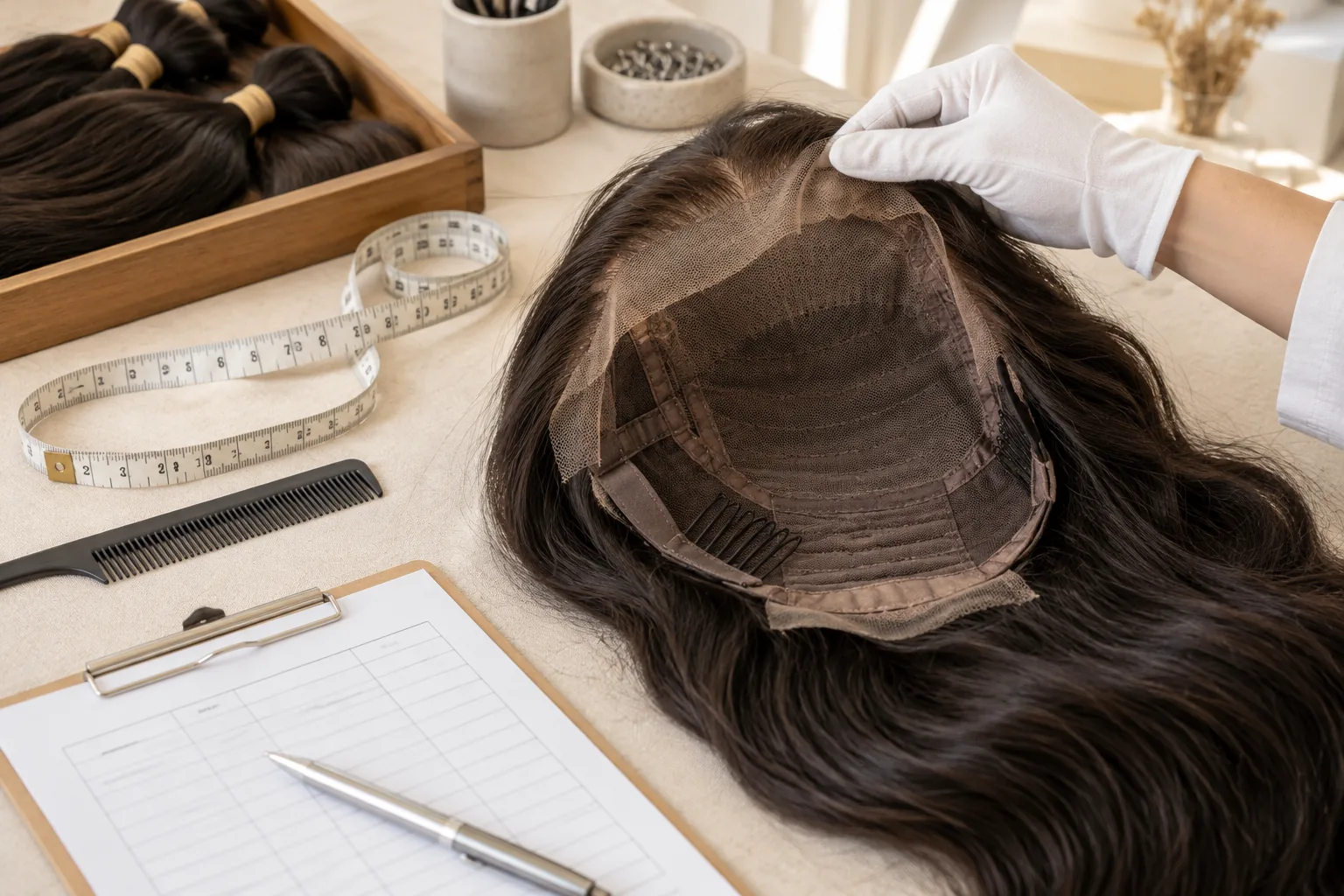
Finishing may include washing, setting a curl, trimming excess material or preparing a requested haircut. Separate the factory finish from the final salon styling in the order notes. When reviewing images, request views of the front, top, back and underside. Compare these with the approved brief before authorising any irreversible cutting.
Plan inspection and repeat orders
Use the approved brief as a receiving checklist. Measure the relaxed base, compare perimeter widths, check the crown position and view the front with the hair lifted. Photograph the colour beside its reference under the same light. Record a mismatch as an observation, such as a PU strip wider than the drawing, rather than simply reporting poor quality.
Create a reference that can be reproduced
Royal Hair manages sales in cooperation with Phuc Thien Toupee, which handles manufacturing. Discuss the construction through Custom Order and compare the relevant hair system catalogue before finalising a brief. Standard custom production is generally six to twelve weeks, subject to confirmation; shipping and any salon finishing should be planned separately.