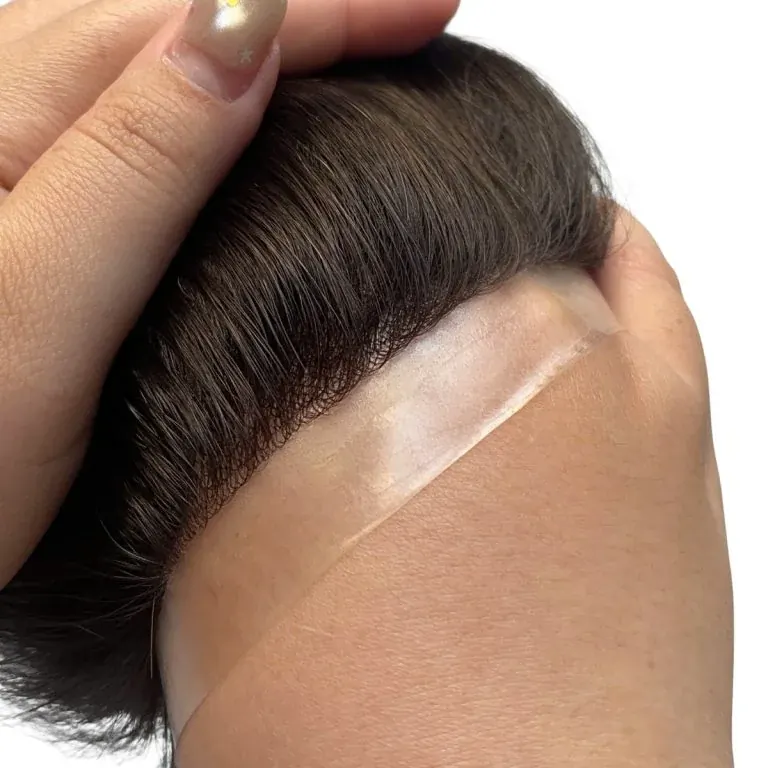
V-looped skin, injected skin and silk top can all give a clean-looking root area, but they achieve it differently. V-looping uses folded hair without a tied knot, injection anchors hair within a skin construction, and silk top hides attachments beneath an upper layer. These differences affect root direction, return hair and the feel of the base. Choose by construction rather than treating knotless as one interchangeable product.
Distinguish the attachment methods
A V-loop has a folded section of hair passing through skin, so short returned lengths can still be present even though there is no tied knot. Conventional injected skin is a different anchoring method and is often selected for a smoother, more fixed fall. Lift-injected designs aim for more root elevation. The exact sealing, thickness and directional freedom remain design-specific.
Look below the visible surface
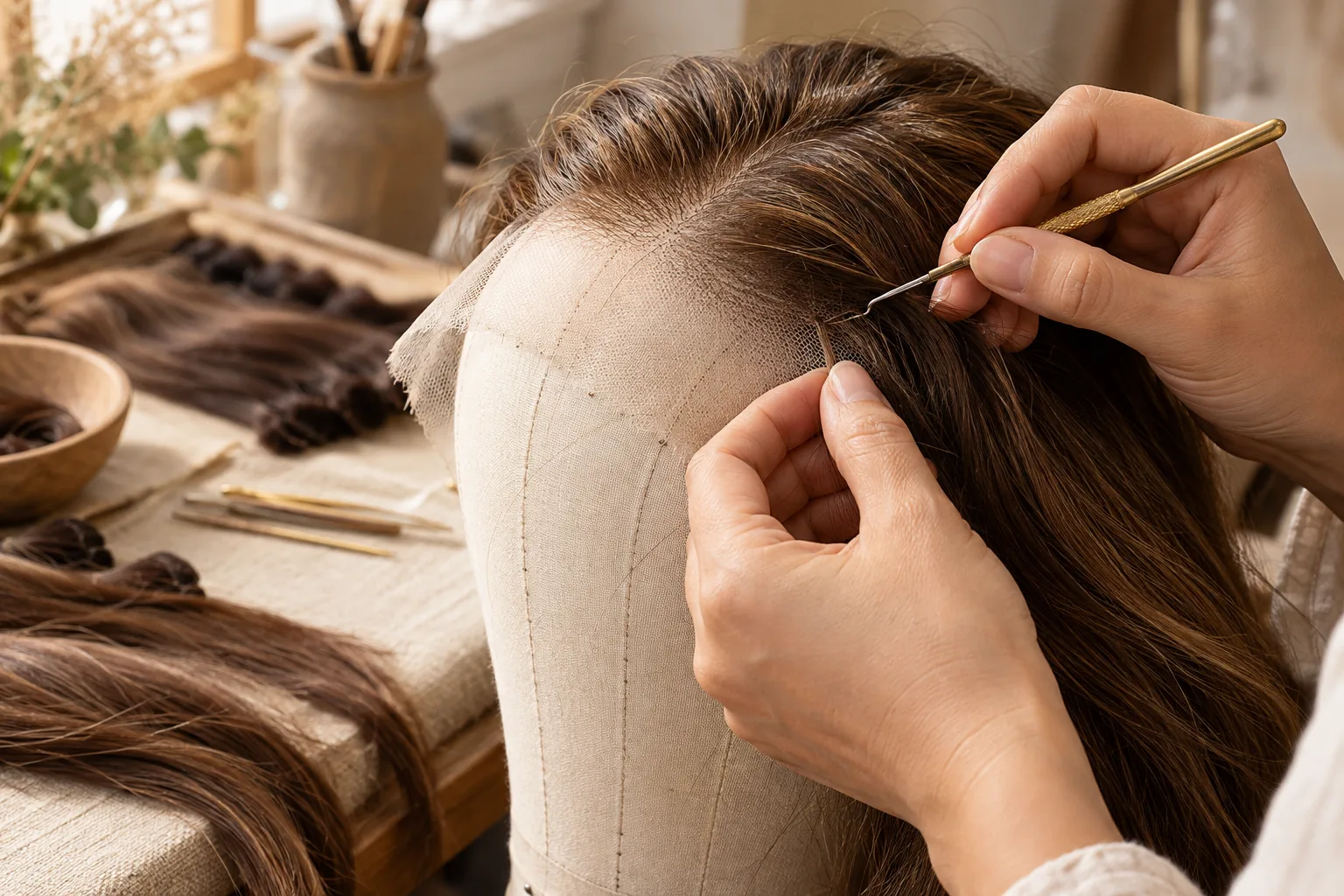
Silk top construction is different: an upper layer can conceal knots attached beneath it. The visible scalp effect does not mean the piece contains no knots. Request an underside photograph and construction diagram so your team understands whether the product is skin based, layered mesh or a combination of materials.
Compare the part and exposed hairline
Silk top is a layered scalp-effect area, not simply injected polyurethane. Knots can sit below its visible surface while hair passes through the upper layer. This conceals the attachment at the part but adds material compared with a single mesh layer. Where that section meets a lace front, inspect the transition separately: a convincing part does not automatically produce a discreet exposed edge.
Assess each visible zone separately
Request photographs with the hair parted in the intended direction. Include side views of material transitions and a front view with the hair gently brushed back. For a topper, explain where it overlaps growing hair. For a partial system, identify the attachment area and the exposed border on the drawing.
Connect ventilation to thickness and style
The technique must be compatible with the base and intended hair loading. An ultra-thin construction advertised by another brand may not be available from every factory. Confirm thickness, reinforcement and ventilation together. Royal Hair’s available skin options should be reviewed directly rather than inferred from a competitor’s sample or a generic online chart.
Confirm available options directly
Very short cuts deserve attention because folded or returned hair can affect the visible root profile. Show the proposed haircut before production. Ask how the design will behave when roots are lifted or brushed forward. A temporary styled finish should not replace discussion about the underlying attachment, direction and material transitions.
Write a construction-led purchase brief
Name the material first, then the ventilation method, scalp section and perimeter arrangement. Add colour, grey content, density distribution and finished length. If your team prefers concealed knots, identify whether that appearance matters at the part, the front or both. Ask the factory to confirm those requested areas independently.
Keep sample and drawing connected
During sample review, compare the drawing with the underside before assessing the hairstyle. Record the overall feel and appearance of transitions without destructive stress tests. If another technique is proposed, request a revised diagram and approve the change before a larger order begins. Keep that approval with the product reference.
For a sample comparison, keep colour, length and approximate coverage alike. Examine the open part, brush the front into the intended style and feel the transition between zones. Note whether the client needs a changeable part or consistently flat direction. Send those observations through Custom Order so the proposed method solves the styling problem rather than merely matching a marketing label.