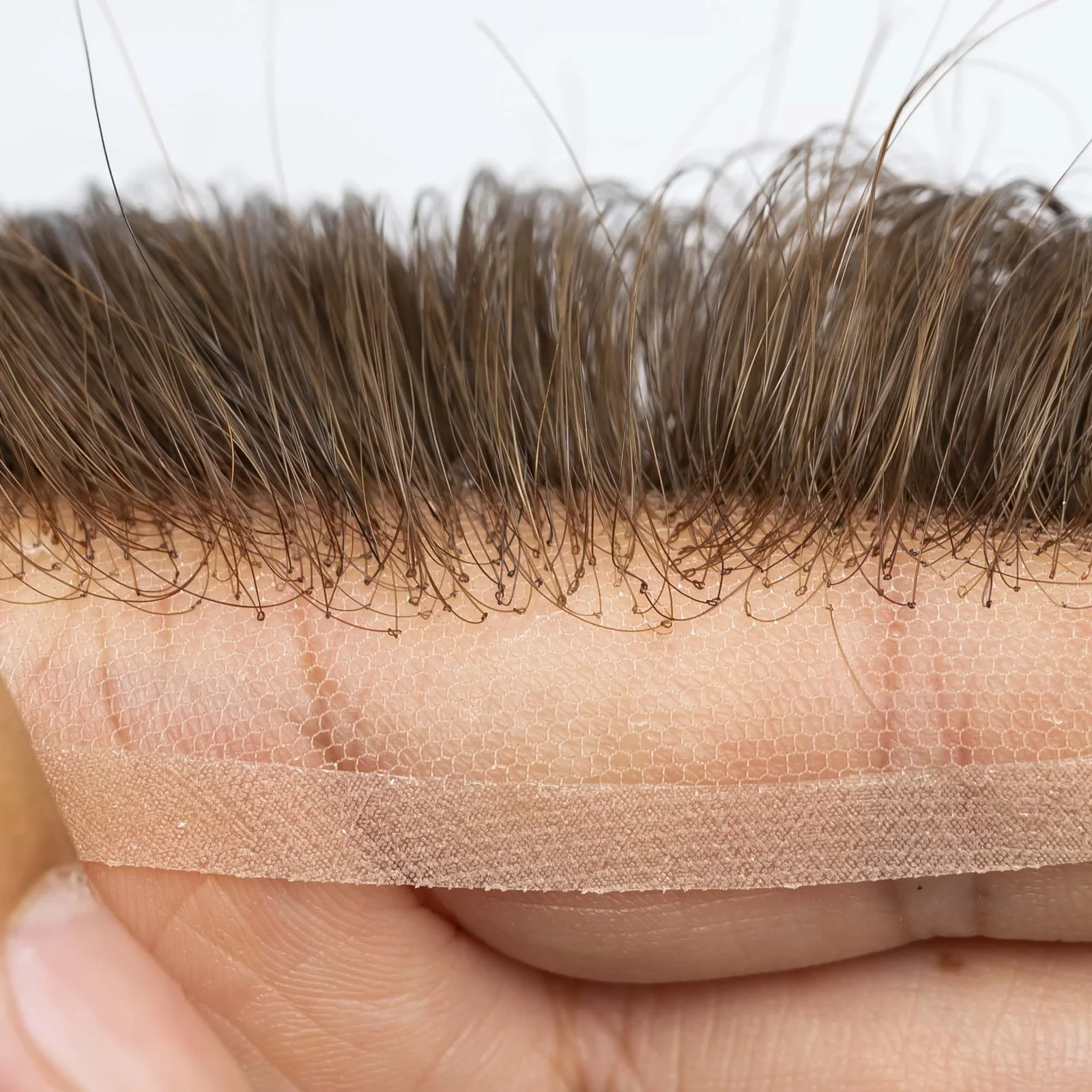
Single split knots favour a small attachment and natural root lift; double split knots add a securing turn and usually create a larger attachment. That trade-off matters most when the hair is brushed away from the face. A sensible specification often uses different knots in different zones rather than choosing one method for the entire system. Start with the visible hairline, then decide what the covered body needs.
Understand the visible difference
Single and double describe the knotting action, not automatically one hair versus two hairs. A technician can work with different numbers of strands, which also changes the size of the finished knot. In split knotting, the folded hair ends emerge separately, contributing to lift. A second securing turn generally improves anchoring but leaves a more noticeable attachment, particularly with dark hair against light lace.
Compare roots rather than styled volume
Gently separate a small section and look at its attachment against a neutral background. Ask for front and underside photographs of the same area. A styled photograph showing impressive volume cannot establish the knot type. Keep the physical sample available when your team approves a repeat production brief.
Specify where each knot belongs
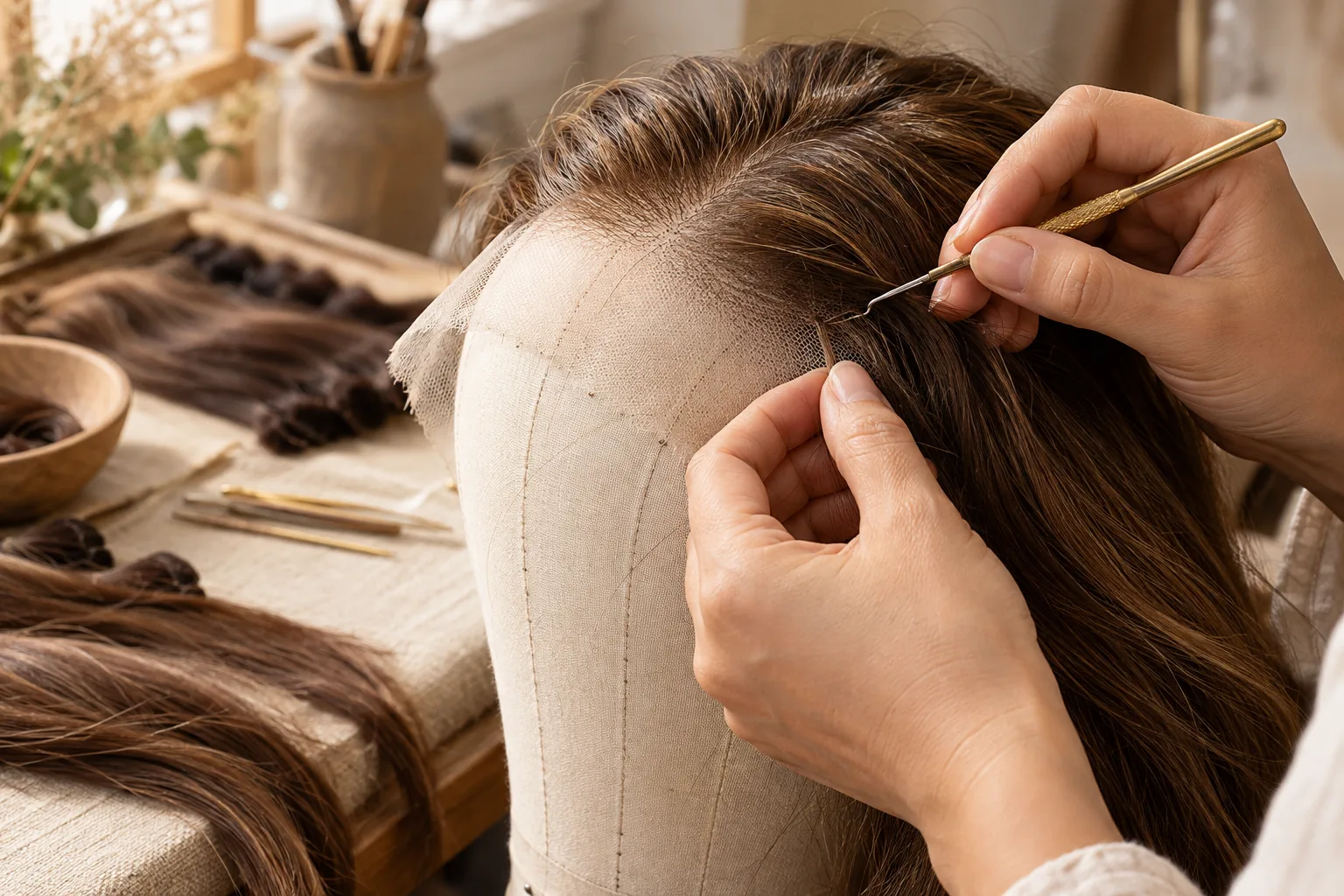
On a compatible lace design, smaller single split knots can be useful at an exposed front, with double split knots farther back where surrounding hair conceals them. This is not a rule for every material: a delicate mesh or unsupported clear skin cannot simply accept the same knot loading as reinforced mono. Decide the material first, then choose the knot plan for each zone.
Create a simple ventilation map
Mark the front band, top, crown and back on an underside drawing. State the desired knot method for each zone and ask the factory to confirm compatibility. If a transition is needed, clarify its location. Avoid requesting single knots everywhere simply because one close-up sample has an attractive front edge.
Review lift and return hair
Explain whether the client wants an exposed front, a fixed side part or a flexible crown. Include the finished cut length, especially for short styles where root behaviour is easier to see. Request an unstyled view before relying on a factory finish to judge directional control. Identify the crown position on the drawing.
Evaluate the proposed haircut
Return hair is the shorter portion associated with folded hair attachment. Its appearance can matter when the final cut is short or the longer hair is moved aside. Ask the supplier how return hair will be managed for the selected design. Visible short hairs do not automatically indicate poor workmanship.
Approve and preserve the specification
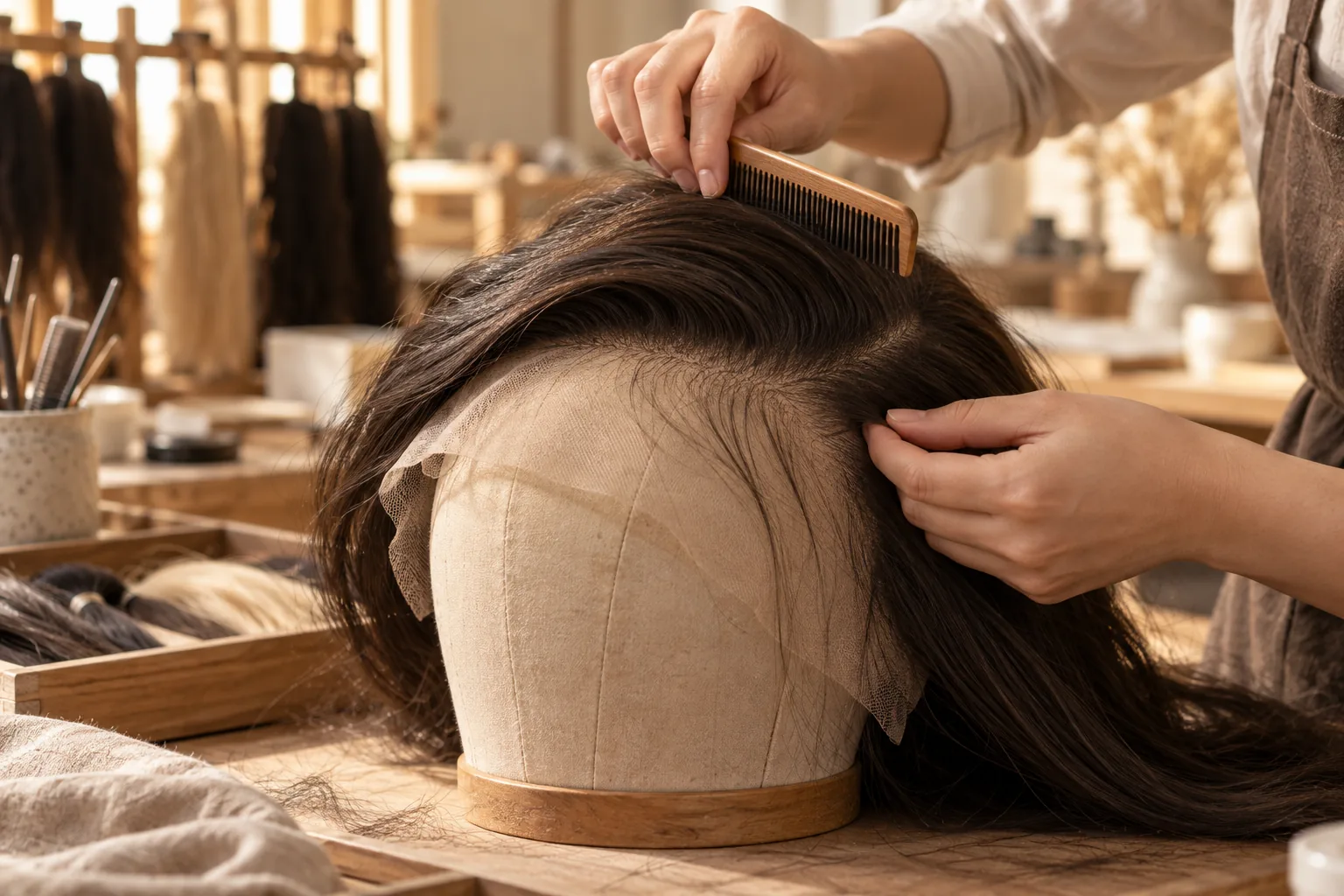
Assess knot visibility, direction and handling as a combined result. Record which zones meet the agreed brief and photograph any area needing adjustment. Describe observations precisely: uneven lift at the front is more useful than saying the piece looks wrong. Do not pull knots aggressively as an informal durability test.
Record changes before repeating an order
For repeat orders, retain the approved drawing, sample reference and date. A change in colour, density or material can require a fresh knotting discussion. Send the complete updated specification through Royal Hair’s Custom Order service and compare the men’s hair system collection for relevant construction examples.
An example enquiry might read: lace front, small single split knots in the exposed band, double split knots in the compatible body, and a clockwise crown marked on the drawing. Add the front-band width and final cut length. Treat this as a starting brief for technical approval, not a promise that every base can be made this way.