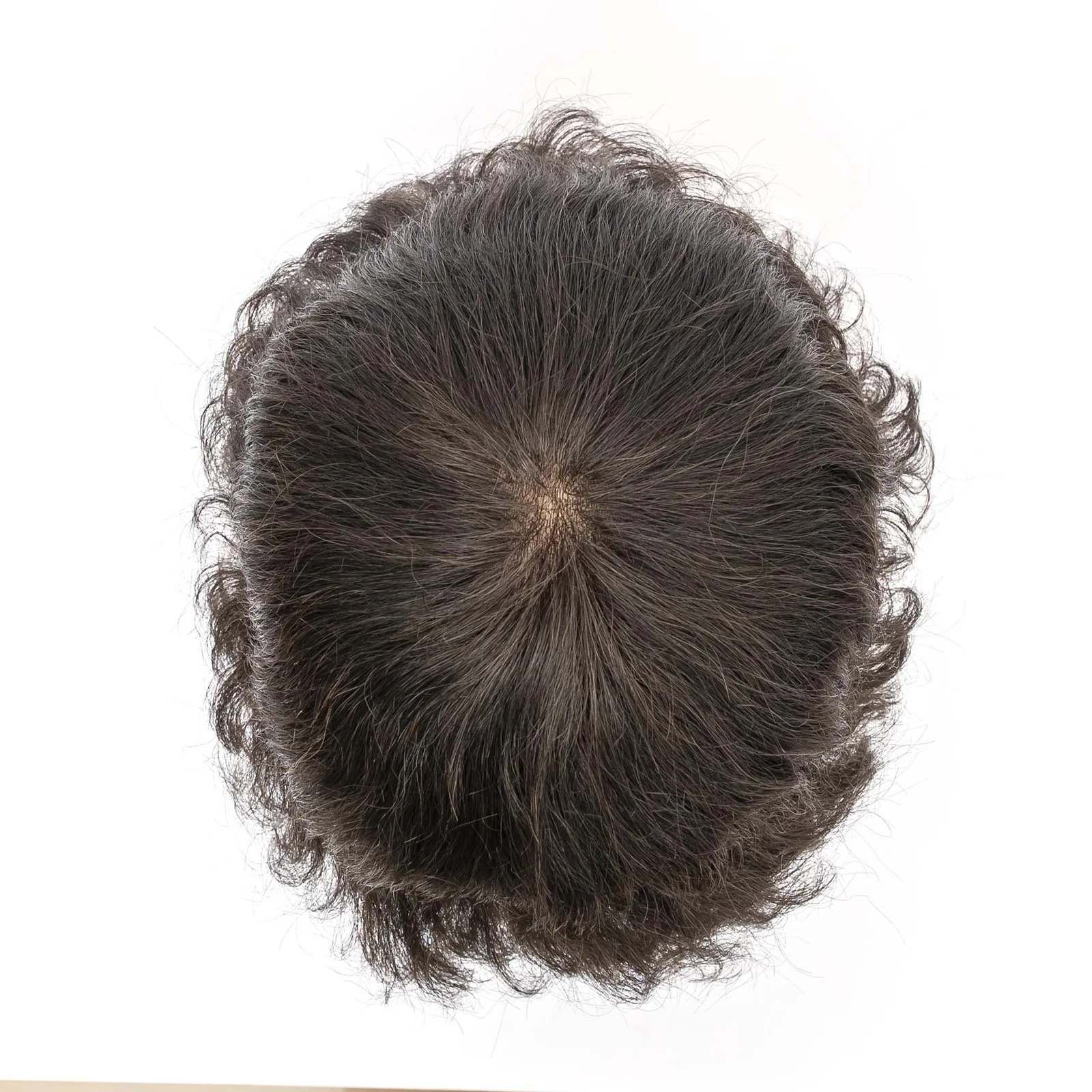
Flat knots are used when the hair should lie closer to the base rather than stand up at the roots. They can help a temple, side or nape blend smoothly, but they do not make every hairstyle easier. A brushed-back front may need lift instead. The useful question is where a lower root profile improves the finished cut, and whether that knot is suitable for the supporting material.
Recognise the purpose of flat knotting
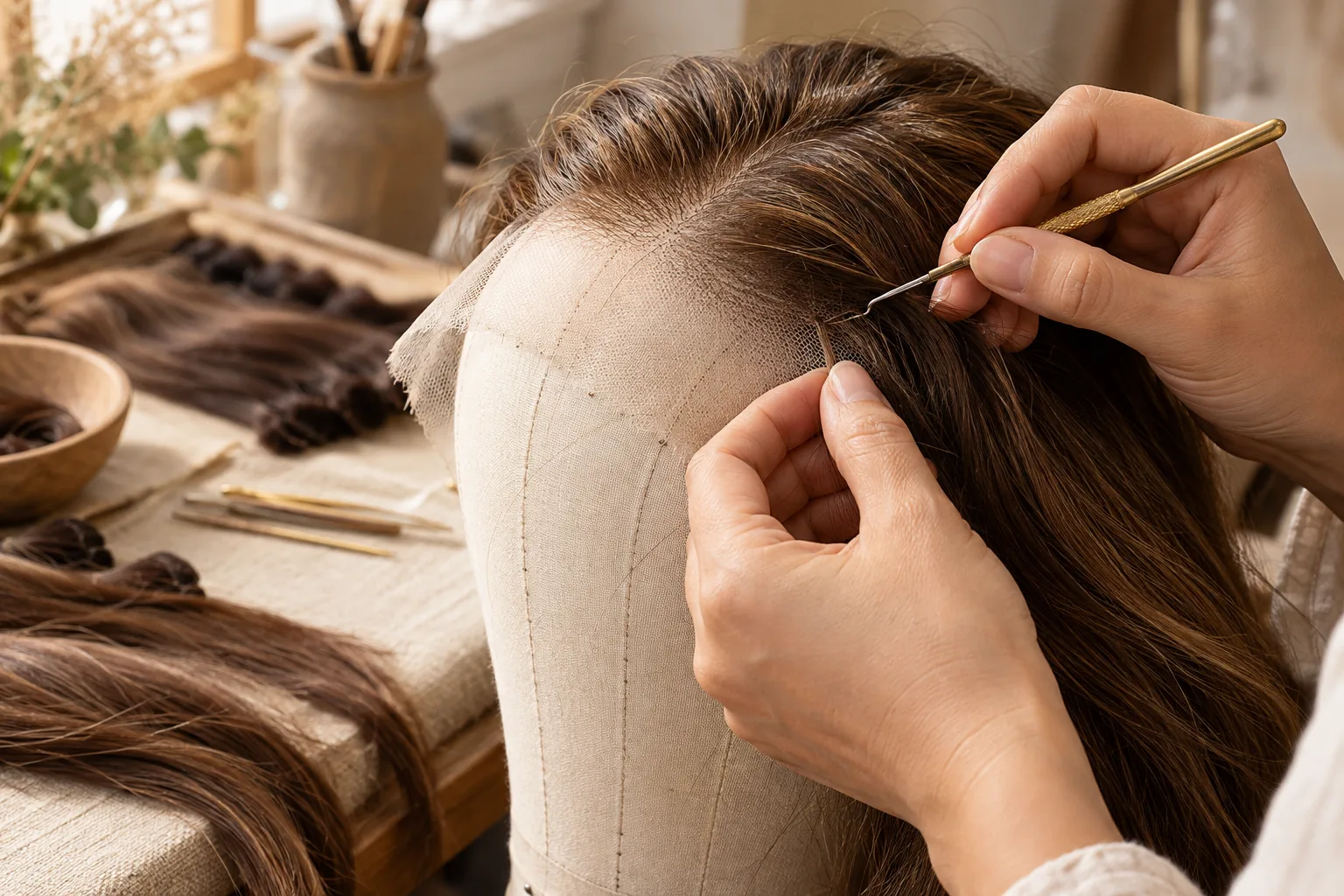
With flat knotting, the folded hair lengths are kept closer in direction than in a split-knot arrangement. Single flat knots keep bulk low, while a double flat knot adds security at the cost of a larger visible attachment. Larger-hole integration mesh can benefit from controlled hair direction, but a substantial double knot is not automatically appropriate for fine lace or clear skin.
Separate attachment from styling
Ask the manufacturer to demonstrate the proposed method on the actual base. Compare a dry, unstyled sample with a lightly brushed section. Heavy styling products can obscure the root behaviour you are trying to evaluate. Photograph the same section from above and from the side before deciding whether the effect suits your client.
Draw the intended hair direction
Draw arrows from the crown towards the intended fall of the hair. For example, a left-side part needs a defined part location and a longer sweep towards the right; a flat-back style needs a different front direction. Mark the wearer's left and right, not the viewer's. Freestyle describes styling flexibility, not the absence of an underlying ventilation pattern.
Include the crown and perimeter
At the sides and back, consider how the system will blend with growing hair. The direction that suits a long layered style may not suit a closely cut perimeter. Give the factory the proposed finished length and photographs from more than one angle. Keep the front contour drawing separate from the ventilation map.
Check the material and hair combination
A delicate mesh, an open integration net and a reinforced perimeter create different working conditions. The technician must attach hair without placing unsuitable stress on the material. Ask whether the selected base supports the requested knot, density and length together. Different knot plans may be needed in reinforced and unreinforced zones.
Confirm compatibility for the complete design
Hair processing also belongs in this discussion. Record whether the order uses natural dark hair, a lighter processed shade or a blend containing grey fibres. Request a representative sample if knot retention is a particular concern. Avoid applying another supplier’s instructions to Royal Hair without checking that the materials and preparation match.
Use a repeatable inspection routine
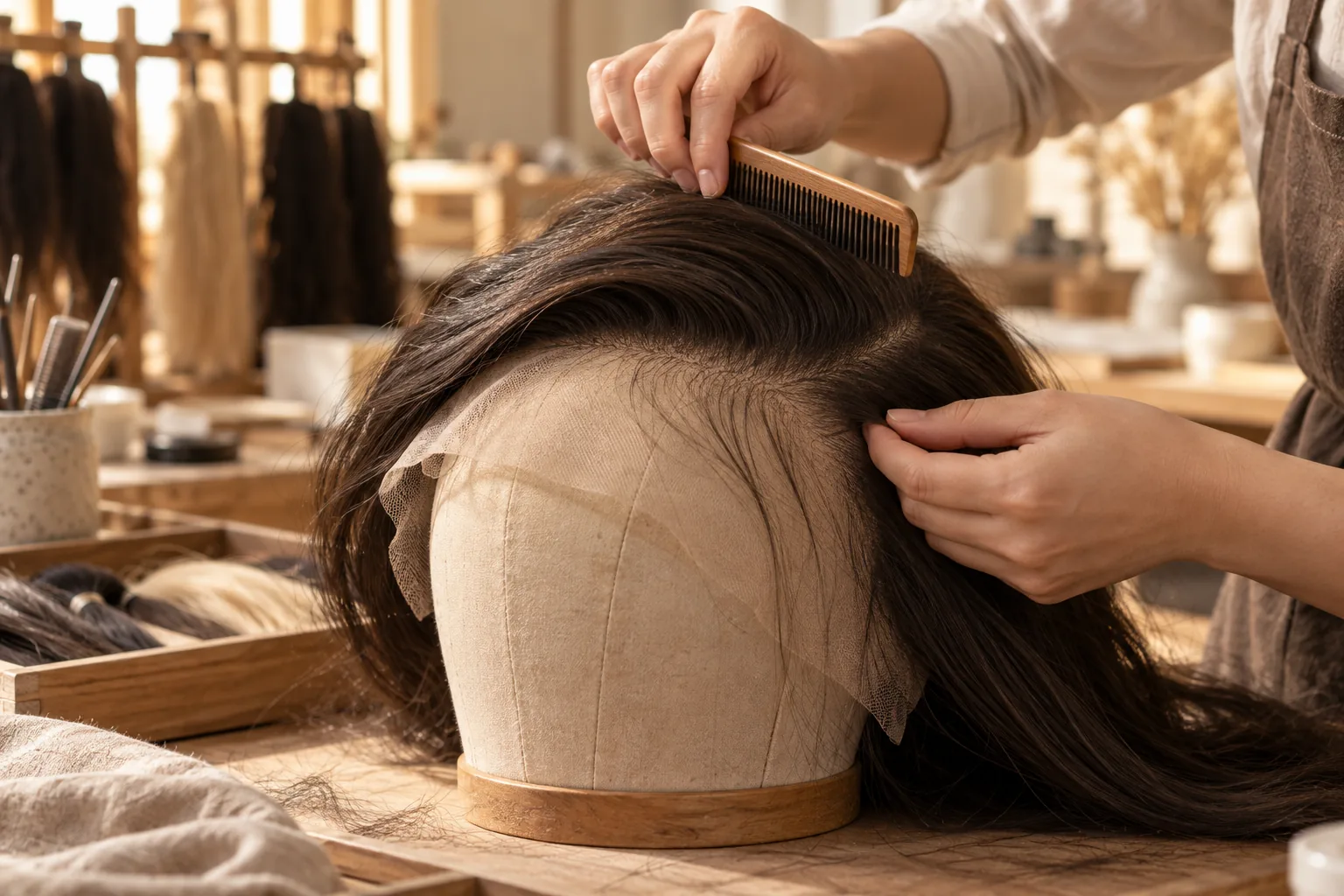
Begin with the approved directional map. Part and brush the sample gently along the intended route, then compare both sides of the base. Note any sudden change where one material meets another. An upright section may reflect direction, return hair or finishing, so ask for an explanation before requesting a density reduction.
Test the intended hairstyle
A salon trial can establish whether the low-profile look remains practical during ordinary fitting and styling. Record the haircut, products used and approved adjustments. This helps purchasing teams distinguish a construction issue from a styling choice when the same design is ordered again, especially after a change in hair length.
For a short side blend, photograph the sample in profile with the perimeter unstyled. If one section stands away while the adjacent area lies flat, mark that location on the direction map before changing density. Send the marked images with your Royal Hair custom enquiry. This identifies a local root-direction problem instead of requesting less hair across an otherwise suitable system.