Ventilation means attaching hair to the base, but the choice is not simply knotted versus knotless. Knot shape, the number of hairs at each attachment point and the direction of insertion all affect the finished roots. For a salon ordering a brushed-back style or a short crop, those details deserve as much attention as the hair length and density.
Separate attachment from hairstyle
Flat knots encourage a lower-lying root, while split-knot techniques create a different separation and lift. A double knot adds another securing turn, usually making the attachment more substantial than its single-knot counterpart. That can also make it more visible. Ask for a close sample of the actual technique on the proposed base; names alone do not show strand loading or workmanship.
A method name does not describe the whole product
Methods used on skin can create a different root effect. V-loop construction passes hair through the skin base without the same visible knot structure associated with mesh knotting. Availability depends on the supplier’s construction capability. Avoid treating knotless as a promise of perfect invisibility or identical performance across every skin product.

Specify the direction of the hair
Ventilation direction influences how readily hair follows the intended style. A side part, forward fringe and brushed back look place different demands on the front and top. Provide photographs of the actual target hairstyle and explain whether the part is fixed or the client expects flexibility. Do not rely on a single word such as freestyle.
Map the front, part and crown
Describe the crown position and any changes in direction. The manufacturer may need a marked drawing rather than a photograph of a finished haircut. For repeat orders, keep that directional map with the approved sample. A change in root direction can make two systems feel different even when length and density are unchanged.
When ordering more than one sample, change a limited number of specifications between them. Comparing different bases, colours, lengths and densities at once makes it hard to identify why one looks better. A controlled comparison helps the salon decide whether the ventilation itself suits the intended style and what to confirm in the next order.
Consider the haircut before choosing V-loop
Very short hair makes root behaviour more noticeable. V-loop hair may stand differently after cutting, particularly around an exposed front. Discuss this before requesting a close crop. The relevant comparison is a sample with a similar base and finished length, rather than a promotional image showing much longer hair styled flat.
Short cuts can reveal root behaviour
Knotted hair also has a short folded-back end, often called return hair. Ask how long it will be and whether any treatment is proposed for it. This matters with cuticle-intact, customer-supplied hair, because the return runs opposite to the main length. Do not assume that bleaching knots, treating returns and preserving root-to-tip direction mean the same thing.
Evaluate a sample through a salon workflow
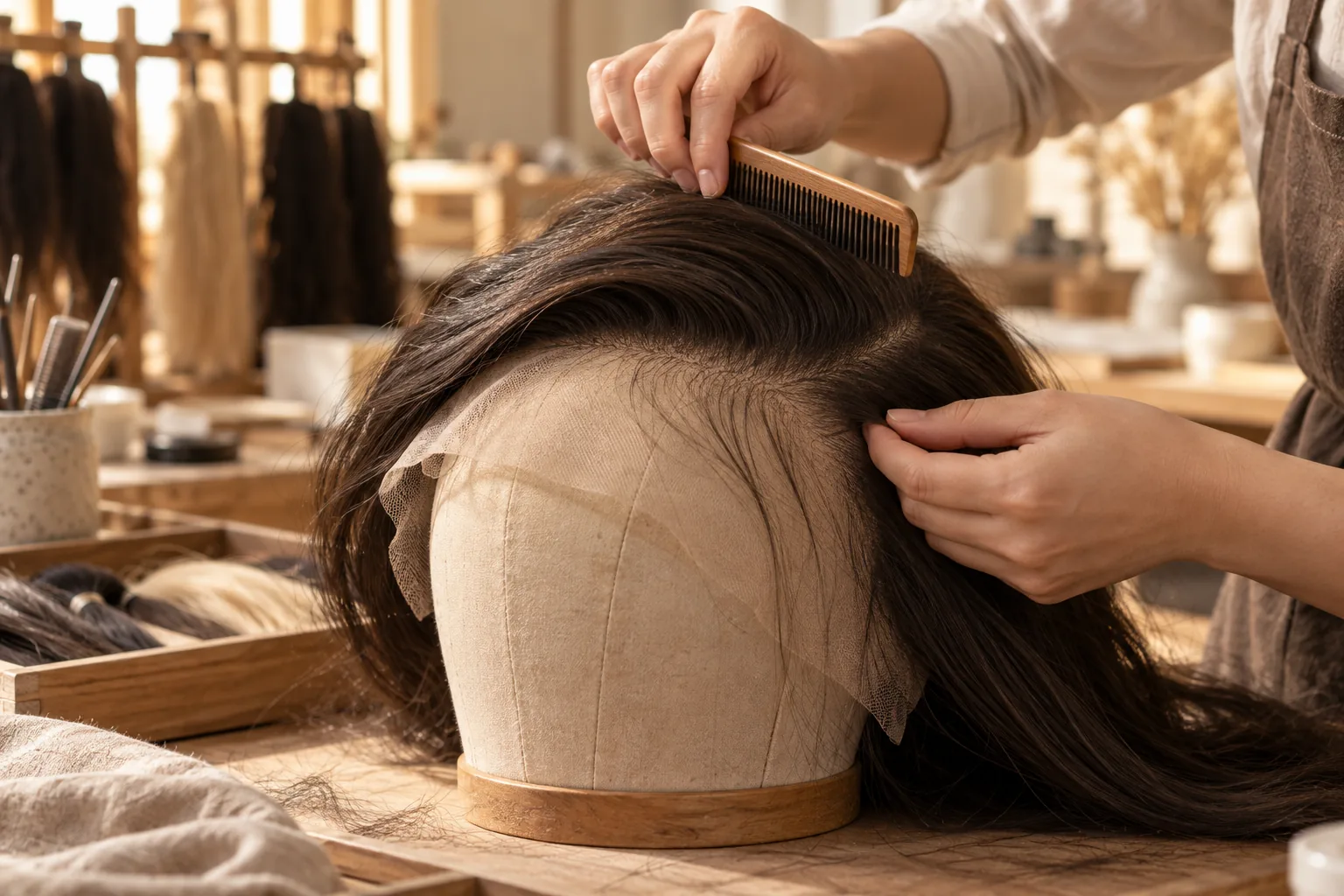
Inspect the front and part with the hair both lifted and resting naturally. Check whether the direction follows the approved brief and whether the root appearance suits the intended client. Request underside photographs to understand the construction. Avoid aggressive brushing or pulling as an inspection method because these actions can damage a sample.
Compare useful views before the final cut
Royal Hair coordinates sales with manufacturing by Phuc Thien Toupee. When using Custom Order, state the proposed base, haircut and exposed hairline requirements together. Compare applicable hair system models, then confirm the ventilation option for the exact order. Record the approved result so future discussion centres on a reproducible specification rather than a marketing term.