
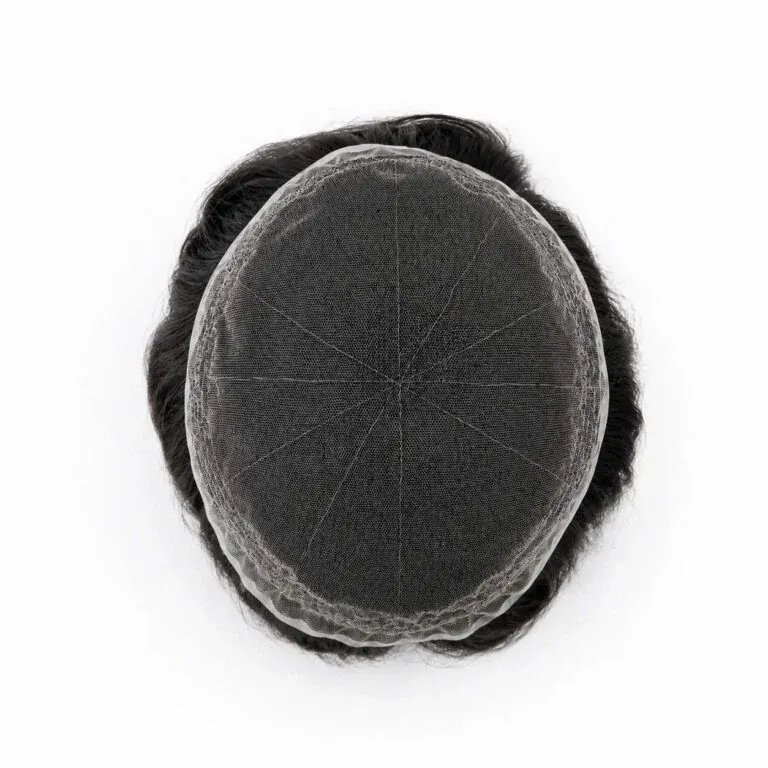
Lace, skin and mono solve different fitting problems. A client who exposes the front needs a convincing edge; a stylist who removes tape frequently also needs a base they can handle confidently. Neither requirement is answered by a material name alone. Start with the intended hairstyle and maintenance routine, then compare the construction underneath the hair.
Understand the role of each material
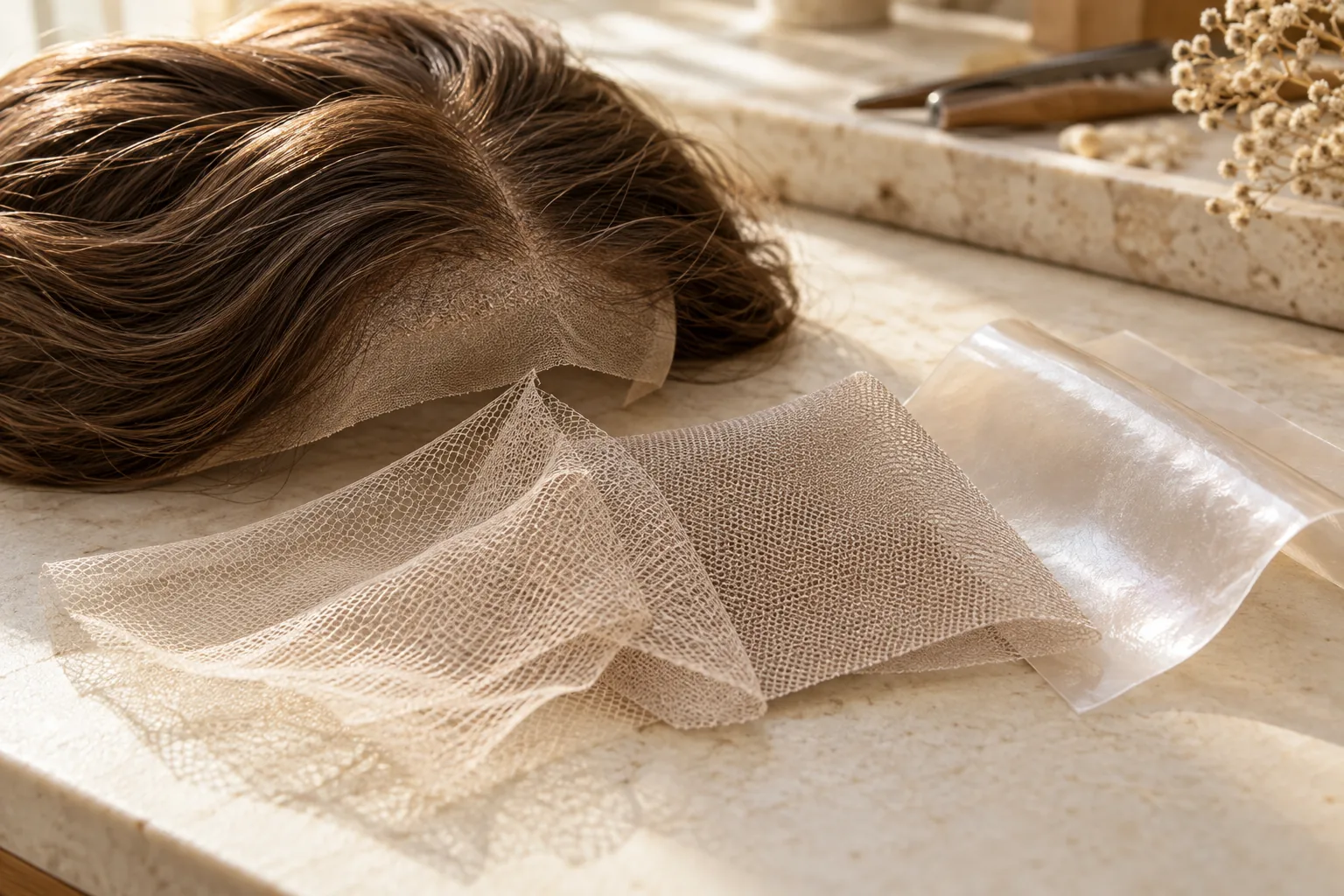
Lace is an open mesh, allowing airflow through the uncovered material, with hair usually tied to its threads. Polyurethane skin is a continuous film: it offers a smooth attachment surface but not the same open structure. Monofilament is a more structured mesh option. Exact visibility and strength still depend on the particular material, edge finish and ventilation, not just the category.
Ask where each material is used
These names are broad categories rather than complete specifications. Ask for the actual material, the zones it covers and an underside photograph. A full lace base and a lace front with a different centre are distinct products, even if both are marketed around the same front hairline feature.
Design the perimeter before ordering
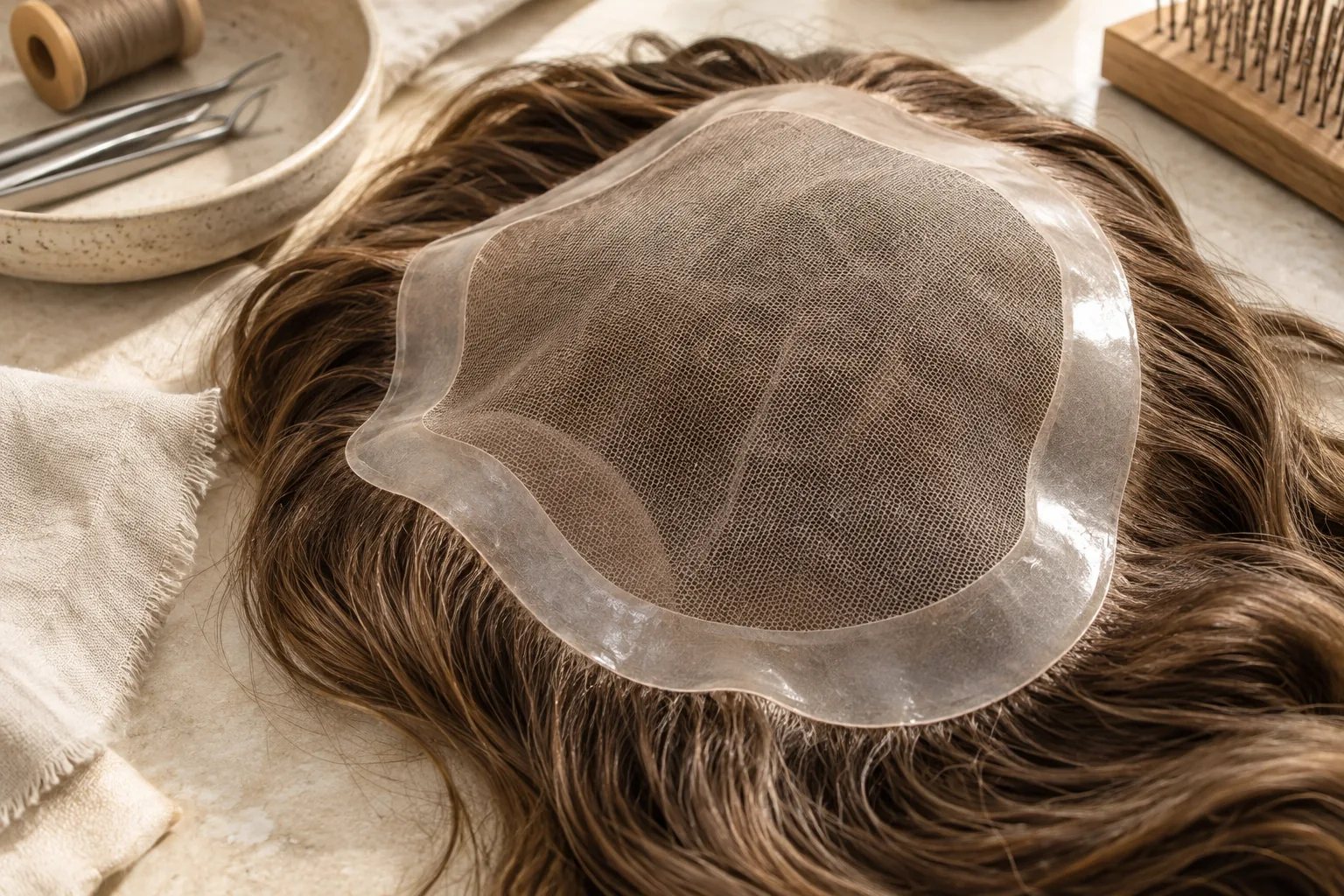
The perimeter should support the intended fitting method. If a buyer wants a polyurethane strip around a mesh base, specify its position and width. An unclear instruction such as add some skin can produce a different result from the one the stylist imagined. The front, sides and back may need separate instructions.
Match edges to the attachment plan
Also explain whether the client wears the hair forward or exposes the edge. A base transition may be easy to conceal under one style and more visible under another. Show the intended parting and cut length alongside the underside drawing. This gives the manufacturer context for discussing a workable construction.
For a hybrid, review each zone separately. A PU perimeter can give the stylist a defined tape area, while a mesh centre retains an open structure. The join adds another feature to inspect, especially near an exposed part. Ask how to clean and remove adhesive without pulling on a delicate edge; no base choice eliminates the need for careful maintenance.
Treat thickness and density together
Skin thickness affects the feel and handling of the finished piece, but it should not be reviewed independently of density and ventilation. A thinner material is not automatically the best choice for every client. Ask what hair loading and construction the manufacturer considers suitable, especially when requesting a dense system or a very short haircut.
Avoid selecting numbers in isolation
Royal Hair can discuss skin options within the available 0.04–0.12 mm range. Do not assume a supplier can produce every thickness advertised elsewhere. Confirm the actual specification for the order and request a sample if the difference matters to your fitting routine. Compare handling gently rather than testing an edge by pulling it.
Approve the construction with useful evidence
Measure overall dimensions and check the contour, material transitions and edge finish against the brief. Photograph the underside on a contrasting background so the zones are clear. Review whether clips, tape areas or other attachment details match the agreed placement. A top view alone cannot verify these construction features.
Use a diagram and an underside sample
For a new design, begin with a sample before committing to a repeat batch. Royal Hair handles sales while Phuc Thien Toupee manufactures the product. Use Custom Order to confirm the base drawing and explore the related hair systems catalogue. Keep the approved construction reference with your client record, including material names and any later adjustments.