
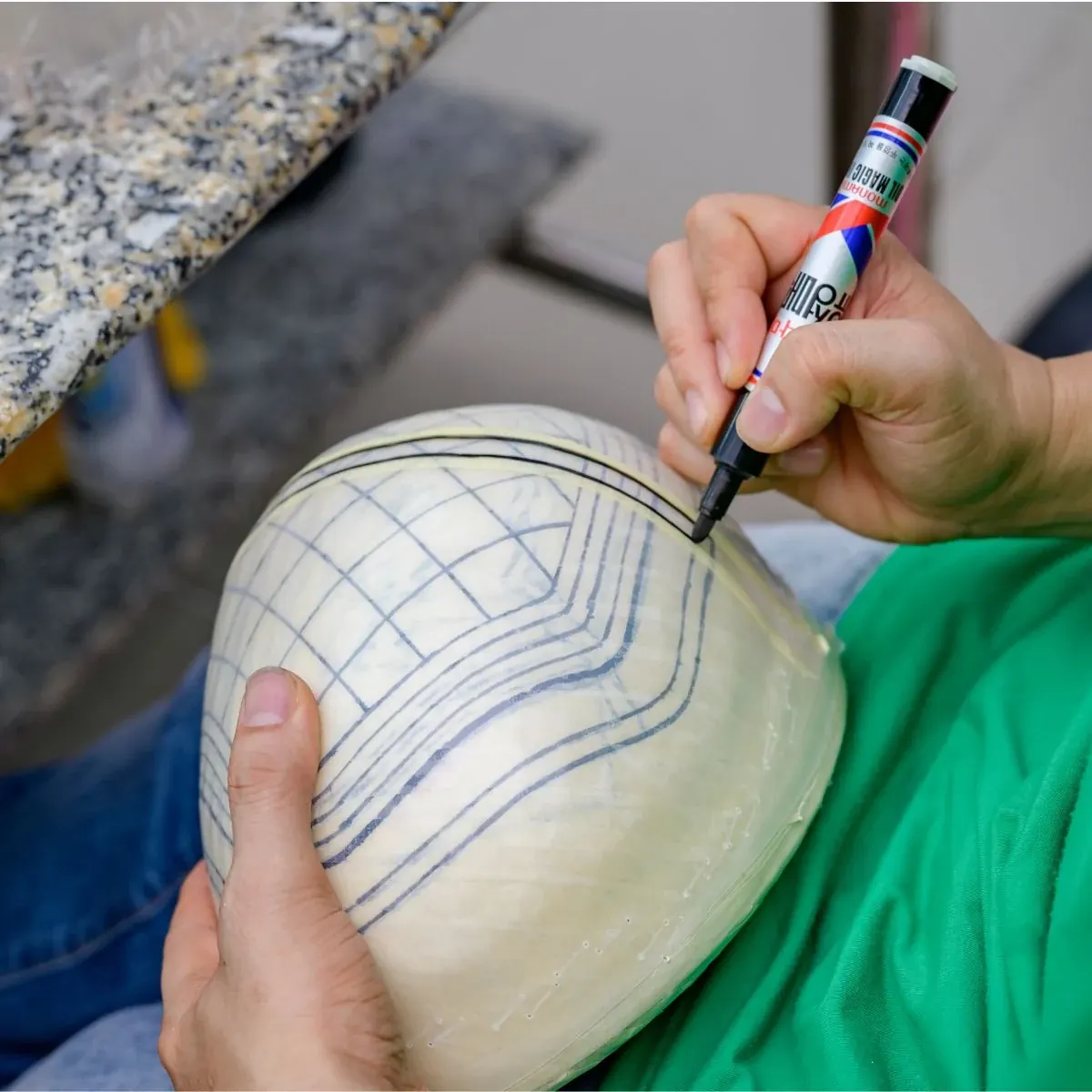
A template tells the factory where a custom base should sit and what shape it should follow. Length and width cannot do that on their own: two outlines can measure the same yet fit differently at the temples or back. A useful template therefore combines a stable shape, clear orientation and written construction notes that agree with the measurements.
Capture shape as well as dimensions
Ask whether the factory needs a three-dimensional mould, a flat tracing or an existing piece. A tracing records the outline but not the curvature; a physical mould should retain its shape when removed and packed. Mark the approved front edge clearly. Check the widest side-to-side measurement and longest front-to-back measurement without flattening or stretching the reference to force a match.
Keep the template and measurements consistent
When copying an existing system, list changes edge by edge. For example, extend the back by 5 mm while keeping the front and sides unchanged is clearer than make it slightly bigger. State whether a measurement describes the base or the hair coverage. Ask the manufacturer to acknowledge the revised outline before it starts building the new base.
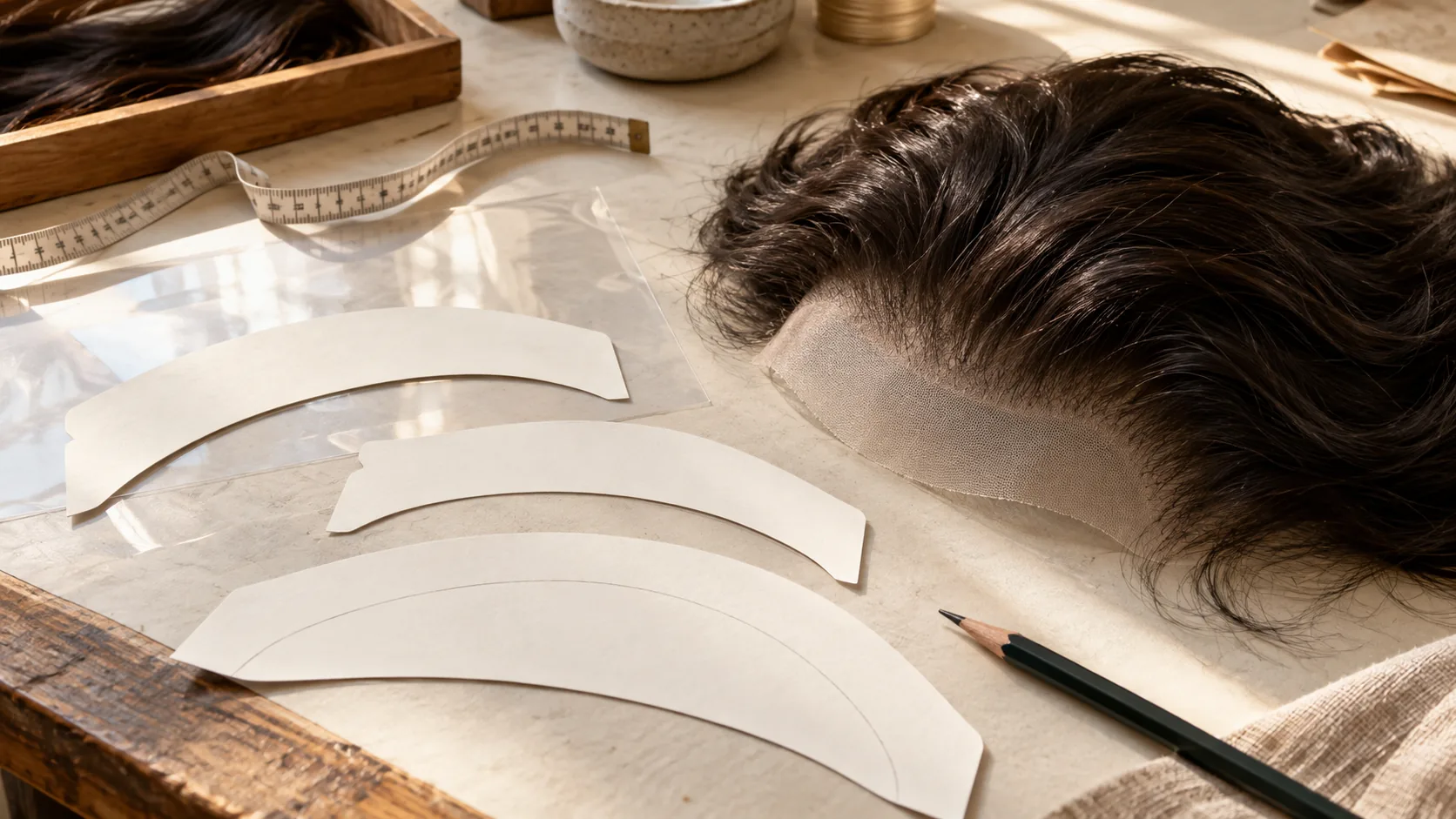
Label orientation and construction
Mark front, back, left and right, and include a client or order reference. If the base uses more than one material, draw the intended zones and widths. Show any requested clips or attachment areas, noting whether their positions are fixed or should be reviewed by the manufacturer. Check that labels remain legible in a photograph.
Make the front unmistakable
Hair direction should be documented alongside the base outline. Add the intended part, crown location and styling preference. A contour template cannot communicate these automatically. Keep construction notes separate from inspiration images so a technician can distinguish a measurable requirement from a general preference about the finished appearance.
Before dispatching a physical template, photograph it from several angles and retain the measurements in your own records. Label any accompanying hair or sample piece with the same order reference. If several clients are being served at once, separate their materials carefully so the manufacturer does not have to infer which reference belongs to which brief.
Resolve changes before production
Send a complete brief with base shape, hair colour, length, density and grey percentage. Ask the supplier to confirm unclear details and identify any combination it cannot manufacture. If the factory suggests a modification, update the drawing and assign a new date or version number. Both sides should know which reference is current.
Use a single approved version
Avoid spreading final instructions across different chat messages without a consolidated summary. A last minute request to move an edge or change the material may affect other construction steps. Ask whether the order is still at a stage where that change can be made and whether it alters the quoted timing.
Keep the template useful for future orders
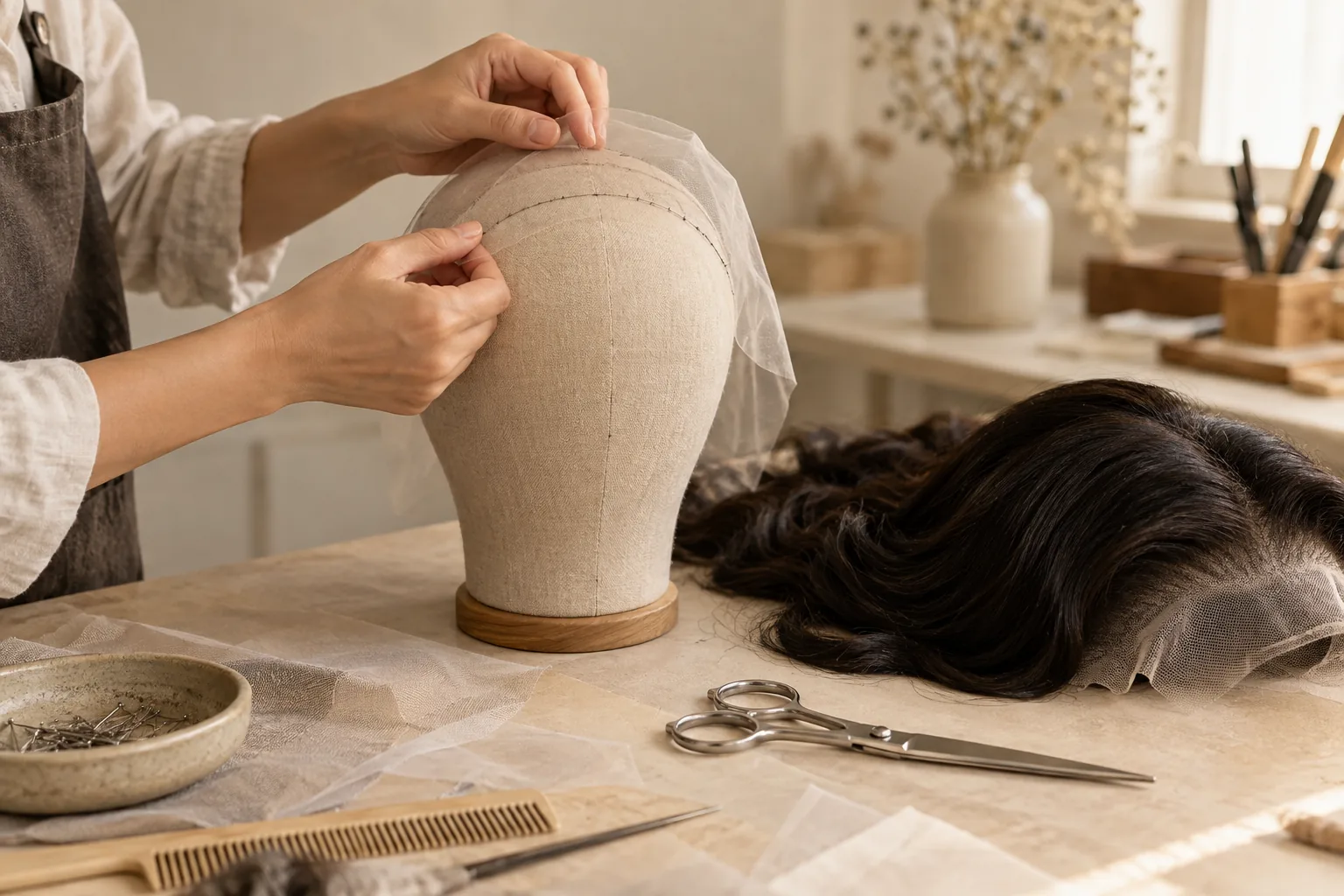
After receiving the sample, compare the outline and construction with the approved template. Note any fitting adjustments made by the salon. Decide which should become part of the next factory brief and which were specific to that fitting. This prevents an altered salon piece from becoming an ambiguous reference for future manufacture.
Archive approved details with sample photos
Royal Hair handles sales and communicates custom requirements to Phuc Thien Toupee manufacturing. Use Custom Order to discuss accepted template formats and any storage arrangements before dispatching physical references. Pair the template with photographs of the approved hair system and a written specification. That combination provides a stronger basis for repeat production than measurements alone.