
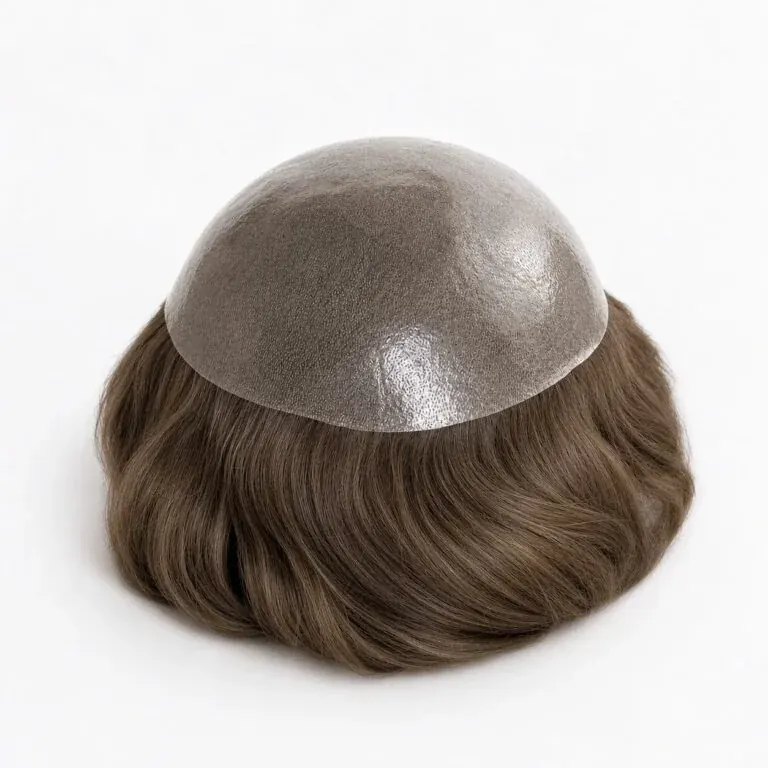
A density percentage cannot tell you whether a hairline will look natural. The front may be too abrupt even when the top has the right coverage, or the sides may look heavy beside the client’s own hair. A better brief describes density by area and connects it to the haircut, base and direction of the roots.
Describe distribution rather than one number
For an exposed front, discuss a graduated transition: lighter placement at the leading edge, building towards the main body rather than starting with a solid wall of hair. That is different from making the whole system sparse. A forward fringe may prioritise edge coverage instead. Confirm the supplier’s sample scale, because an identical percentage can represent different fullness at different factories.
Different zones can need different instructions
Provide a reference piece where consistency matters. Include top and front photographs with the hair resting naturally, and identify any area you want adjusted. A styled image can make modest density look fuller through lift and volume. It should support a brief, rather than act as the only density specification.
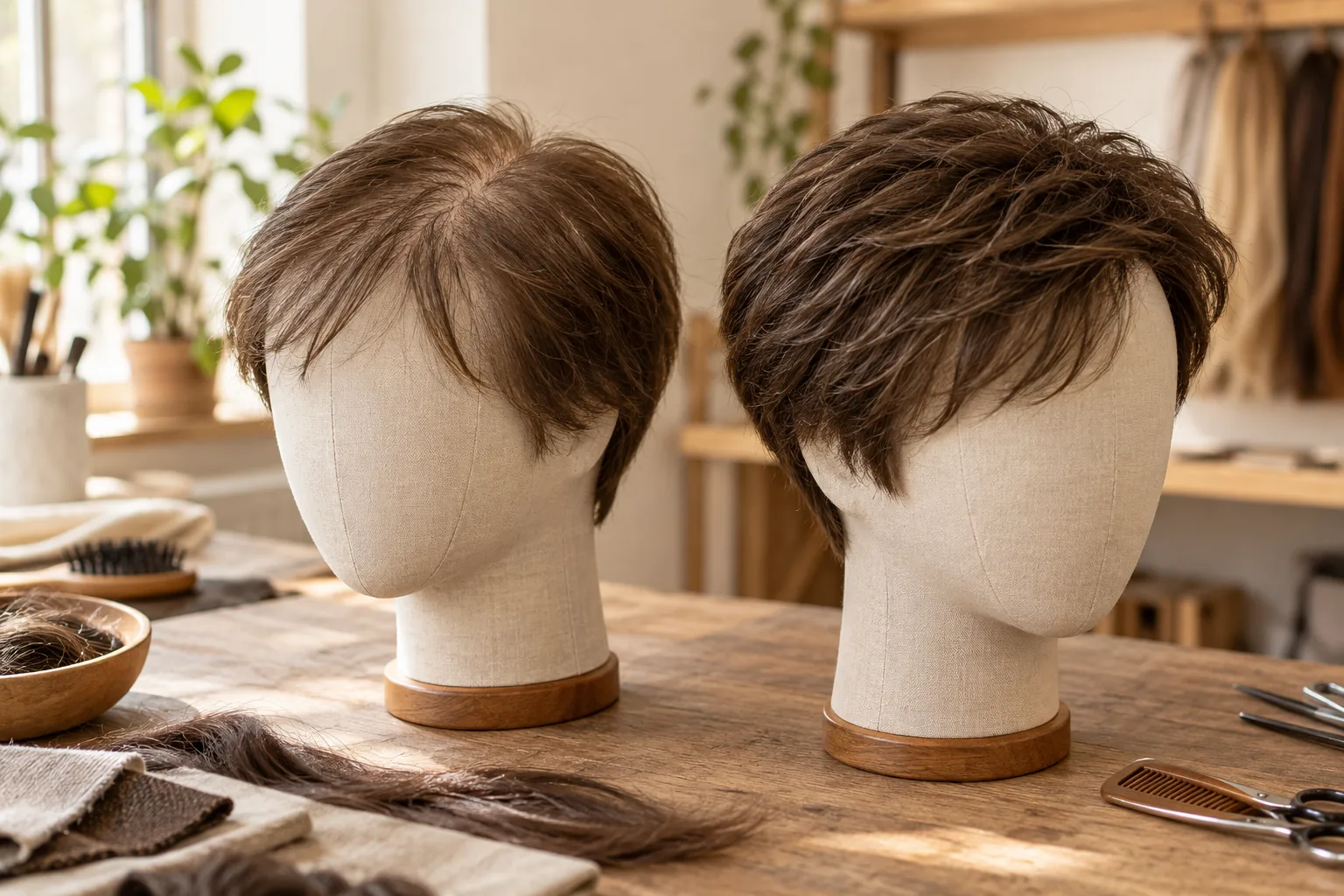
Design the hairline around the actual haircut
The front design must work with the base, ventilation and intended length. Explain whether the client brushes the hair back, wears a fringe or changes styles. Also consider the surrounding natural hair and how the salon plans to blend the piece. A factory cannot infer those conditions from a generic model photograph.
Consider exposure and surrounding hair
Where concealing the perimeter is important, state which edges need coverage. Request a manufacturer review of that requirement against the chosen construction. Extra hair alone may not solve a mismatch between base visibility and styling. Direction, length and the position of the edge can be equally relevant to the final result.
Client consultation notes can also explain the priorities behind the density request. Record whether the main concern is crown coverage, a discreet exposed front or easy blending at the sides. Sharing that priority helps the supplier discuss tradeoffs when all requested features cannot be combined exactly as imagined. The approved brief should reflect the final decision.
Check compatibility with the chosen base
The manufacturer should confirm that the requested density is suitable for the base and ventilation. Very thin constructions and dense hair requests may involve limitations. Ask for the actual available combination instead of choosing each feature independently from different catalogue products. A sample helps establish what the proposed design looks and feels like.
Balance appearance with a workable construction
Visual bulk is not a strand count. Curl, darker colour, root lift and a short layered cut can make the same nominal density appear fuller. Before reducing density across the whole order, check whether the problem is concentrated behind the front or beside the part. Keep a photograph of the unstyled sample so later orders do not copy fullness created only by salon styling.
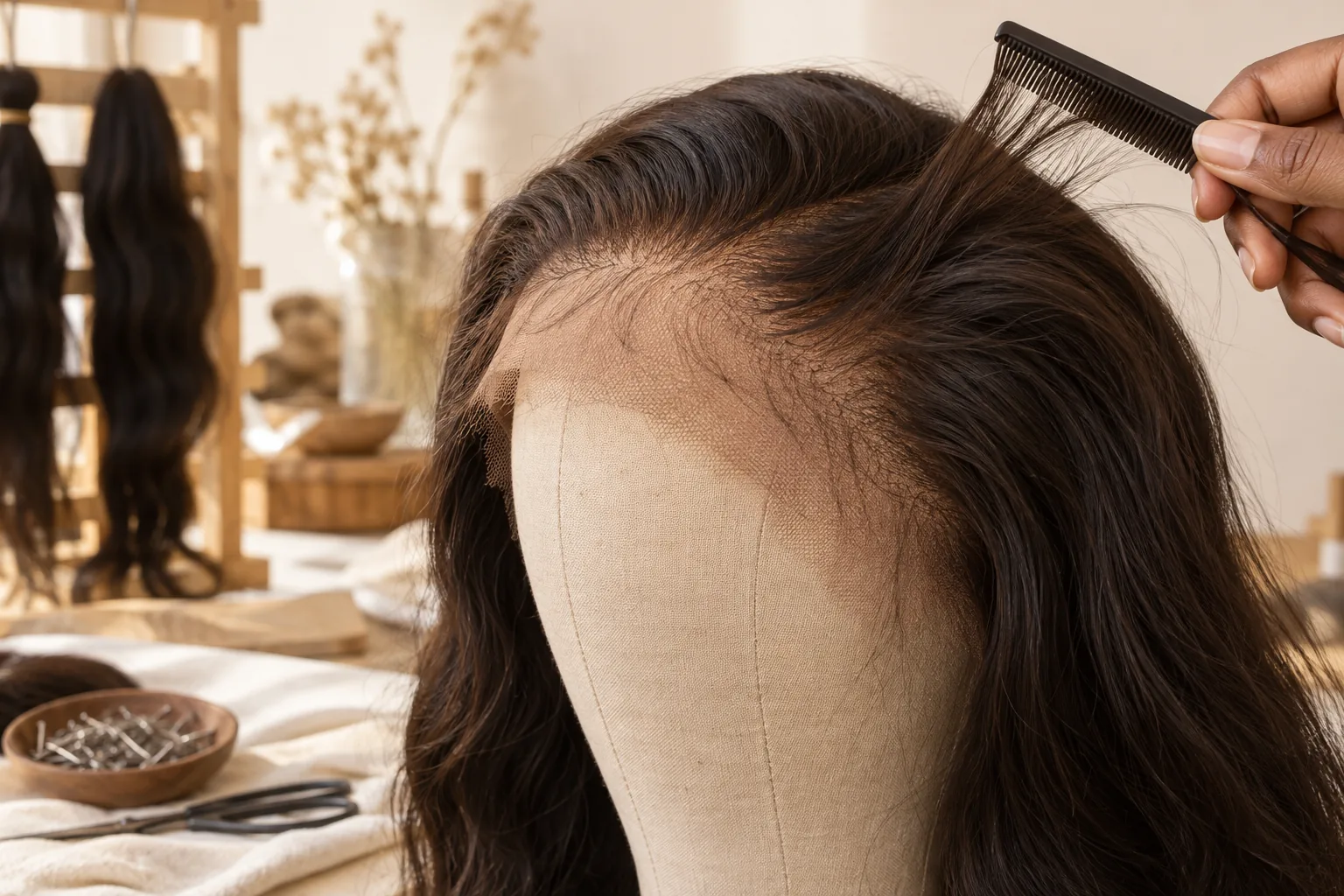
Evaluate the sample before thinning
Review the front, crown and sides under consistent lighting. Compare the sample with the approved reference, then assess it in the proposed hairstyle. If the salon thins the piece, document where and how much visual fullness changed. Cutting away hair is not the same as asking the factory to redistribute it in a repeat order.
Record changes for the next production brief
Royal Hair manages sales for systems manufactured by Phuc Thien Toupee. Use Custom Order to submit a zoned density drawing and the hairstyle reference together. Explore relevant hair system models for construction ideas, then keep an approved sample record. Specific observations such as reduce fullness behind the part are more actionable than saying the whole piece feels heavy.