
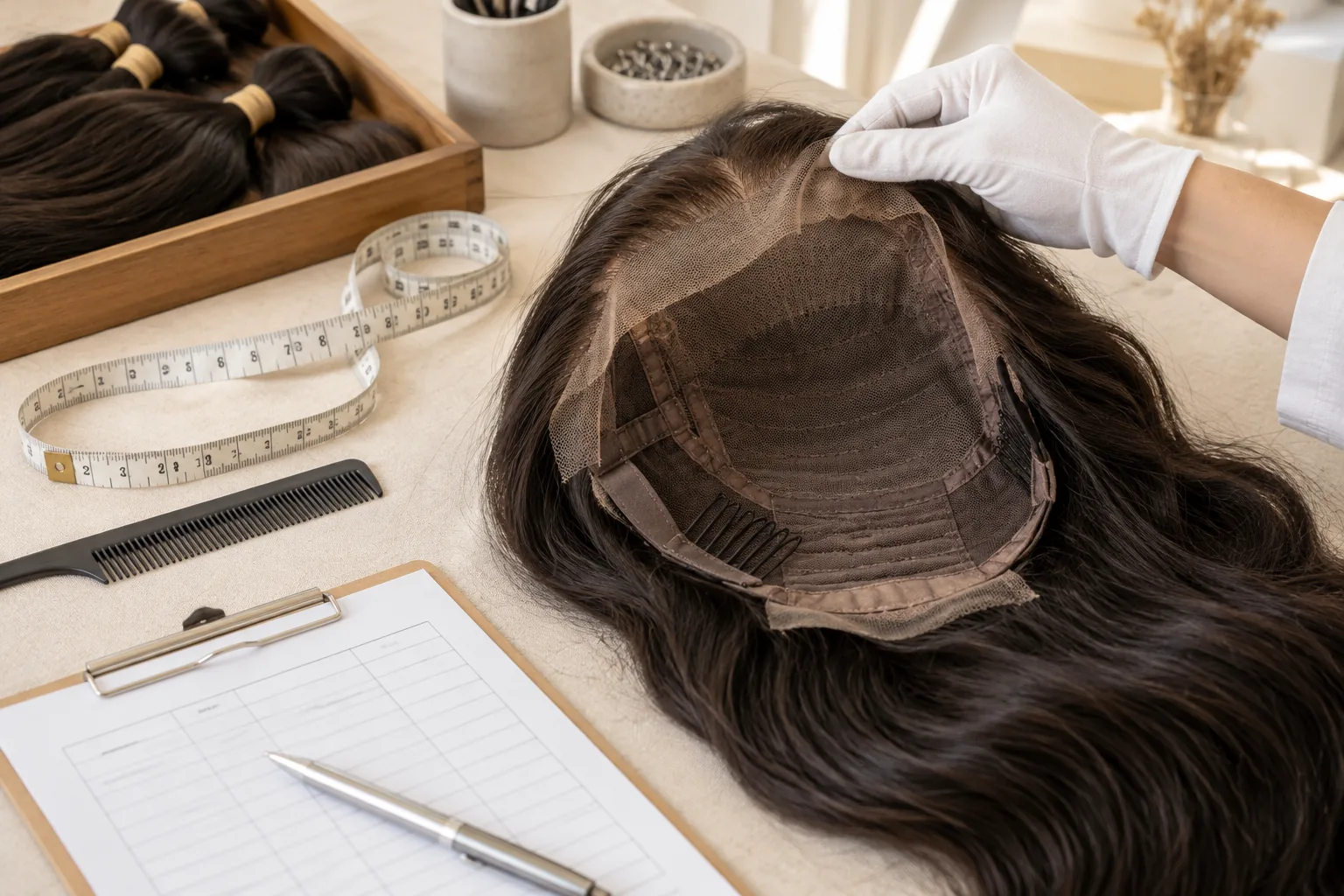
The useful question in a sample inspection is not simply whether you like the wig. It is whether the base, hair and finish match what was approved. A short checklist, consistent photographs and a clear order reference make that comparison easier. They also help the factory distinguish a production discrepancy from a new preference raised after delivery.
Begin with the approved order brief
Bring together the final drawing, measurements, shade reference, density notes and requested hairstyle. Confirm that this is the version approved for production. If instructions changed during the order, identify the accepted revision. Inspecting against an outdated message can lead to a dispute even when the factory followed the current brief.
Check the reference before the product
Write a short acceptance checklist before reviewing the sample. Include essential requirements such as the base outline, perimeter materials and clip placement. Separate these from subjective impressions about volume or styling. This makes the review more consistent, especially when several staff members assess the product at different times.
Inspect the base and hair together
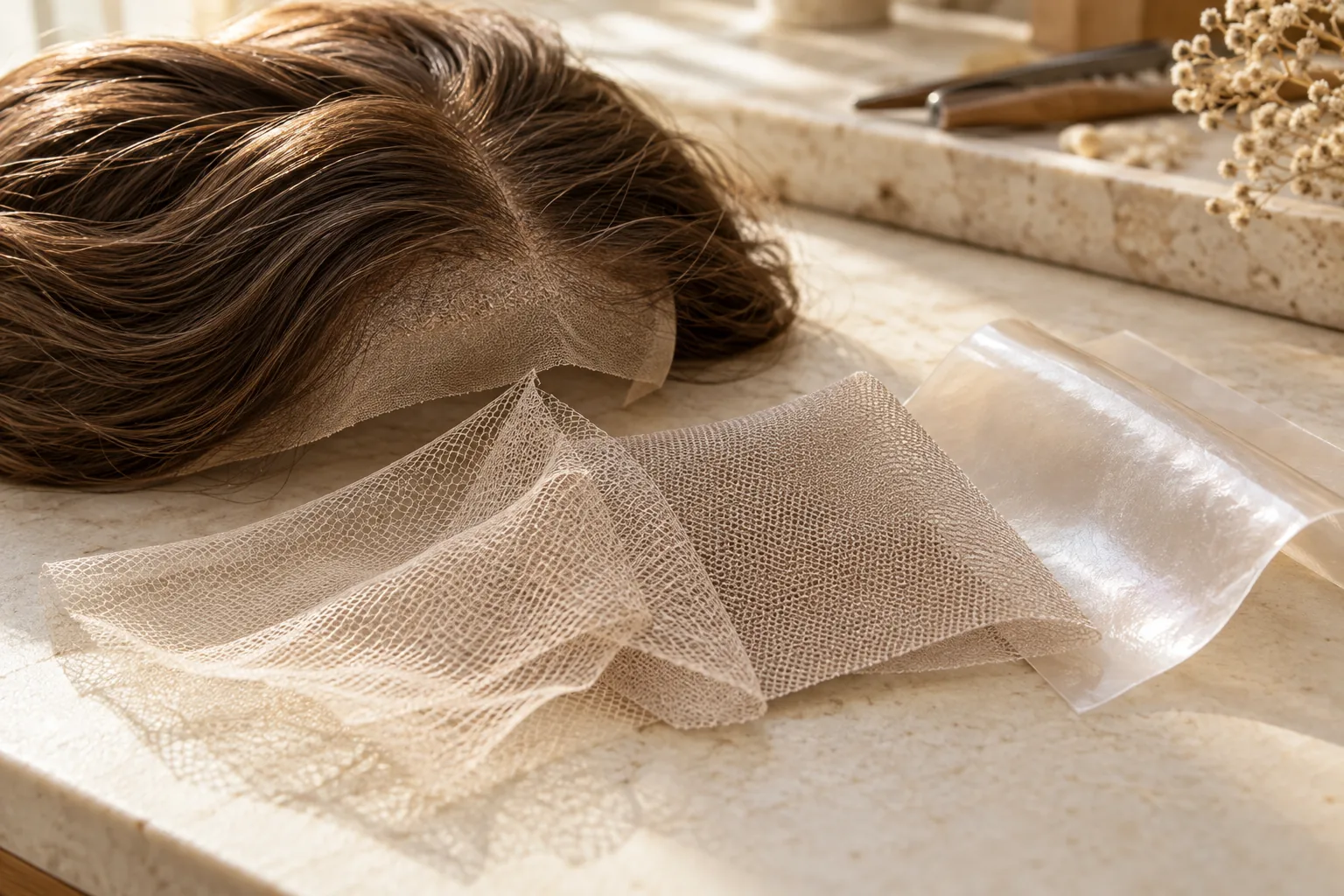
Check the base in its intended shape without stretching it. Compare length, width and perimeter strips with the approved drawing, then look for tears, open joins or a clip placed outside its marked position. View the knots and stitching under good light, noting visibly uneven areas rather than pulling to test strength. Remote photographs should include a ruler and the order code.
Use underside and top views
Then review shade, grey distribution, hair length and the direction of ventilation. Look at the front, part, crown and sides under consistent lighting. Compare colour directly with the approved reference when possible. Keep the hair naturally arranged for at least one photograph so styling does not conceal the distribution you are trying to assess.
If several samples arrive together, inspect each against its own order code. Similar colours or base sizes can be confused when products are unpacked without a record. Keep packaging and identification with the piece until the review is complete. A clear receiving process protects the accuracy of your observations and makes follow up questions easier to answer.
Document differences precisely
Make each issue report specific: the drawing shows a 10 mm side strip; the relaxed sample measures 18 mm at the marked point. Attach an overview and a close photograph so the location is unambiguous. Use only tolerances agreed for that order, not an invented universal standard. Keep the piece unaltered while the supplier reviews whether correction, clarification or another remedy is appropriate.
Describe an observable issue
Ask the supplier to review a discrepancy before cutting, colouring or altering the product. Once the salon changes the piece, assessing its original state becomes harder. Distinguish a corrective request from a new preference. If the client now wants a shorter cut or another shade, explain that separately from whether the original order was fulfilled.
Turn an accepted sample into a repeat standard
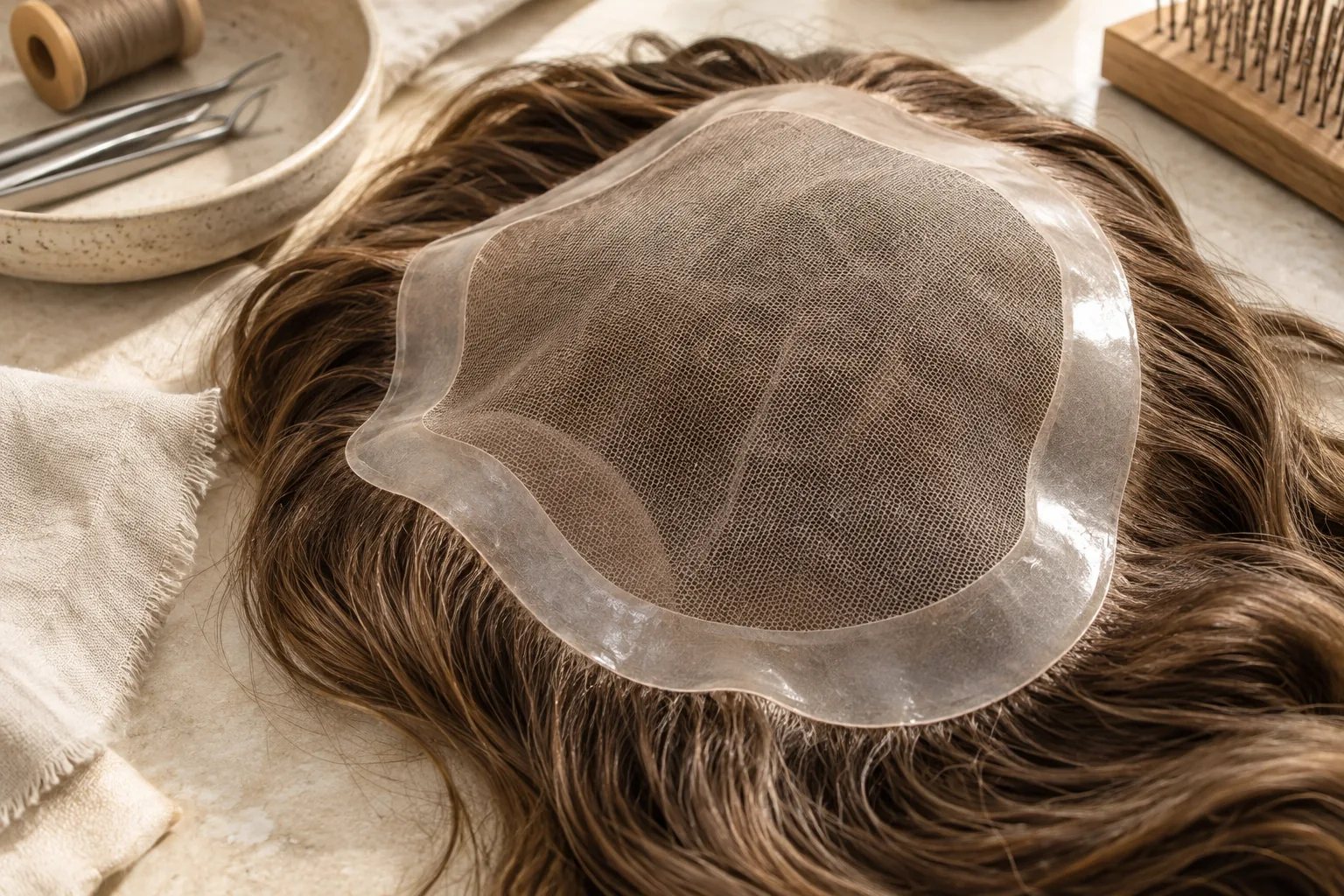
After resolving any questions, save the accepted sample details and the review photographs. Record whether the approval applies to construction only or to the complete finished design. If salon finishing changes the appearance, document that stage too. Future orders should identify which reference the factory needs to reproduce.
Keep a dated approval record
Royal Hair manages sales and Phuc Thien Toupee handles manufacturing. Use Custom Order to agree sample review expectations and confirm applicable after sales terms for the order. Browse relevant wig or hair system categories to choose a construction, then maintain a clear specification record. A careful review supports repeatability without turning a single sample into a guarantee about every future unit.