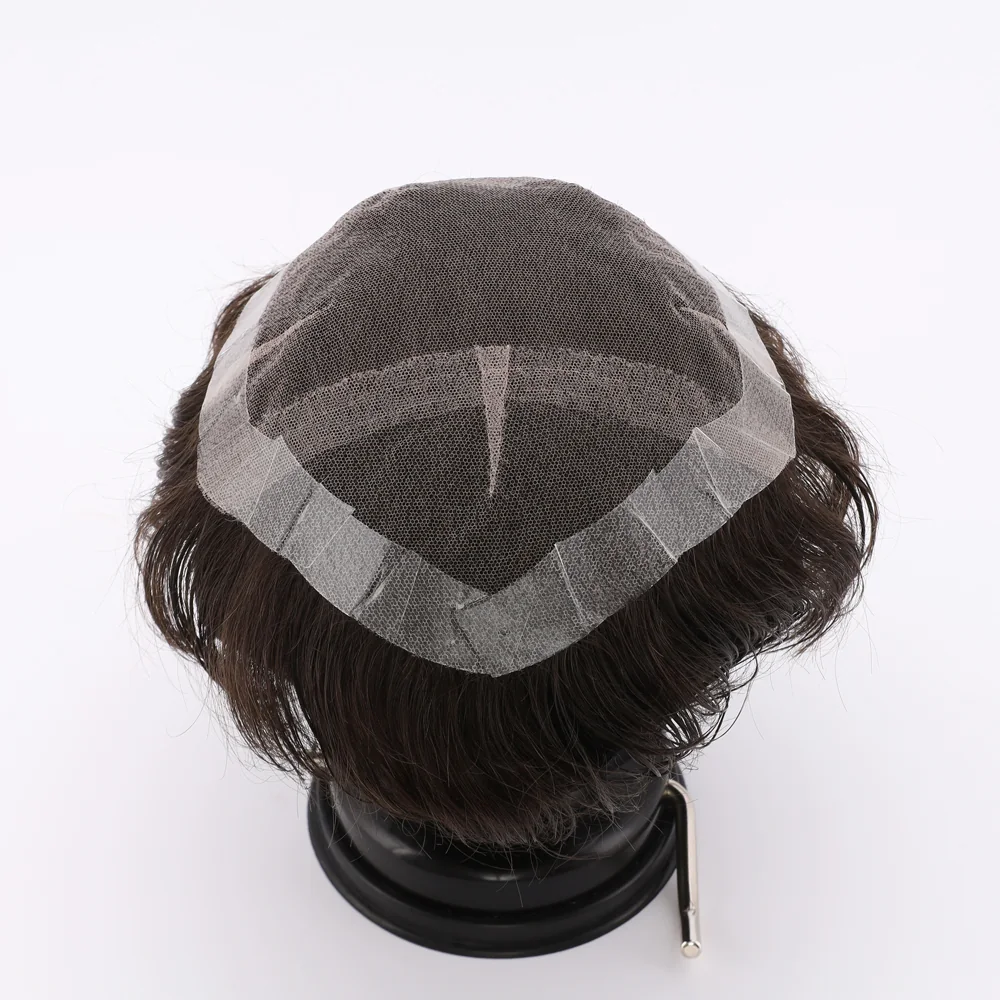
Monofilament provides a structured fine mesh for attached hair, silk top conceals attachments beneath an upper layer, and integration mesh leaves openings through which existing hair can be incorporated. Their purposes overlap, but they are not interchangeable bases. Choose by the coverage required, the visible part and the wearer's remaining hair. Then specify the front and attachment areas, which may use different materials from the centre.
Define the role of the centre material
A mono centre can support hand-tied hair while offering more structure than very fine lace. The exact mesh, layers and perimeter still matter: mono does not automatically mean a complete full-mono base. Examine the open part and the underside, then identify any lace front or poly strip separately. A similar-looking hairstyle can conceal a substantially different construction underneath.
Look at structure as well as appearance
Inspect a ventilated sample and an underside view. Record how the centre meets the front, sides and back. The material should be discussed with the intended parting and coverage, because those choices affect what the client sees. Keep the accepted sample reference available when reviewing a future order or proposed substitute.
Understand a layered scalp section
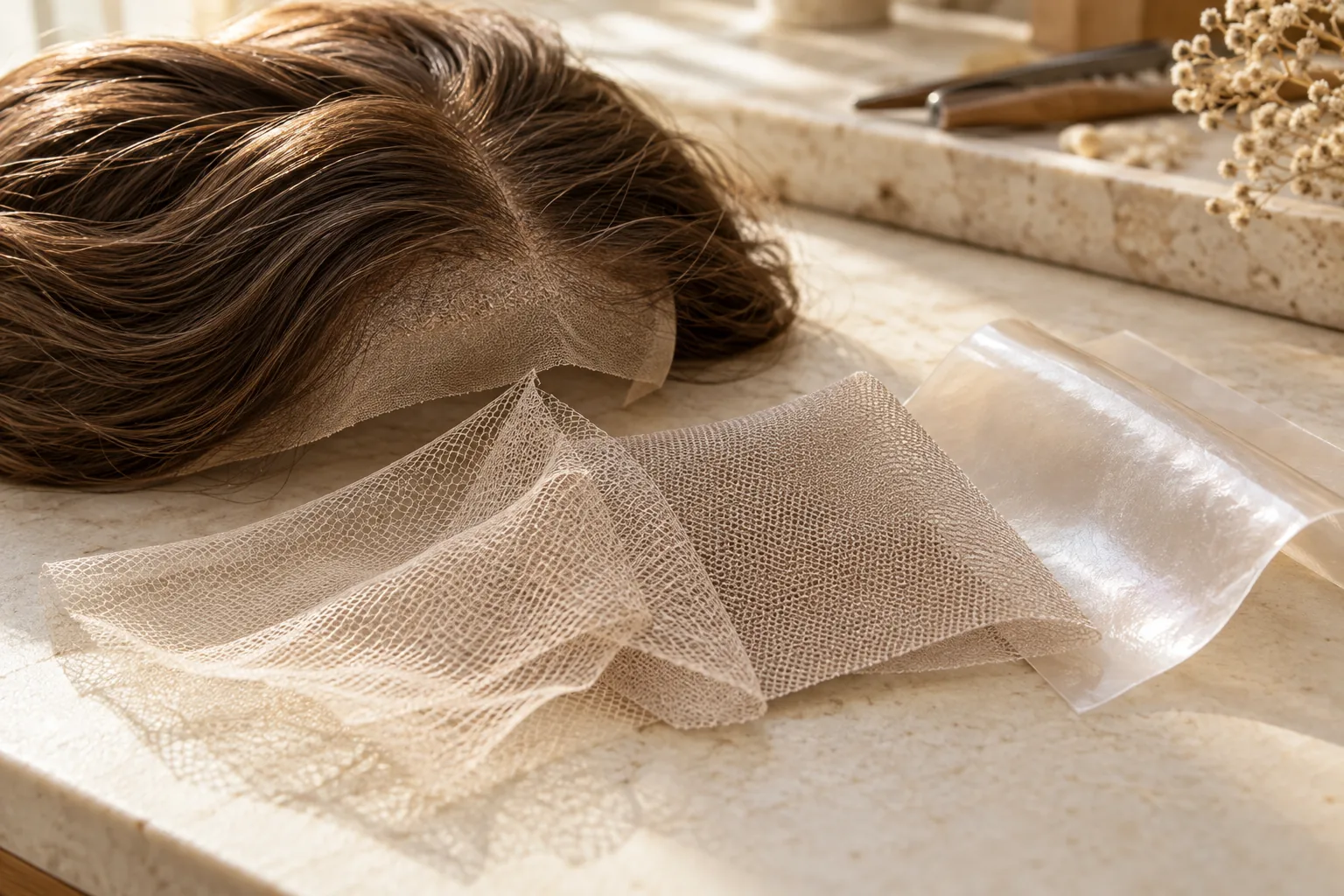
A silk top design can conceal attachments beneath an upper surface, creating a different construction from ordinary exposed knotted mesh. Ask for a diagram showing the layers and the area they cover. Confirm the actual textile reference; a trade description should not automatically be interpreted as a guarantee about fibre composition.
Clarify what silk top means in the order
The upper scalp area and the front edge may use different materials. Mark their boundary and explain whether the wearer wants a fixed or flexible part. Request photographs showing the hair separated in the intended location. A convincing top view does not establish how the surrounding edge will look or how the piece will be fitted.
Treat open integration mesh as a different brief
Integration mesh is designed to blend with existing hair through openings rather than simply cover an area with a closed scalp section. Hole size and position affect how that hair is incorporated. It is not automatically suitable where insufficient growing hair remains to support the proposed fitting. Have the stylist assess the client before ordering a net solely because it looks breathable.
Explain how growing hair will be incorporated
Label the open area and any reinforced perimeter on the drawing. Include planned clip positions or other fitting requirements where relevant. Ask the manufacturer to confirm the proposed ventilation for that mesh. Keep the client’s hair condition and professional fitting assessment as separate references rather than choosing an open net solely from its appearance.
Compare complete samples before approving materials
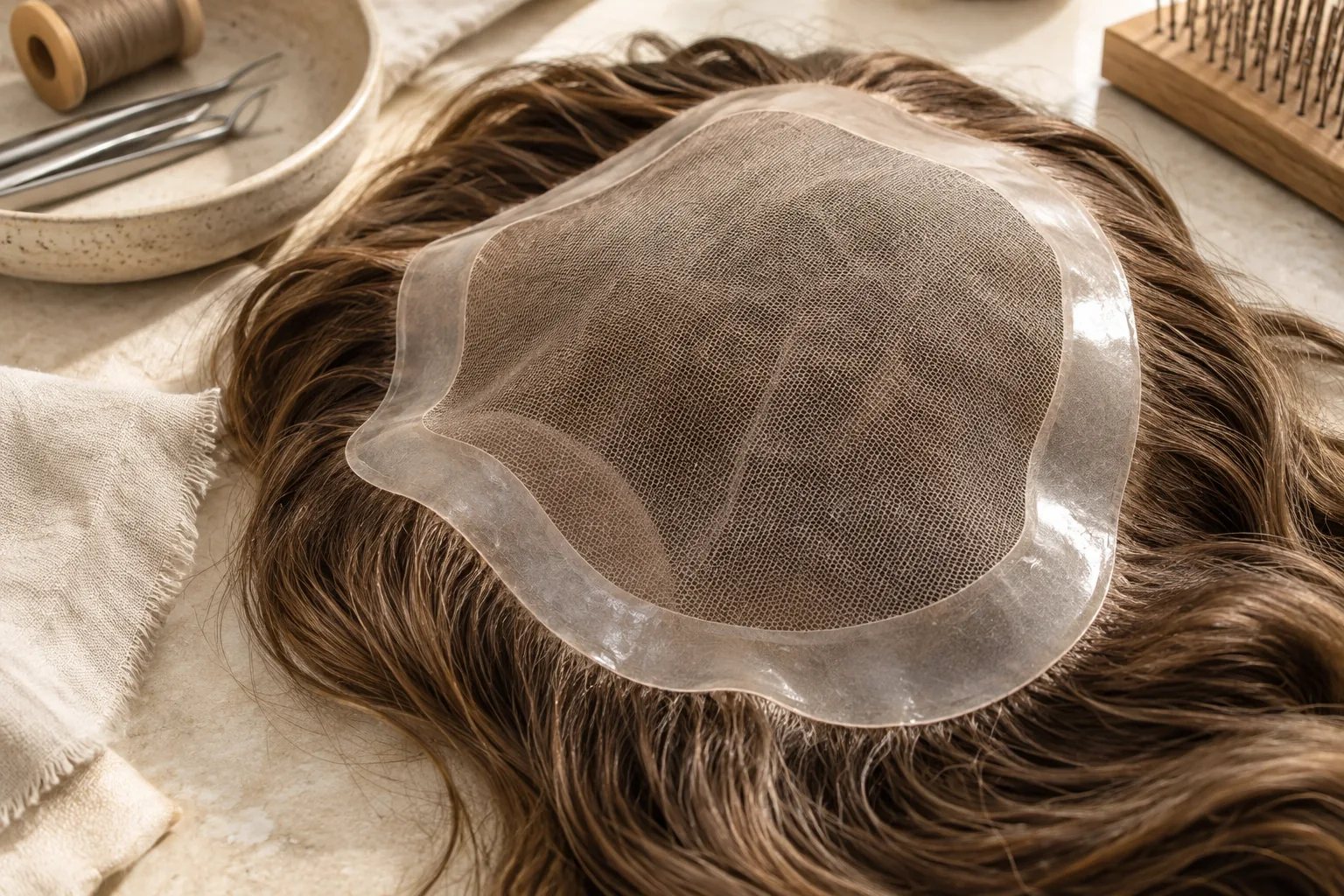
Review each construction in the form it will actually be supplied. Compare dimensions, material transitions, the visible part and perimeter arrangement. If one sample uses a layered centre and another uses plain mesh, note that difference before judging their weight or root appearance. Similar styling can conceal substantial differences in the underside.
Save the underside and fitting references
Discuss maintenance and handling for the chosen design with the supplier and stylist. Record any adjustments made during the trial fitting and whether they should become factory requirements. A repeat order should name the exact centre reference, layers and attachment zones, rather than asking for the same scalp effect without retaining its construction details.
Compare the parting view, underside layers and planned attachment on the same sample. A silk scalp effect may suit an exposed part, mono may suit a more structured centre, and integration serves a different blending task. Send that fitting brief with the Royal Hair enquiry. Choosing the centre first and discovering the attachment requirements later can lead to an unsuitable finished piece.