
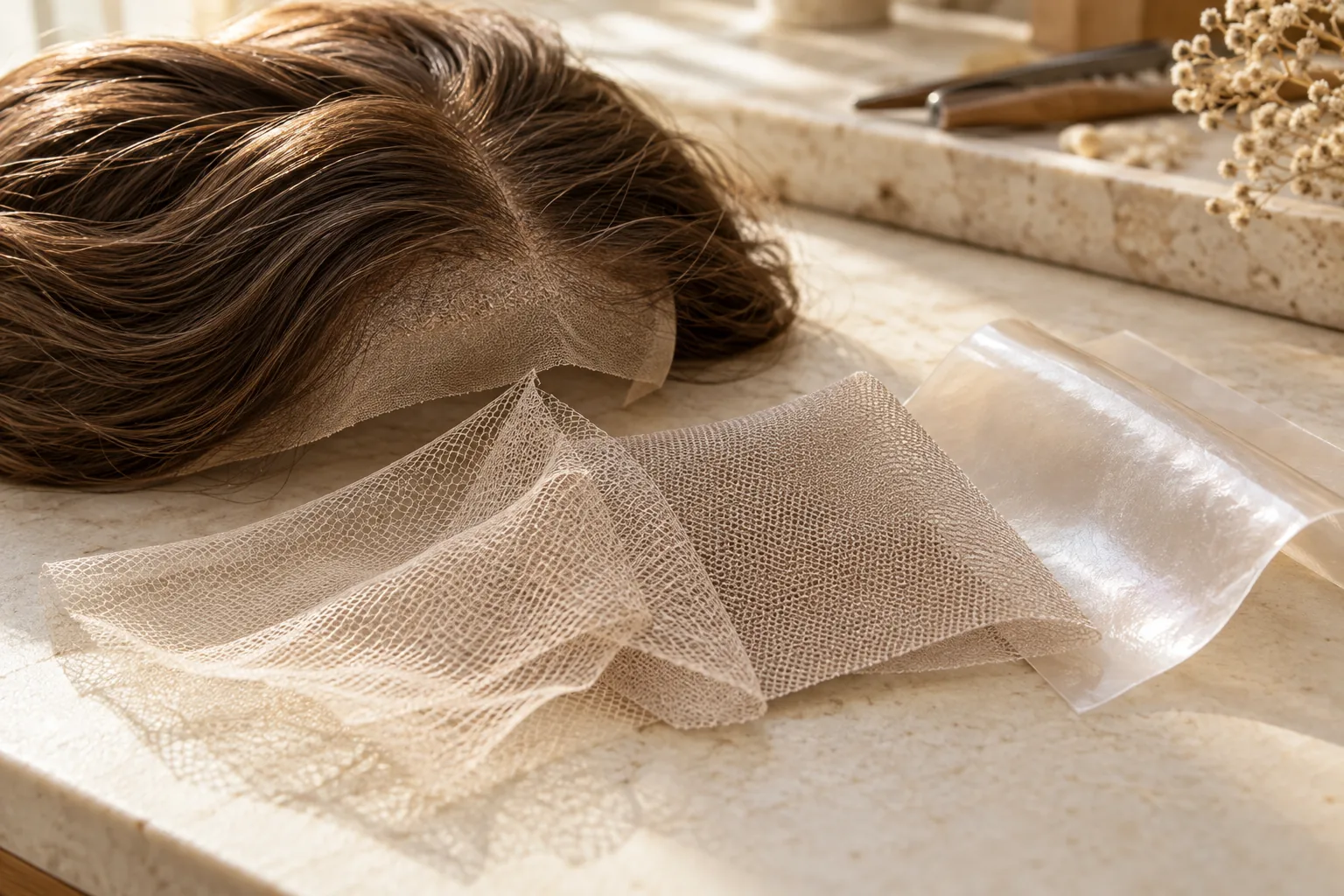
French lace generally puts more emphasis on handling strength, while Swiss lace is typically finer and more delicate. HD lace is commonly sold for very low material visibility, but the name alone does not define a consistent mesh specification. These are trade-offs, not a simple good-better-best ranking. Inspect the exact material with the intended hair colour, density and attachment plan before choosing an exposed-front construction.
Identify the actual mesh reference
French lace can be a practical starting point where repeated handling matters. Swiss lace may be preferred where a finer edge takes priority and the wearer accepts more careful maintenance. HD should be assessed as an actual swatch, not an automatic upgrade. Suppliers use these names differently, so retain the accepted reference instead of relying on a universal thickness or lifespan chart.
Use the name alongside a physical sample
Compare material swatches against the intended background and record the accepted sample. Note its colour and where it will appear on the base. A loose piece of mesh can communicate the material, while a ventilated sample shows how it works with hair. Keep both references if your purchasing team needs to compare repeat production.
Review colour and visibility in context
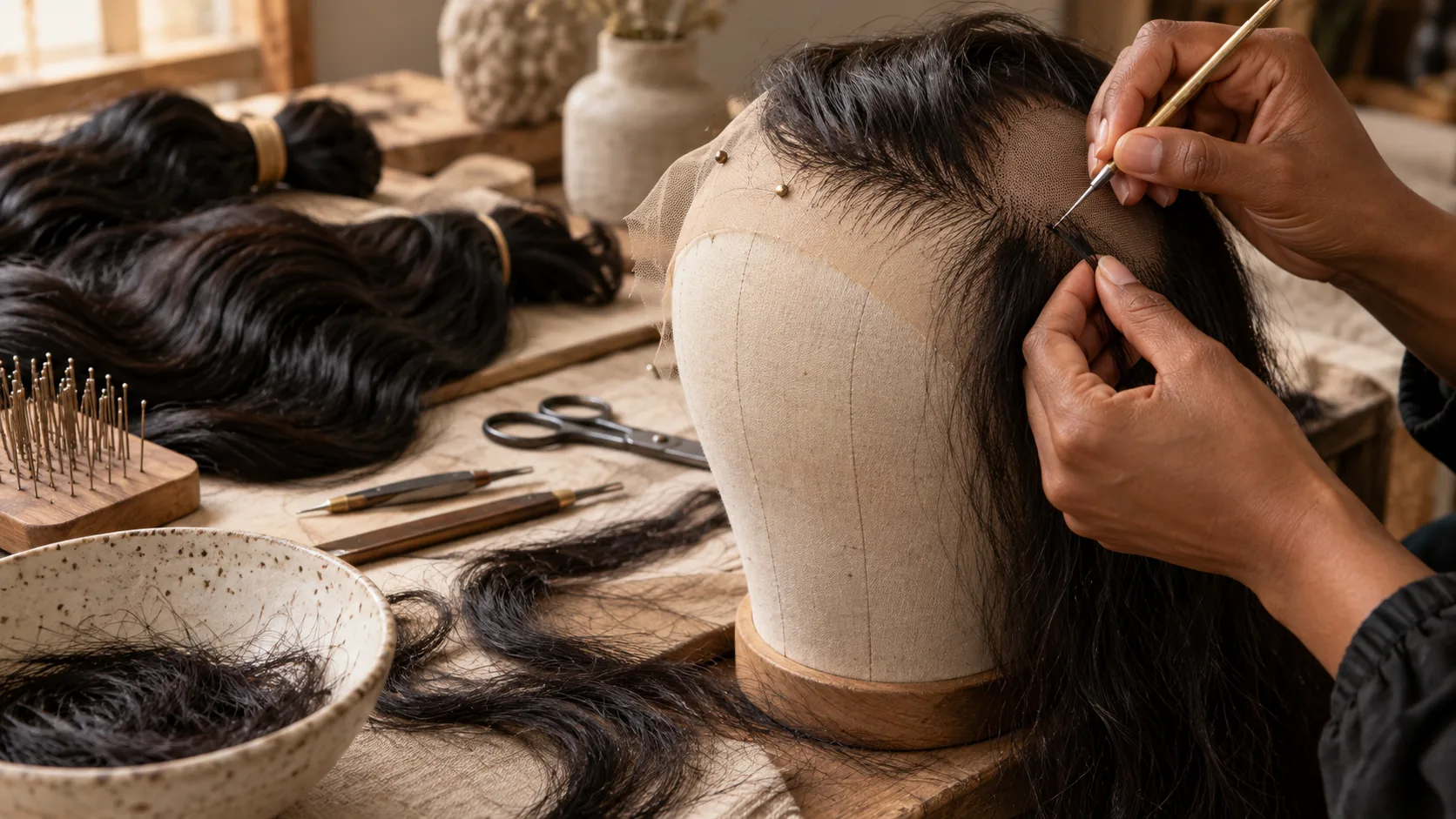
The impression of the mesh depends on what sits beneath it and how much hair covers it. Inspect the intended front and parting area with representative hair colour and density. Ask for plain photographs without filters, and compare under more than one ordinary lighting condition. A swatch held against white paper is not a complete fitting reference.
Inspect mesh with the proposed hair
Transparent usually describes a lace colour or visual finish; it is not interchangeable with the term HD. A fine mesh in an unsuitable tone can remain visible, while the same mesh can read differently over different backgrounds. Record lace colour separately from hair colour and compare an attached-hair sample rather than a loose swatch held only against white paper.
Specify the front, centre and perimeter separately
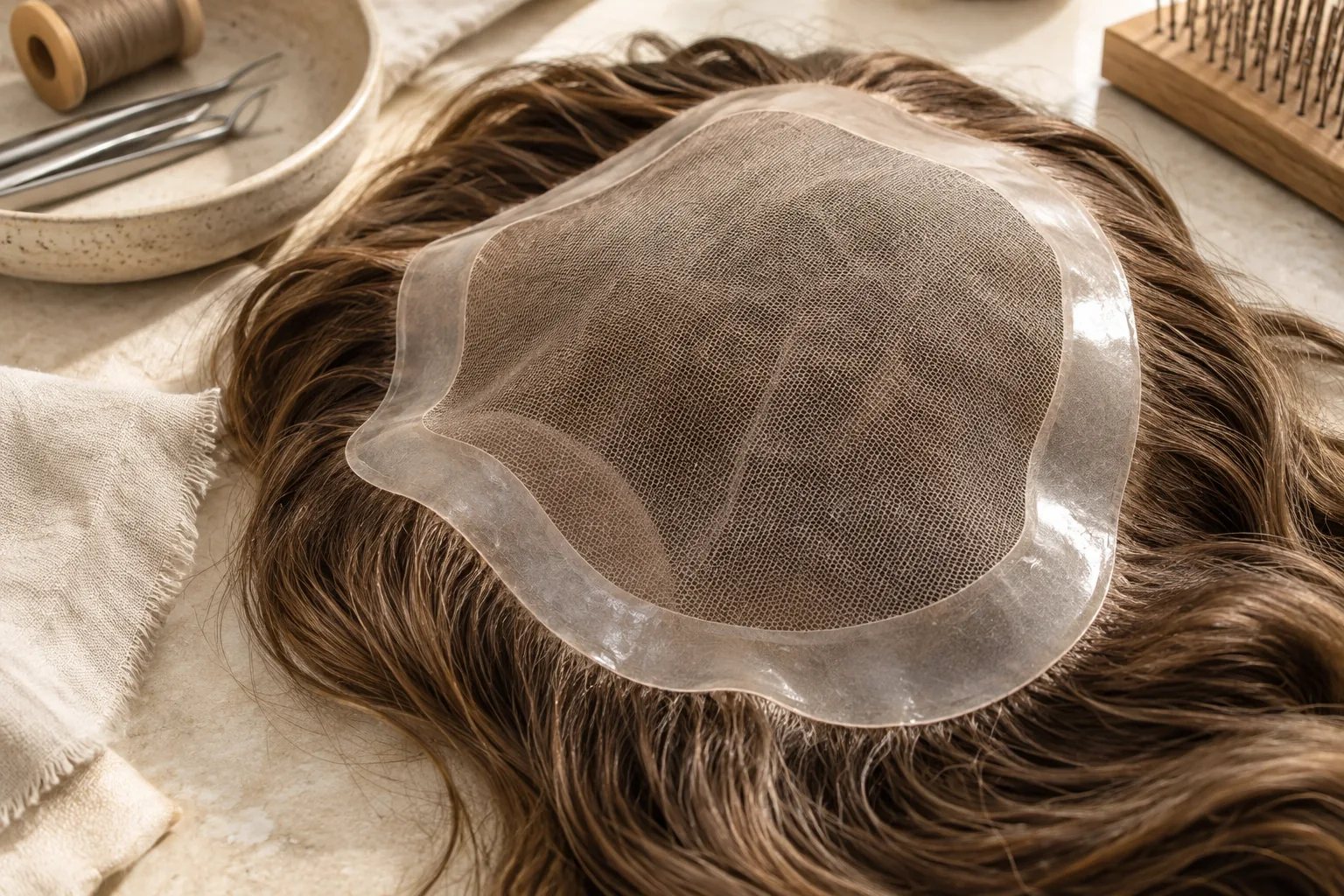
A full mesh base and a mesh front with another centre are different constructions. Draw each zone and label any polyurethane strip or other reinforcement. State its width and position in the agreed units. A phrase such as Swiss lace system may leave these details unspecified even when they matter greatly to the fitting routine.
Describe reinforcements and transitions
Explain whether the front will be exposed and how the piece will be attached. Review the edge finish with the stylist and manufacturer before approving the sample. If unventilated material is required for fitting, specify that separately. Do not confuse extra material at delivery with an error unless the agreed finishing instructions say otherwise.
Match mesh to ventilation and density
The selected mesh must work with the knotting plan, hair length and requested loading. Ask the factory to confirm the combination rather than choosing the most delicate-looking option independently. Where a stronger perimeter or another centre is suggested, request a diagram explaining the transition. Compare the proposal against the client’s hairstyle and attachment needs.
Approve the finished construction
Inspect the sample’s front, part and underside before cutting. Check that material boundaries follow the agreed drawing and that the root appearance suits the intended styling. Record any local adjustment precisely. A problem at one transition should not automatically lead to replacing every material in the design.
Before approval, check the front edge for fraying, inspect the part with hair gently separated and compare reinforcement widths with the drawing. Do not stretch the lace to make the outline match. If one zone needs more handling strength, discuss a local reinforcement or hybrid design through Custom Order rather than replacing every area with a heavier mesh by default.