
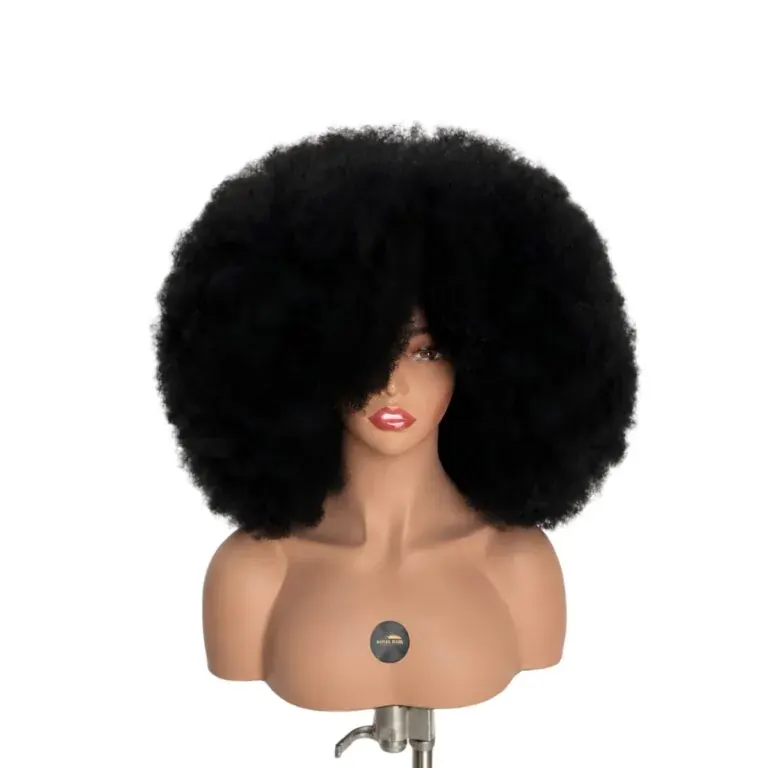
A high-density wig needs a base that can support its hair loading and the way it will be worn. Adding hair increases coverage, but long lengths, curl and a larger cap can also add weight and volume. Start by identifying the desired silhouette. A full-looking body does not require the same dense front edge, and the highest percentage on an order form is not automatically the best construction.
Define the fullness you actually want
Ask the wearer to explain where fullness matters: the crown, a long layered body, the sides or the entire cap. A photograph may show volume created partly by curl or styling. Confirm whether the same impression is expected with straight hair and minimal products. Record the finished length alongside the factory length.
Separate body volume from root coverage
Describe local coverage as well as overall density. A full wig may still need a softer front transition or a clear parting area. Discuss those zones individually before choosing a heavy label. If the order uses a percentage, ask Royal Hair to confirm its meaning for the particular product and construction.
Review the base before adding hair
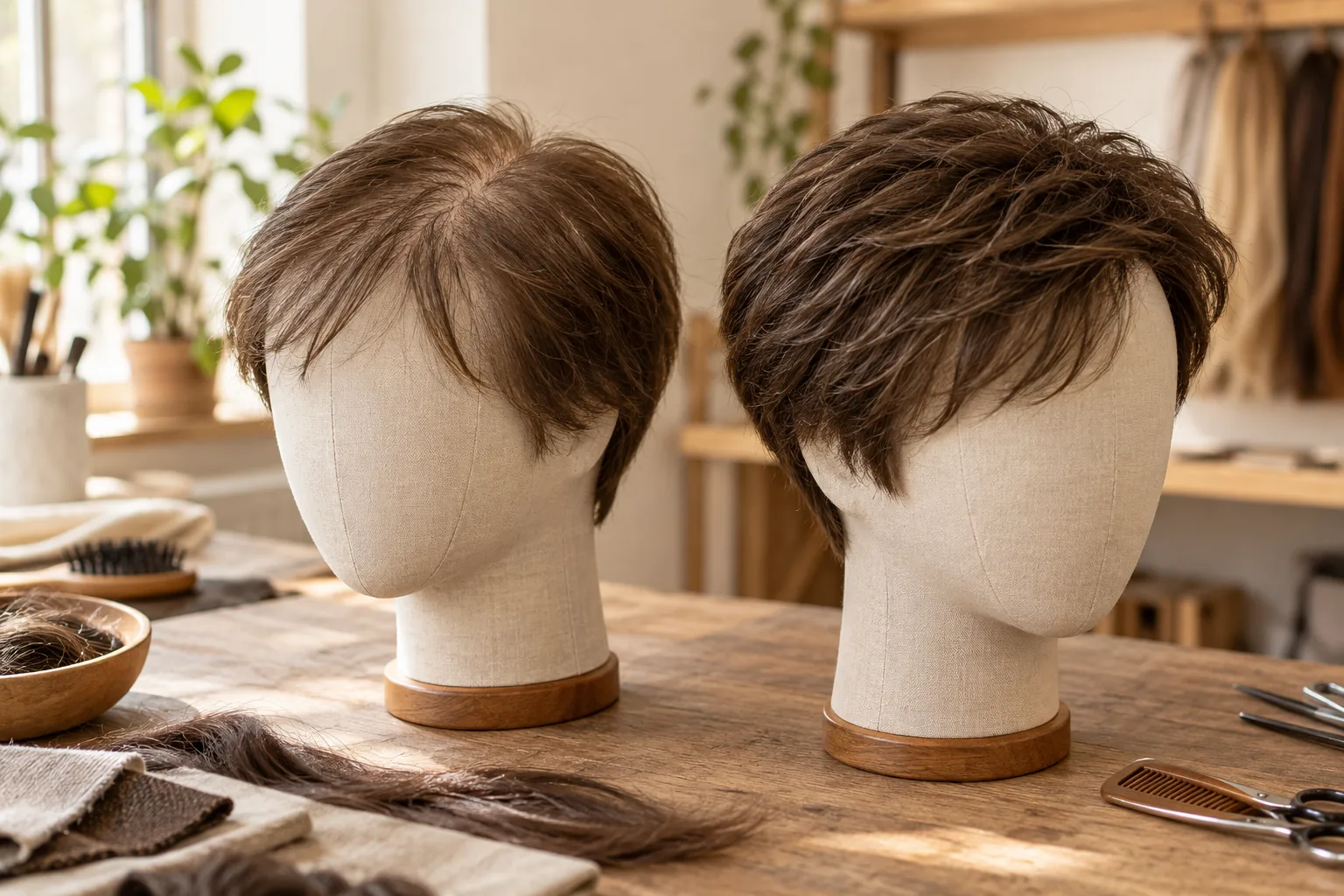
Thin skin should not be treated as a platform for unlimited density. Royal Hair's 0.04–0.06 mm skin options are limited to 110% or below, subject to confirmation for the complete design. The current quoted skin range is 0.04–0.12 mm; do not infer availability of a thinner grade from another supplier's chart. Higher hair loading may require a different construction rather than an exception to the thin-skin limit.
Confirm a compatible material combination
An underside diagram should identify the centre, perimeter and any lace front or scalp section. Mark material transitions and the areas used for attachment. For custom pieces, confirm that the base shape follows the approved template. A stronger-looking perimeter does not establish how the entire centre will handle the selected hair loading.
Compare weight and handling in context
Compare samples with the same cap dimensions, length and texture before judging density by weight. A long curly wig can create a much larger silhouette than a short straight wig at a similar local coverage. Record both the unstyled root view and the finished shape. Otherwise a request for 180% may be trying to solve a styling issue rather than a shortage of hair.
Keep the sample dimensions consistent
Review the practical fitting arrangement with the stylist. Show where clips, tape or other attachment areas are planned and confirm suitable reinforcement with the supplier. Evaluate the sample during the intended hairstyle, rather than lifting it by the hair to imitate a strength test. Ordinary handling provides more relevant information for your salon.
Approve the sample before scaling production
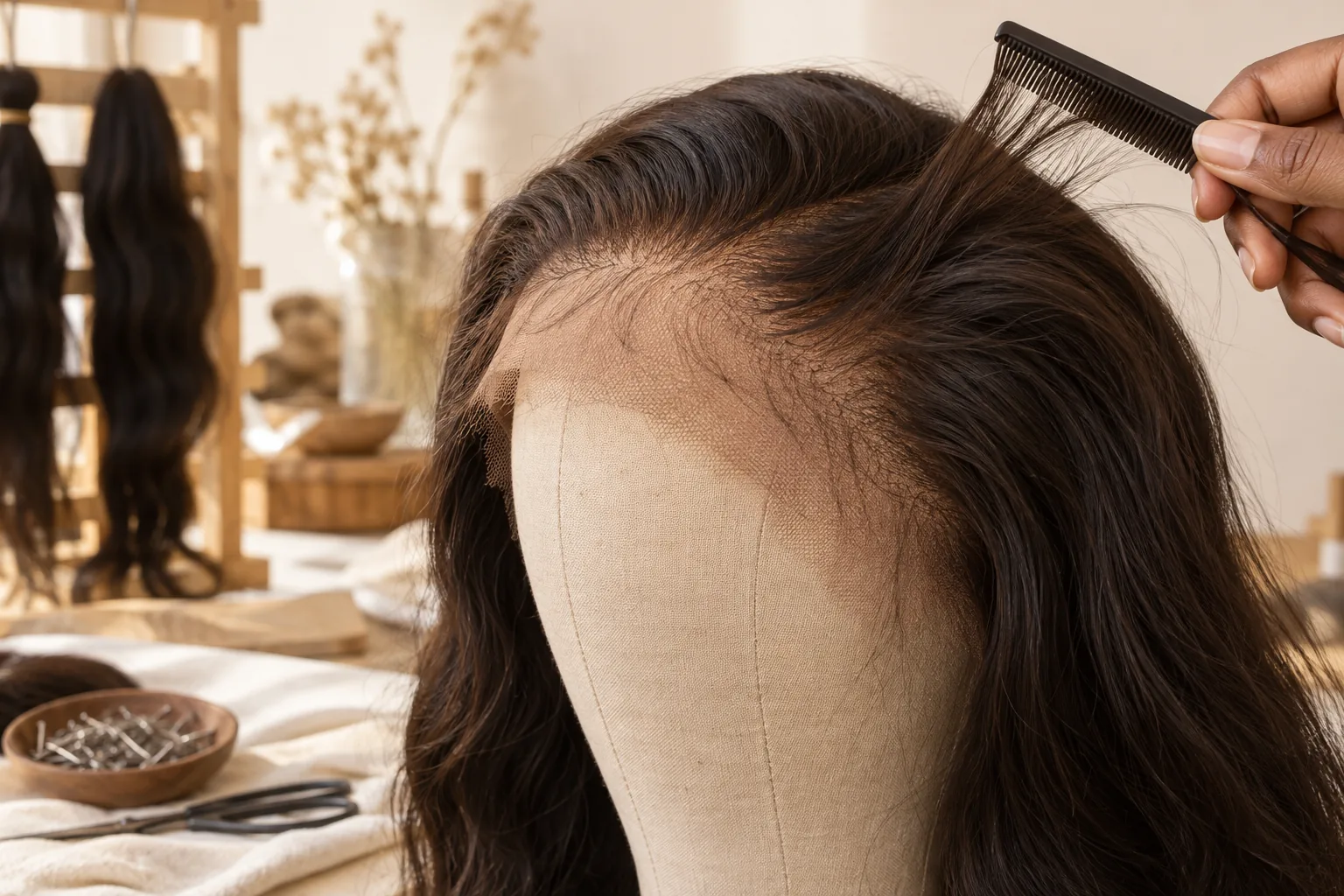
Inspect coverage at the front, part, crown and back. Look for an unexpected dense band or a visible transition that differs from the brief. State whether a requested revision concerns the whole cap or one area. Photograph the hair both naturally arranged and separated so the factory can understand the observation.
Document density and finishing separately
Keep factory density and salon finishing as separate records. A layered cut, curl setting or local thinning can change the impression substantially. If the salon adjusts a trial wig, include that finished reference in the next enquiry. Otherwise a repeat of the original specification may not reproduce the look you approved after styling.
For a quotation, separate the fuller body from the graduated front and state the finished length. If the requested combination is incompatible, ask for a revised base drawing and weight expectation before paying for production. Review that proposal through the human hair wig or custom system category. A suitable sample should demonstrate manageable coverage, not simply satisfy the largest number on the form.