
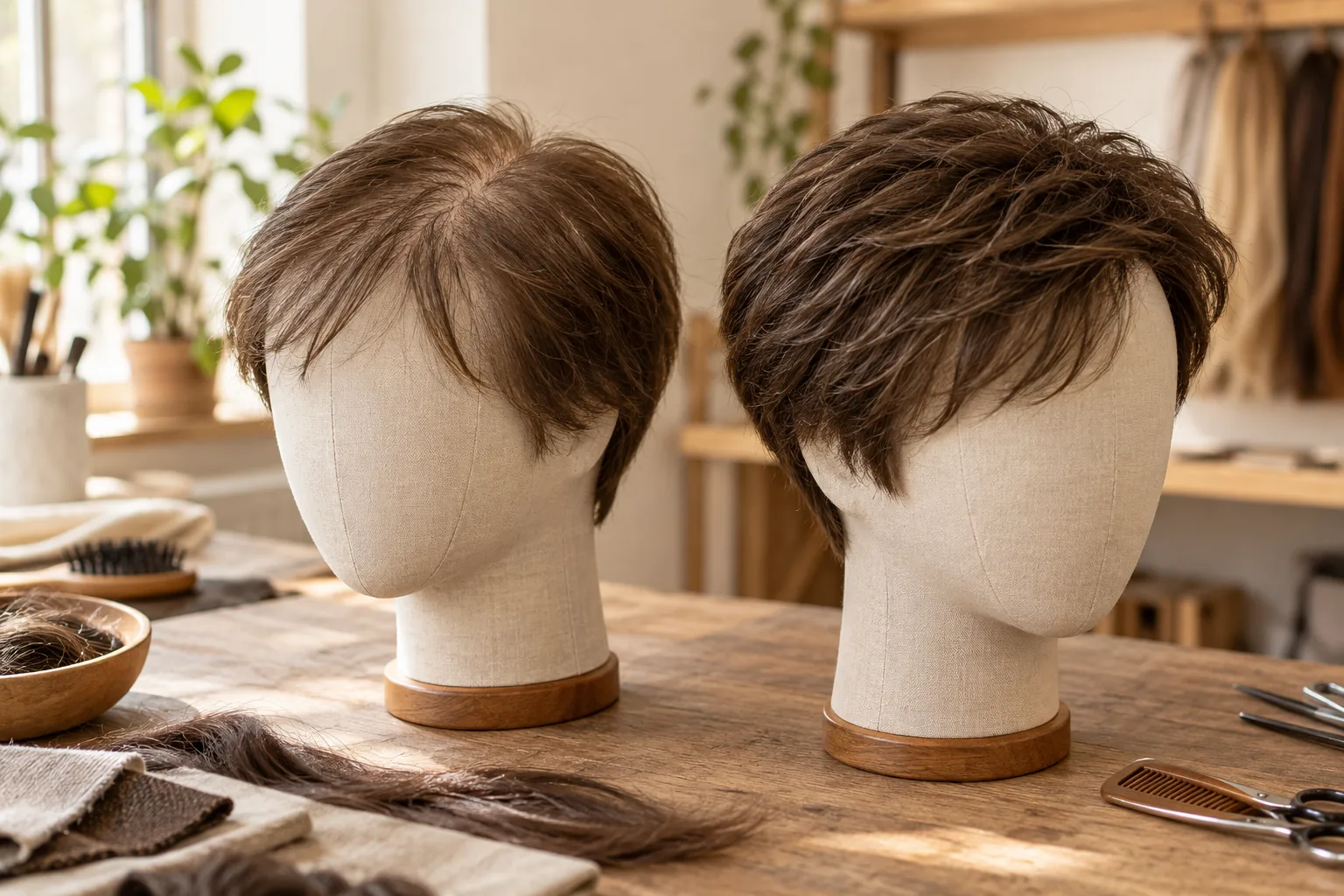
Hair density describes how much hair is distributed over the base, not how thick an individual strand is. Percentages such as 80%, 100%, 130%, 150% and 200% are useful ordering references within a supplier's range, but they are not a universal strand-count standard. Choose a visual level of coverage first, then record the corresponding percentage, base size and front-to-body distribution for the factory making your piece.
Treat percentages as supplier references
As a broad reading guide, 80–100% usually sits towards lighter coverage, 120–130% towards fuller everyday volume, and 150–200% towards heavier looks in ranges that offer them. The labels overlap between suppliers and between men's systems and full wigs. These are comparison brackets, not Royal Hair's guaranteed density chart; a matching physical sample is the deciding reference.
Request the matching density scale
Do not copy a density choice from another supplier without comparison. Send your reference piece or request samples from the factory making the order. Keep the accepted percentage and corresponding description together in the brief. This provides a shared vocabulary without suggesting that the number guarantees identical results across different manufacturers.
Compare fullness under controlled conditions
Examine pieces with comparable dimensions, hair length, colour and texture. Brush them in the same direction and photograph them against the same background. A curled long wig and a short straight system are unsuitable for judging whether two percentages mean the same thing. Lighting and styling products should also be similar.
Hold length and styling constant
Consider two otherwise comparable pieces: one has six-inch hair and the other has twelve-inch hair. The longer unit can weigh more without having more attachment points per area. Curl and strand diameter also change visible fullness. Record grams as supporting information, but judge the open part, scalp visibility and border blend before deciding that a heavier sample has the right density.
Separate front and body requirements
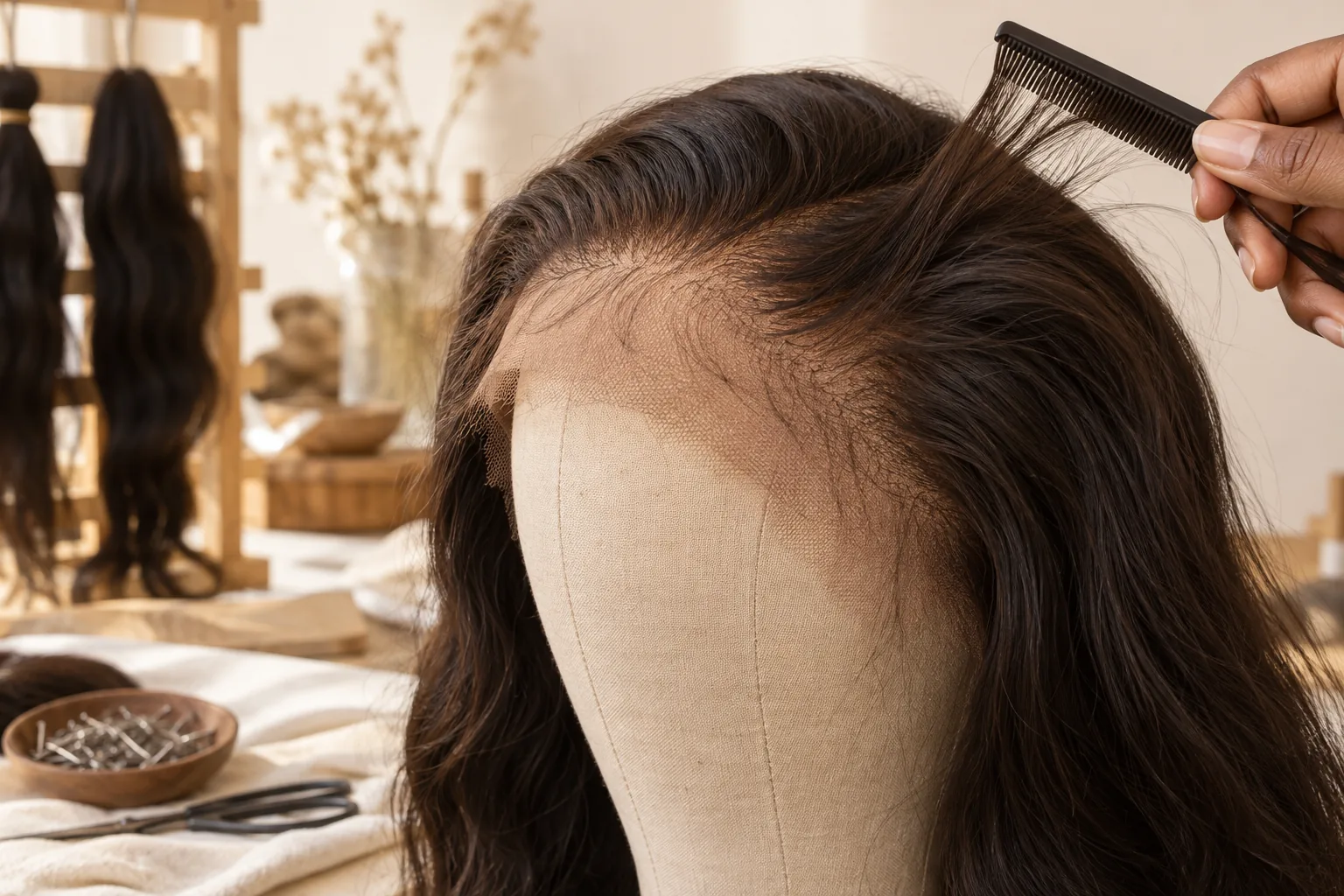
One percentage for the whole system can hide important design choices. The front, top, crown and back may require different visual coverage. Describe where a lighter transition should begin and where fuller coverage is desired. For an exposed hairline, ask how the first rows will relate to the main body.
Specify the transition between zones
The wearer’s existing side hair is a useful reference for partial systems. Discuss the haircut and where the replacement section meets growing hair. A full wig follows a different blending brief because it covers a larger area. Record those differences rather than treating every hair product as the same density problem.
Approve density with the construction
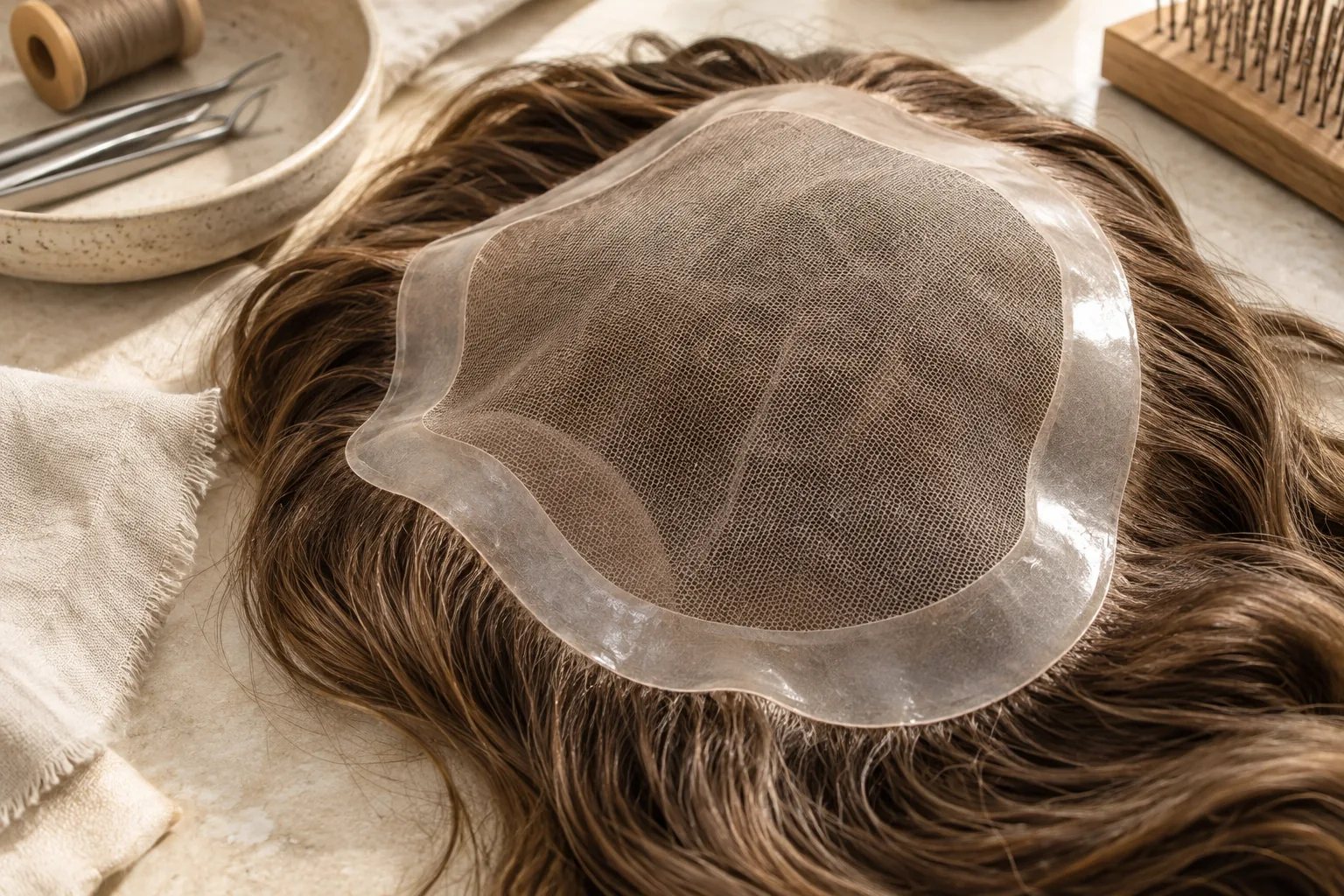
Confirm that the material and ventilation support the requested hair loading before increasing density. Thin skin and delicate mesh require particular discussion when combined with long hair. More coverage may require a revised base or attachment plan. Ask the sales team to identify limitations before the production specification is approved.
Avoid increasing coverage in isolation
Inspect the sample after the agreed factory finish and during the salon’s normal styling routine. Note whether an adjustment concerns overall fullness, one zone or root direction. Those observations lead to a more useful correction than requesting a large percentage change without identifying the location or the desired visual difference.
A useful repeat-order note names the accepted sample and separates front, top, crown and back. If only the front looks too solid, mark that band rather than reducing every zone from 130% to 100%. Keep before-and-after styling photographs so the next order reproduces the chosen coverage, not just the number printed on the previous invoice.