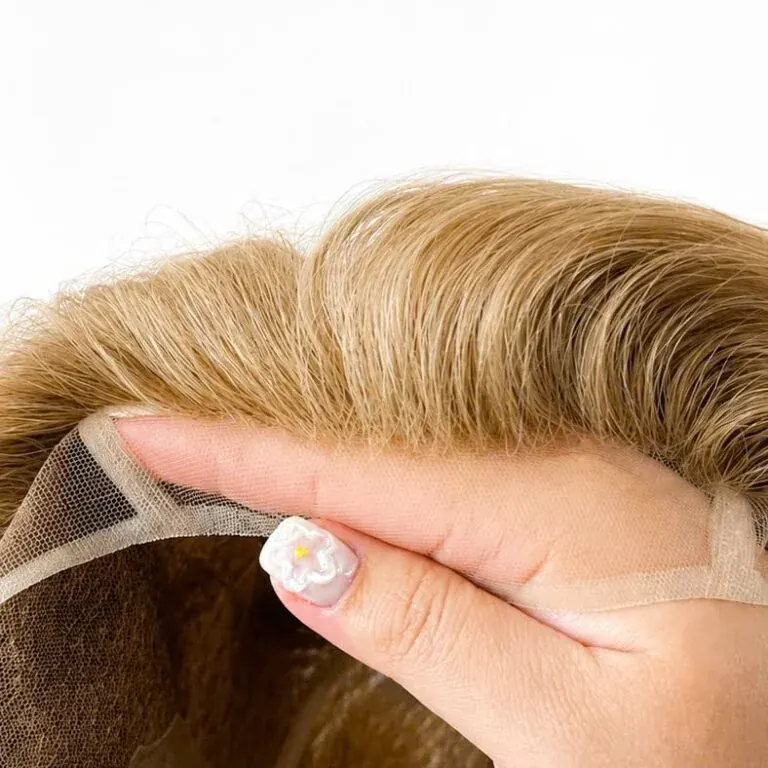
Bleached knots are lightened to reduce visible contrast; unbleached knots have not received that knot-lightening treatment; concealed knots sit beneath another layer, as in a silk top. They are three different ways of handling root appearance, not three quality grades. The best choice depends on what the hairstyle exposes and the base structure. A covered crown and an open front do not necessarily need the same finish.
Start with visibility in the intended hairstyle
An exposed hairline and an open part draw attention to the root area. A forward style can cover more of the front, but the client may still move the hair during ordinary use. Explain the usual styling and any alternatives. Mark the visible zones rather than requesting the same finish automatically across the whole cap.
Locate the front and parting areas
Ask the wearer what appearance they expect under everyday lighting. A heavily styled studio photograph can set an unrealistic reference if the client prefers minimal styling. Provide a plain close-up example and discuss it with the supplier. Keep the preferred root appearance separate from the overall colour and density choices.
Understand the role of unbleached and bleached knots
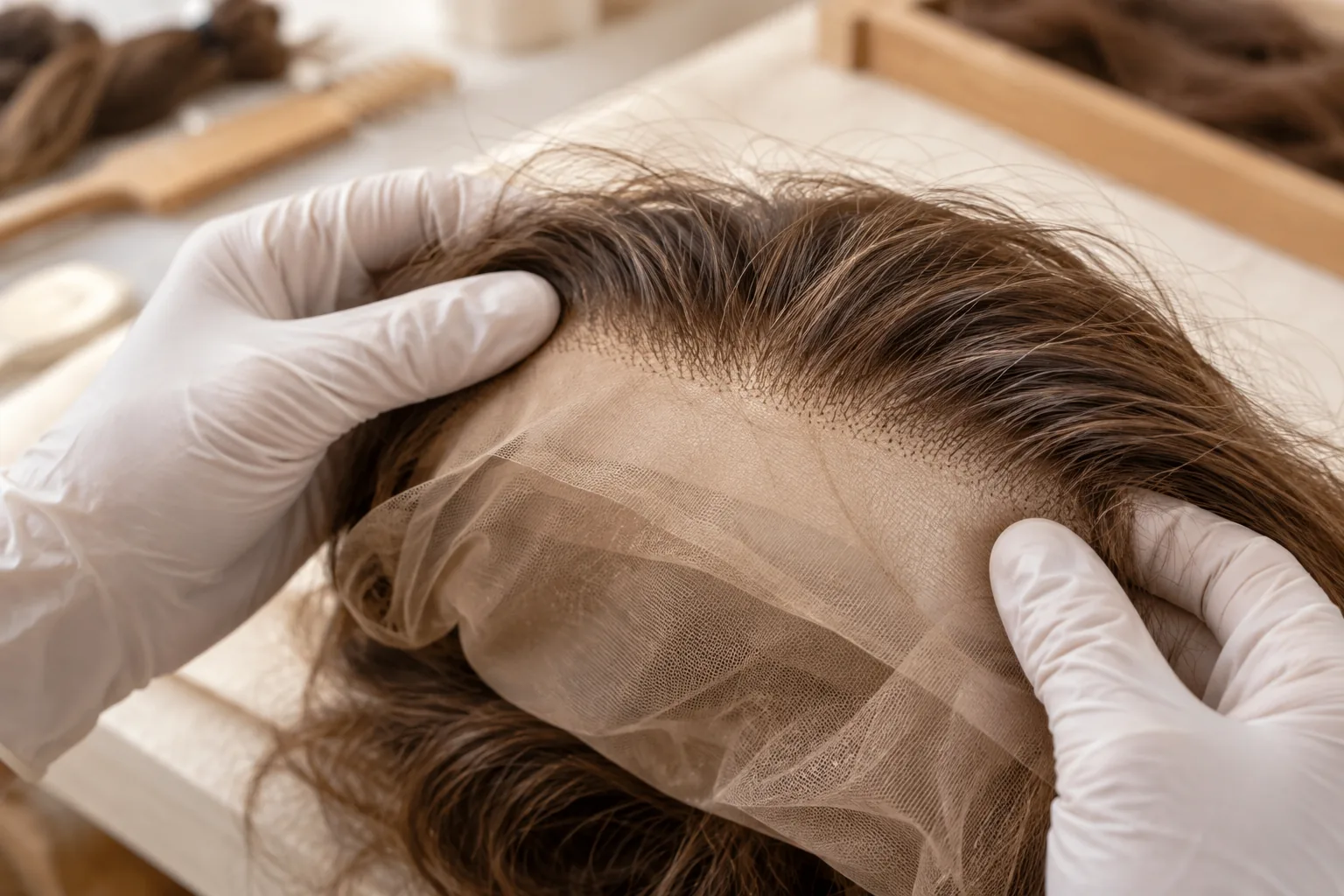
Unbleached describes the knot finish only. It does not establish that the hair itself is virgin, raw or chemically untreated. Bleaching adds targeted processing to suitable attachments, with a possible trade-off in root strength. Dark knots can be harder to lighten consistently, while already light hair may show little benefit. Confirm the achievable finish for the actual colour and construction.
Review the actual hair configuration
Treatment also introduces a processing decision. Ask whether targeted front or parting work meets the client’s needs before extending the request to covered regions. Keep any treatment instructions precise and request a representative sample. Do not assume that selecting bleach removes every visible aspect of the base or the entire attachment structure.
Distinguish concealed knots from knotless attachment
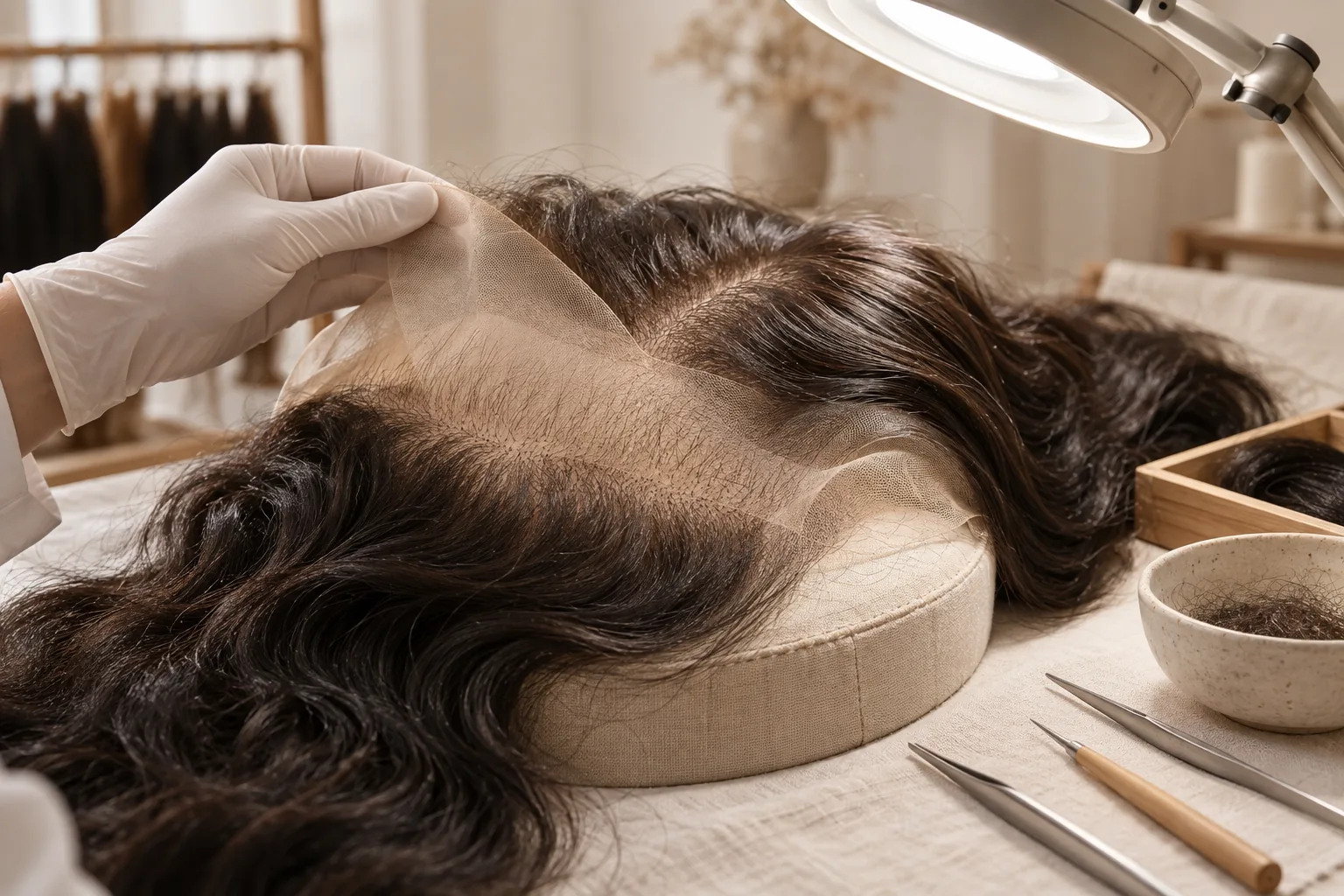
A layered silk top hides the attachments below the visible parting surface. That differs from knotless V-looped skin and from simply bleaching knots on exposed mesh. Concealment adds layers, so assess the feel and the transition into any lace front as well as the parting appearance. A silk centre does not automatically hide every knot or material edge around the whole piece.
Ask for an underside explanation
For a concealed construction, identify the scalp section and how it connects to the front. A convincing part does not establish the appearance of an exposed edge. Request top, front and underside views of the same sample. If a seller uses a broad term such as invisible roots, ask for the corresponding construction drawing.
Choose a finish through sample comparison
Compare samples under similar lighting, with matching hair colour, length and density where possible. Look at the intended part and gently brush the front into the planned position. Record the impression of the root area and material transitions. A difference in overall volume should not distract from the finish you are comparing.
Approve the complete configuration
Ask the supplier to identify which details can be changed independently. A different front treatment may be feasible without replacing the centre, while another scalp effect may require a new construction. Review that proposal with the stylist before ordering. Save the final drawing, treatment map and accepted sample as a linked reference.
For an exposed lace front, compare controlled knot lightening with the unbleached reference. For a visible top part, also consider a concealed scalp section; for covered body areas, extra processing may offer little visual gain. Take matching photographs before choosing. The final Royal Hair brief should identify the finish by zone rather than demanding one treatment across every material.