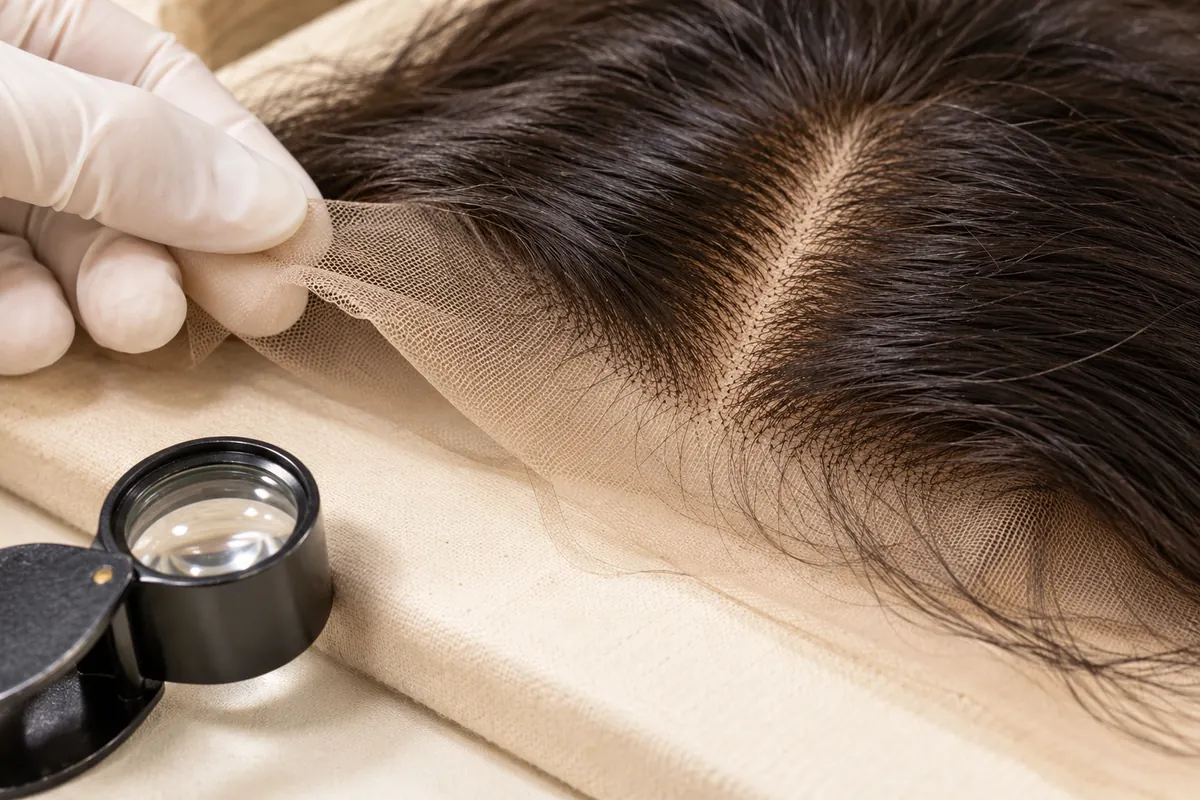
Front knot bleaching targets the attachments visible along an exposed hairline. Parting-area bleaching targets the knots revealed where the hair separates on top. A client who wears a fixed side part may need a different treatment map from someone who changes the part daily. Bleaching reduces the contrast of suitable dark knots; it does not remove the knot or make the entire base invisible.
Identify the area that will be visible
Start with two views: the front brushed into the intended style and the top parted where the client wears it. A fringe can hide much of the front while leaving a part exposed. A brushed-back style does the opposite. Mark only the relevant knotted areas on the construction drawing; do not assume that ordering lace means every covered region needs treatment.
Start with the actual styling plan
Keep the material zones on the same reference. A lace front can sit beside a different centre construction, and the treatment brief should distinguish them. Request confirmation for each proposed area before production. Do not assume that ordering a full lace cap automatically includes bleaching across the whole cap or every possible part.
Check colour and attachment compatibility
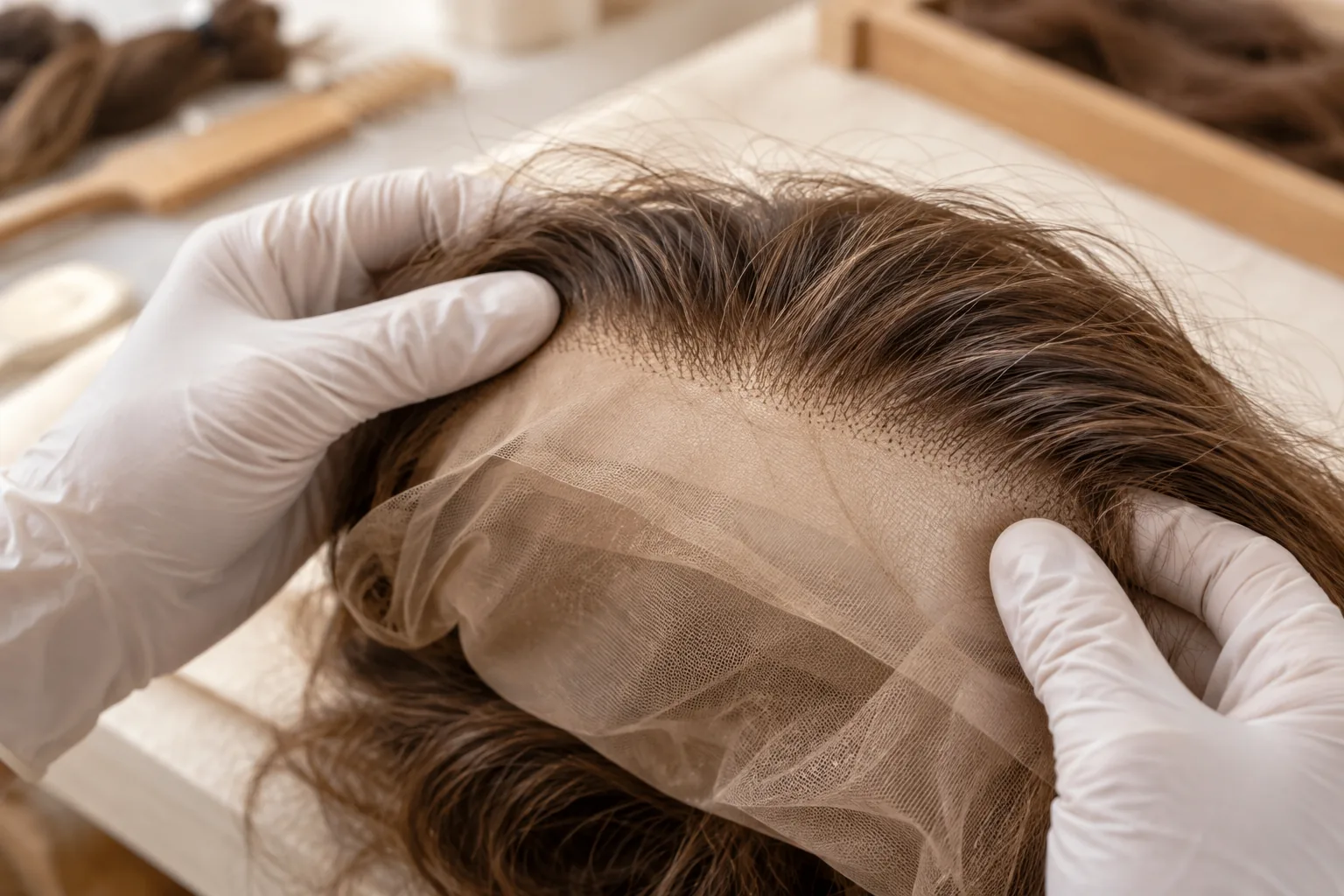
The effect of treatment depends on the hair and attachment at the specified area. Provide the exact colour, grey percentage, hair type and knot plan. Ask the supplier to confirm the configuration rather than inferring eligibility from a colour label. A mixed-hair order may need additional discussion before the expected appearance is agreed.
Submit the actual configuration
V-looped and injected skin areas do not contain traditional tied knots in the same way as knotted lace. Concealed silk top knots are another construction question. Establish what the product actually contains before requesting knot treatment. A general promise of an invisible root effect does not identify the process used.
Write a treatment map that can be inspected
An illustrative brief might request a 10 mm front band and a separately marked 20 mm parting strip, each subject to technical confirmation. Label the position and both endpoints rather than sending the dimensions alone. Those numbers are drawing examples, not processing recommendations. A changeable part may need a broader approved zone or a different scalp construction.
Distinguish front and parting requests
Ask the factory to explain any proposed change in coverage before proceeding. For instance, a different base section may alter the treatment area. Save the confirmed drawing with the sample reference. If the client later changes the part, review whether the original treatment plan still corresponds to the area being exposed.

Assess appearance and condition together
Inspect the specified front and part under ordinary lighting with the hair gently separated. Compare the sample against the approved map and a reference of the intended appearance. Look for a visibly untreated section inside the requested zone or an unexpected change extending beyond it. Strong light and image filters can make comparisons unreliable.
Use consistent close-up photographs
Appearance should be reviewed alongside hair condition. Excessive chemical processing can compromise the roots, so the aim is an appropriate result for the configuration rather than unlimited lightening. Ask the team to assess an unsatisfactory sample before approving further treatment. Record what was changed and retain the revised sample for future orders.
Approve the appearance and the treatment boundary together. Ask for matching front, part and underside views of the same sample before dispatch, and keep the colour and knot plan beside them. If a section looks too dark, identify its location for review. Do not request stronger bleaching across the whole piece to correct a small area without first checking root condition.