
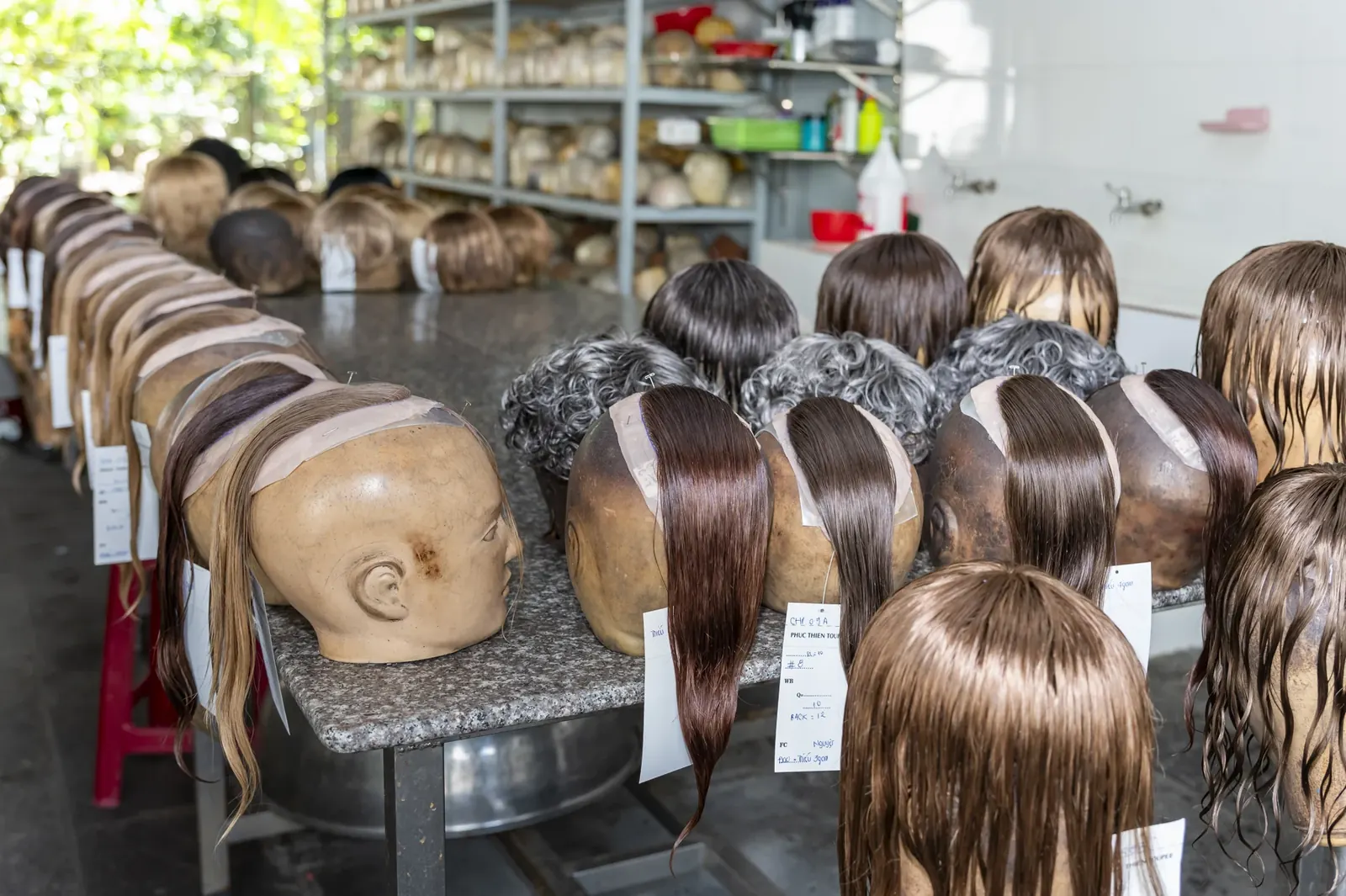
Remy, virgin and European are not interchangeable descriptions. One concerns fibre alignment, another usually describes processing history, and the last is an origin claim that needs its own evidence. A wholesale order should spell out all three separately. Otherwise a smooth sample may be approved without either side agreeing what material and treatment the repeat order will contain.
Separate origin from measurable requirements
Remy generally refers to hair kept aligned root to tip, with cuticle condition needing explicit confirmation. It does not by itself mean uncoloured, single-donor or European. Virgin usually signals no chemical alteration, but supplier definitions vary. Ask separately about previous colouring, lightening, texture-setting and surface finishes, then put the accepted description on the order instead of relying on a grade label.
Turn labels into useful questions
Define the end use: hair system, full wig, topper or extension. Hair suited to one construction or style may not be the right choice for another brief. Explain the length, colour and planned haircut so the manufacturer can discuss available materials in context. An approved sample is more useful than an unsupported quality adjective.
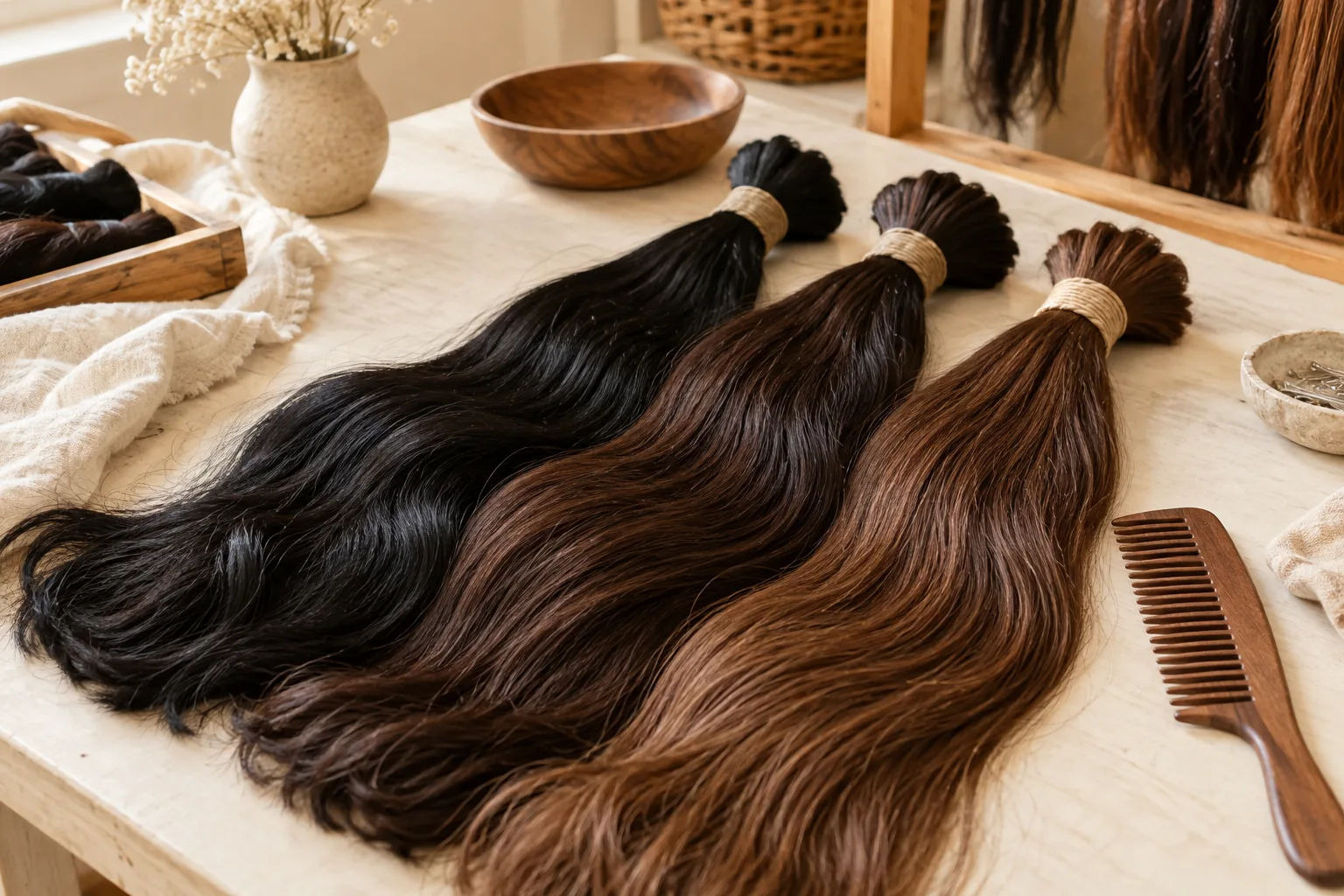
Ask about colour and texture processing
Hair can be selected, sorted and processed to reach the ordered colour or texture. Ask whether the target shade requires colouring or lightening, and whether the requested curl is natural or set during production. The answer helps the buyer understand what is being supplied and what comparisons to make between samples.
The finished look may involve several stages
If you supply untreated hair, agree the processing boundary before dispatch. Ask the factory to list receiving, washing, sorting and ventilation steps, and identify anything involving colour, cuticle alteration or a coating. Require approval for departures from that plan. Keep the main hair’s root direction distinct from the short return created by knotting; preserving one does not remove the other.
Ask how samples and repeat orders are identified in the supplier’s records. Your own record should connect the loose hair description to the finished product that was accepted. If the preferred material is temporarily unavailable, review alternatives before placing a time sensitive order rather than assuming a similarly named option will produce the same result.
Evaluate a sample without overstating its meaning
Examine colour consistency, strand feel, length distribution and the way the hair behaves with gentle combing. For wigs and systems, review the hair after it has been incorporated into the actual construction. A loose bundle may not show how the completed piece will fall, particularly around a crown or fixed part.
Inspect more than surface shine
Keep the inspection conditions consistent across suppliers. Strong styling products and different lighting can distort comparisons. If a proposed salon service involves further colouring or heat styling, ask for appropriate guidance for the supplied hair. A sample review cannot prove every future order will behave identically, so define acceptance criteria and keep production references.
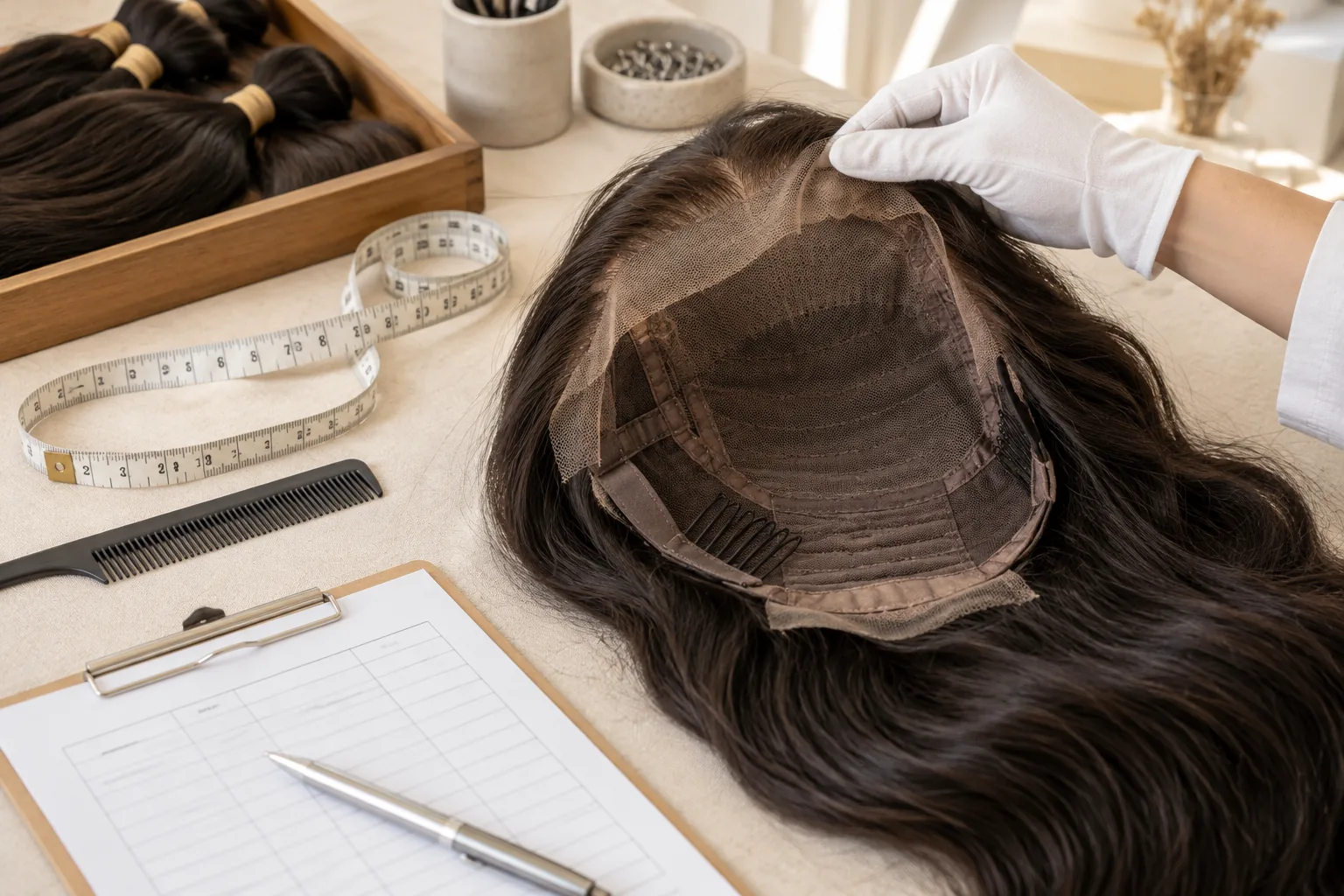
Link material choices to the full order
Record the agreed hair description together with shade, length, density and ventilation. If the factory needs to substitute a material, ask for review before approval rather than treating the change as interchangeable. The same base can produce a different finished impression with another hair choice. Keep any approved substitution attached to the order record.
Preserve traceable descriptions in your records
Royal Hair handles sales, with Phuc Thien Toupee responsible for manufacturing. Use Custom Order to discuss available hair choices for a wig or hair system, then compare suitable product categories. For repeat business, reference the accepted sample and ask the supplier to confirm the current material specification. Clear descriptions support better buying decisions without relying on broad origin based claims.