A private-label launch needs two approvals: a product your team can fit confidently and branding that identifies it correctly. A printed box cannot substitute for a clear base specification, while an approved sample can still arrive with the wrong label. Treat product development and packaging as linked workstreams, with their own costs, minimum quantities and sign-off points.
Define the product before the packaging
Begin with the client needs your brand will serve. Specify base design, available lengths, shades, density and attachment preferences. A small, clearly defined range can be easier to evaluate than many variations introduced at once. Decide which models will be standard and which will require a custom brief, since the ordering process may differ.
Choose a focused starting range
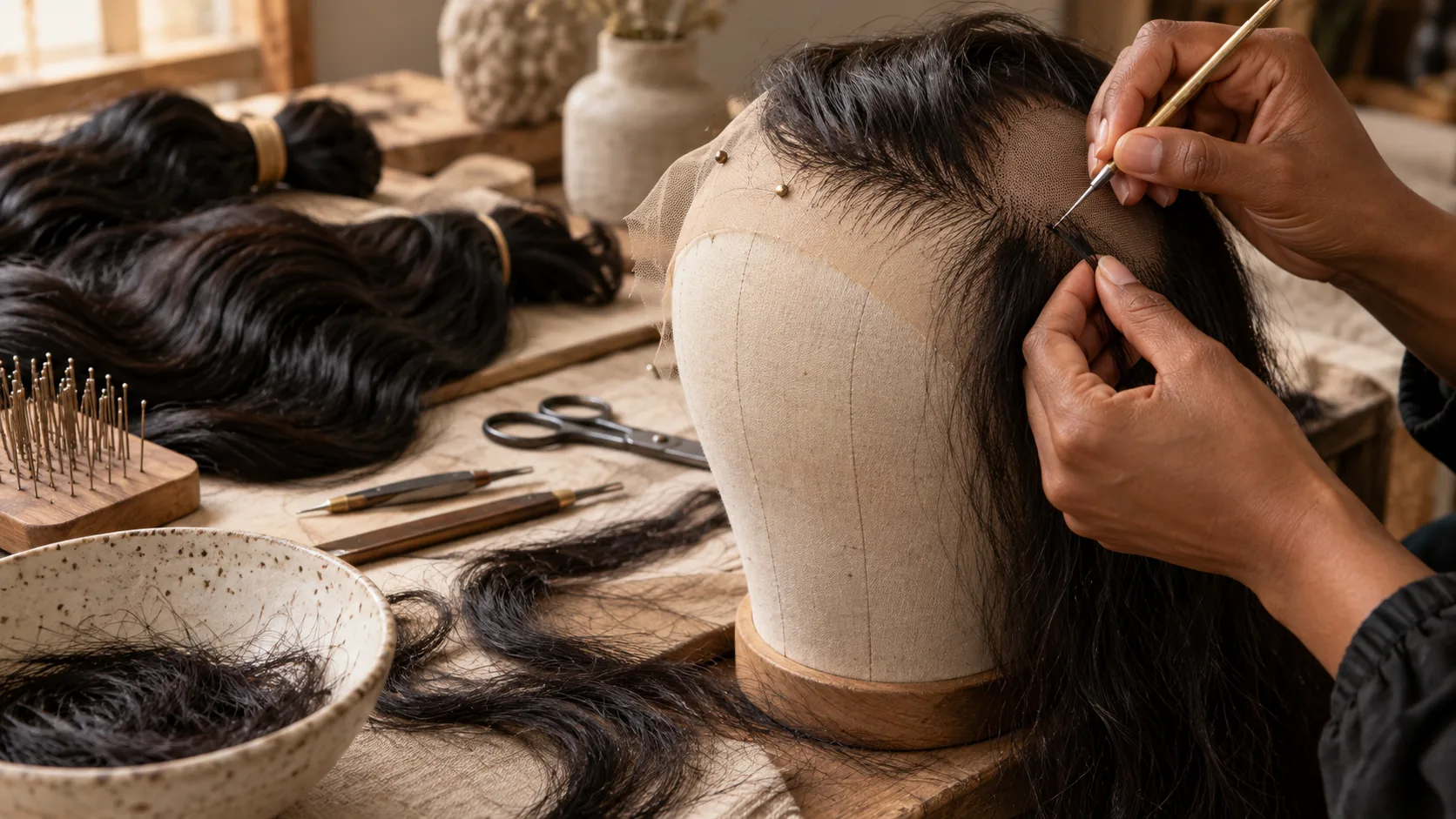
Compare samples in the actual salon workflow. Check the construction and hair direction before deciding whether a model belongs in the range. If the sample needs an adjustment, document it and approve the revised reference. Brand names alone should not become the technical specification the factory must follow.
Prepare private label instructions
Separate the product minimum from the packaging minimum. Royal Hair’s stock MOQ is three pieces and custom MOQ is one piece; custom labels and packaging have separately confirmed requirements. Ask whether artwork setup, printing and spare packaging are quoted independently. A small hair-system trial does not automatically make a short print run economical or establish the terms for a larger branded batch.
Review artwork and placement
Request a proof or sample where available before producing a larger quantity. Check spelling, contact details and whether product codes match your internal records. Keep packaging text consistent with confirmed product facts. Avoid printing claims about origin, certification or performance that have not been verified for the supplied item.
Consider the information your salon staff will need when serving a client after delivery. A simple internal product sheet can connect the brand name with base material, approved specifications and supplier guidance. This supports consistent communication even as the range expands, and reduces the chance that a salesperson promises a feature the factory has not confirmed.
Build an order system that supports repeats
Give each model an internal code linked to its base drawing, hair specification and accepted sample. Add a packing reference showing which label belongs to which model and shade. Before dispatch, reconcile the product count, SKU list and printed information. This catches a correct system in the wrong box, an error that a hair-only inspection would miss.
Assign codes to agreed specifications
Also define how revisions are approved. A change in hair source, base construction or printed label may matter to existing clients even if the commercial product name remains unchanged. Keep dated versions and ask for confirmation before a substitution. Good records are particularly valuable when different staff members place repeat orders.
Plan communication, timing and inspection
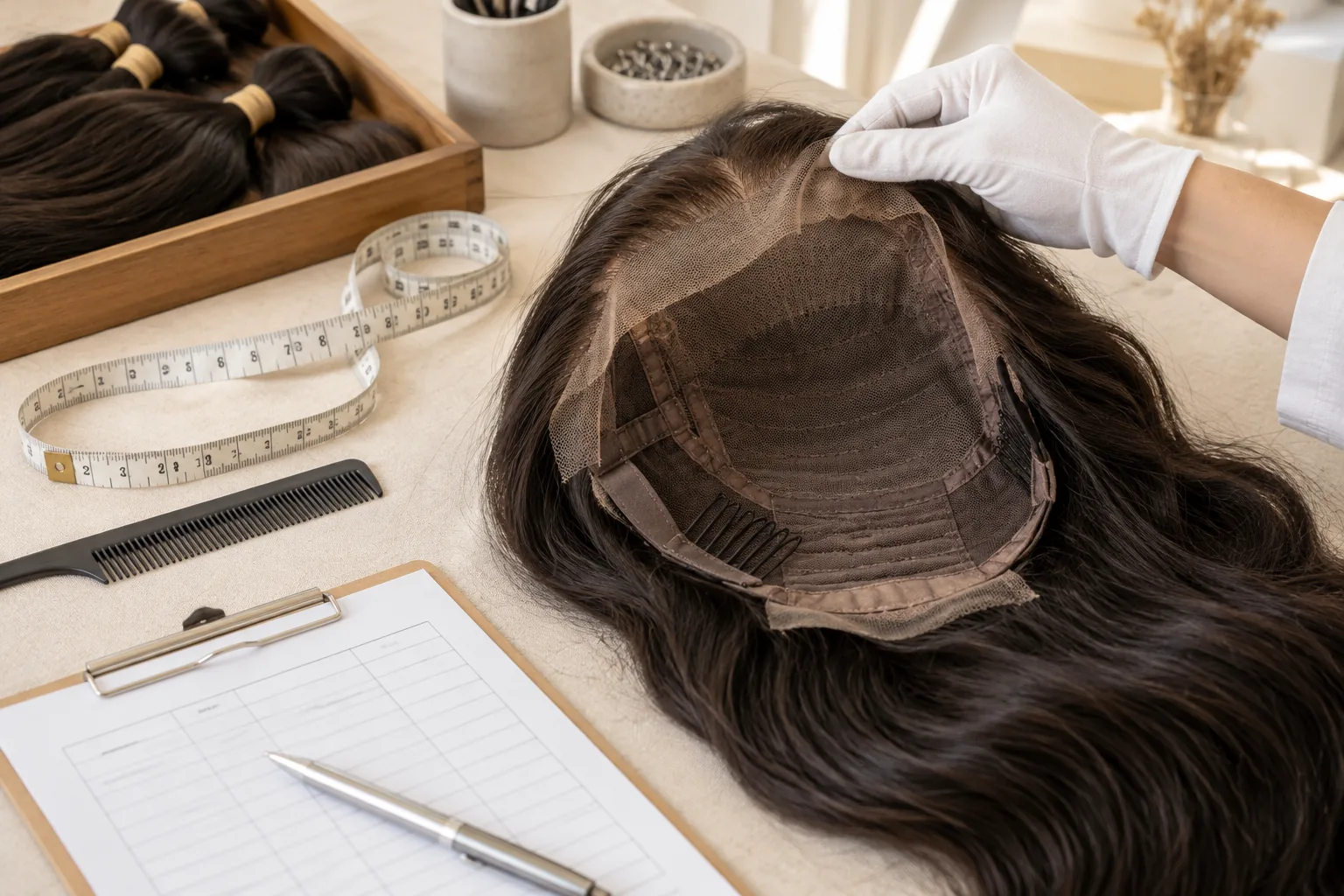
Allow time for product sampling, packaging review, production, transport and receiving inspection. Do not announce a launch date based only on a factory production estimate. Confirm what the quoted schedule covers and which approvals must arrive first. Review the received items against both the technical specification and the agreed brand presentation.
Treat launch readiness as several separate steps
Royal Hair handles sales in cooperation with Phuc Thien Toupee, the manufacturer. Use Custom Order to discuss OEM and private label requirements, available models and applicable minimums. Standard custom production is generally six to twelve weeks, subject to order confirmation. Establish a repeat order record after sample approval so growth is supported by a clear product definition.