
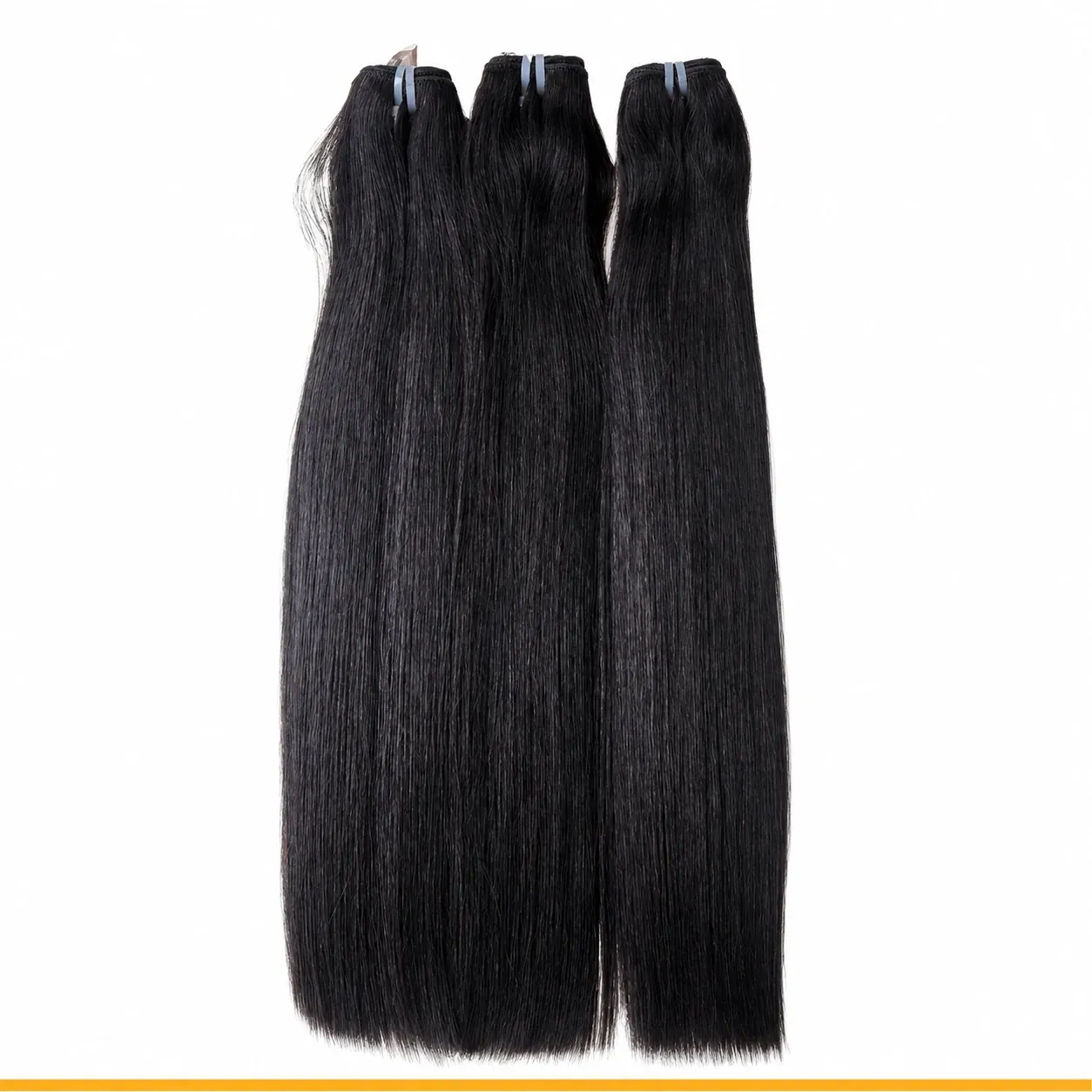
Start a wholesale hair order with two decisions: what your team will make, and what form the hair must arrive in. Loose bulk hair suits further preparation; a machine weft arrives with a sewn track. Choosing between them changes labour, waste and installation planning. This guide covers the specification, sample checks and cost comparison behind that decision. Royal Hair's Hair Bulk catalogue currently shows machine wefts; ask separately about loose-hair availability.
Define the construction
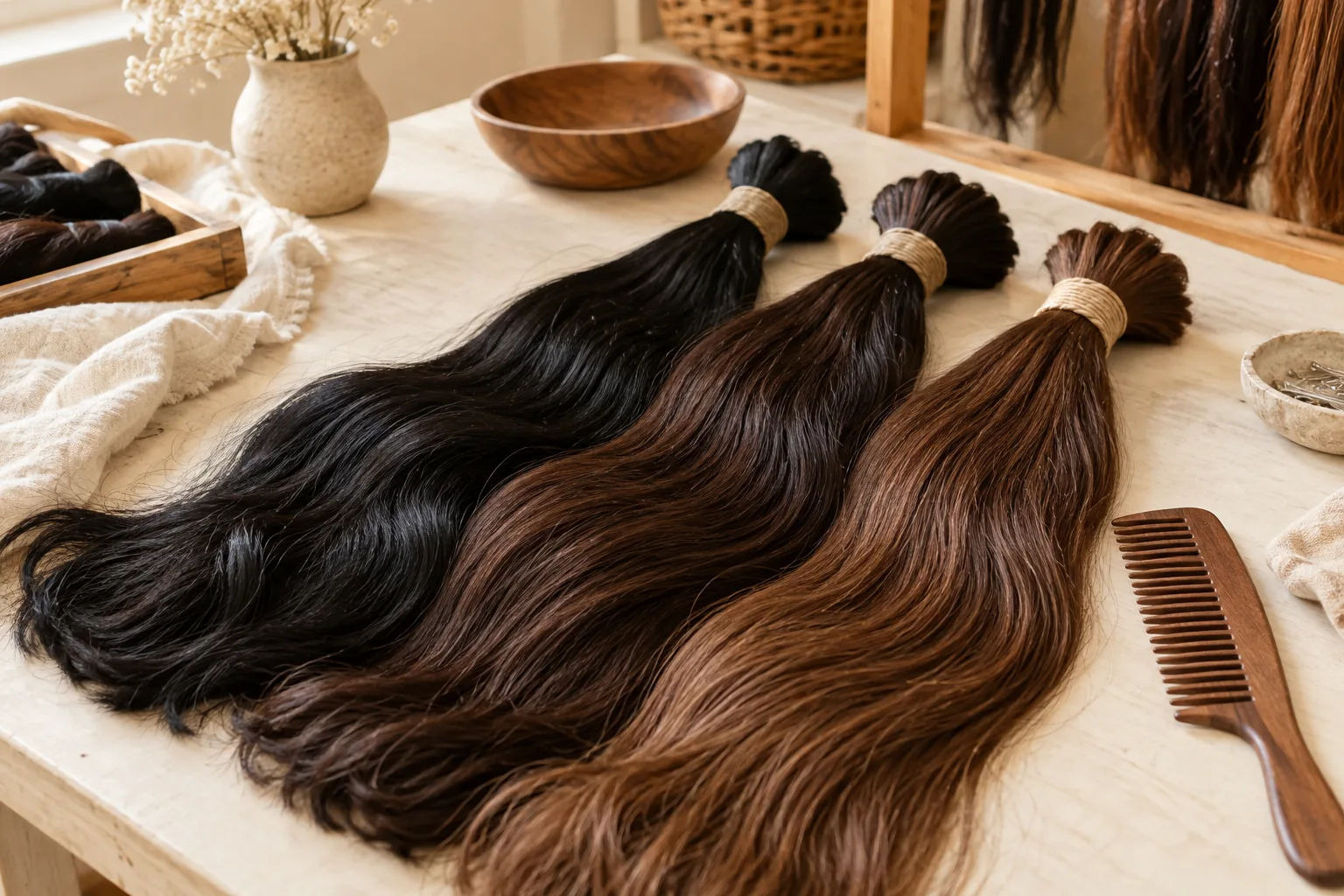
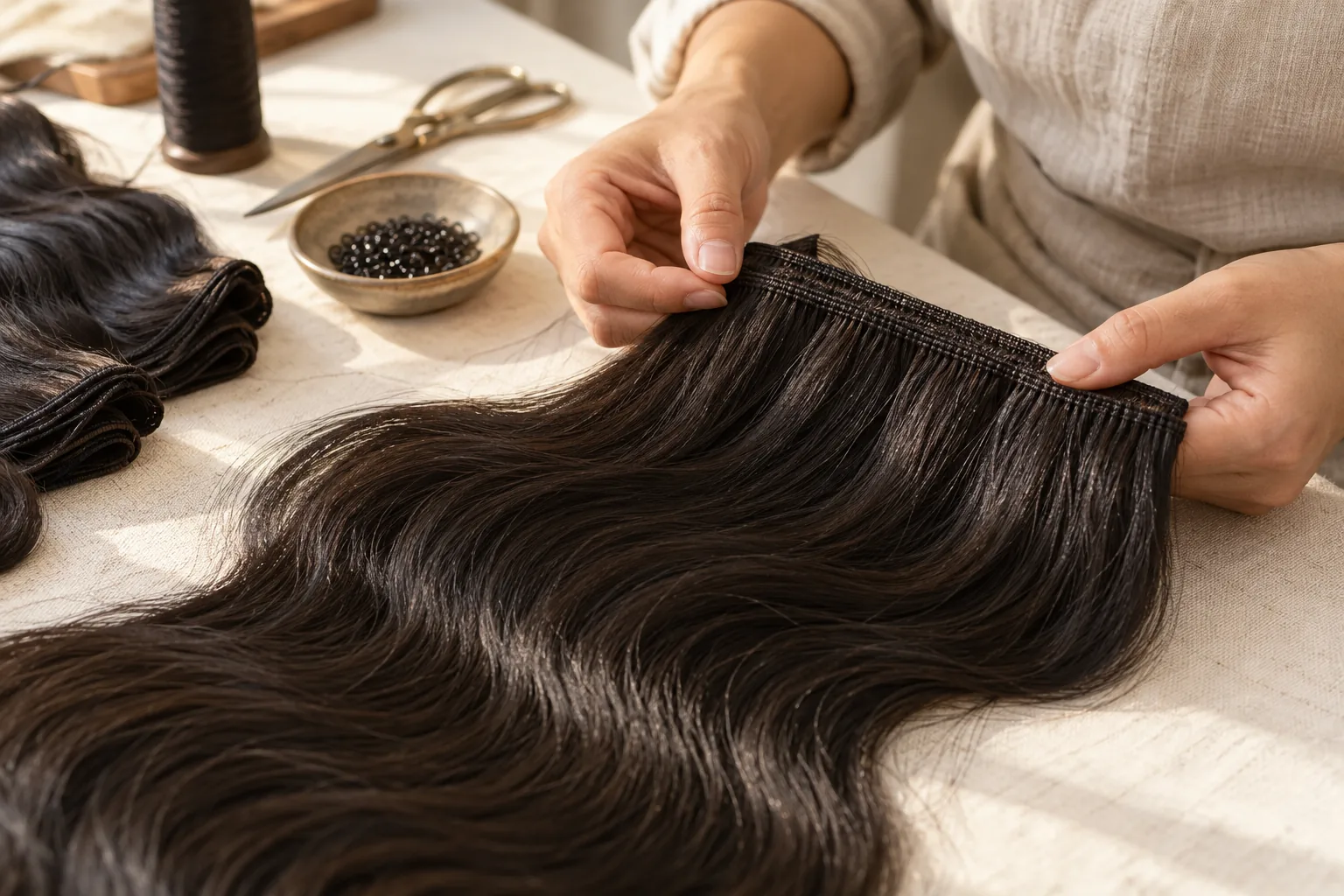
In manufacturing, bulk hair can describe loose strands tied together without a sewn track. In commercial conversation, the same term may simply mean hair purchased in wholesale quantities. Machine wefts are different: strands are secured along a stitched track that a stylist can use within an appropriate installation method. Always write the construction into the order rather than relying on the category name.
Loose hair or a finished weft?
Specify what the installer needs to receive. A buyer making another finished product may need a different format from a salon purchasing ready-made bundles. Track flexibility, intended application and whether the weft will be cut all influence suitability. Discuss those points before selecting colour or negotiating volume.
Build a complete specification
A useful enquiry might read: machine weft, 20 inches, 100 g per bundle, natural dark colour, straight texture, with end fullness matched to the enclosed sample. These are example requirements, not a statement of available stock. Add the length-measuring method and whether 100 g means the finished weft or hair alone. That makes a second supplier's quotation much easier to compare.
Hair, length and finish
Colour and texture should be treated as production requirements. A light blonde, natural dark shade and ombre blend can involve different preparation. Ask what has already been done to the sample and what further salon processing is appropriate. Human hair alone does not establish that bleaching or repeated colour changes will be suitable.
Evaluate a representative sample
Choose a sample that reflects the item you intend to reorder. Inspect the track, compare the ends and check the shade under consistent lighting. Where the supplier's care guidance allows it, observe how the sample behaves after a gentle wash and complete drying. Keep notes about handling rather than judging only the initial shine.
Check before scaling
Give the approved sample a reference such as MW20-NAT-01 and date its photographs. Keep the original delivered measurements separate from any results after washing, cutting or colouring. If the reorder changes from 20 to 26 inches, review the longer version rather than assuming the shorter sample settles every question about ends, track width and visual fullness.
Plan the wholesale order
Start with the shades, lengths and textures your customers actually request. A compact assortment can be easier to assess than a large first order containing many unfamiliar combinations. Confirm available quantities, packaging, dispatch expectations and how to report a discrepancy before production begins. Requirements should be resolved in writing.
Connect product choice to customer needs
Use the related guides on hair terminology, bundle measurements and sample checks to refine your brief. Then review the Hair Bulk catalogue and enquire about the specific machine weft model that fits your application. Providing a reference photo together with measurable requirements is more useful than asking for the best hair without defining the result.
Compare the cost of saleable material, not just the bundle price. An illustrative $60 bundle plus $6 allocated freight costs $66 before duties and preparation. If trimming leaves 90 g for the intended style, that is about $0.73 per usable gram. Use your actual figures, including labour and payment charges, when comparing a loose-hair offer with a finished weft.