
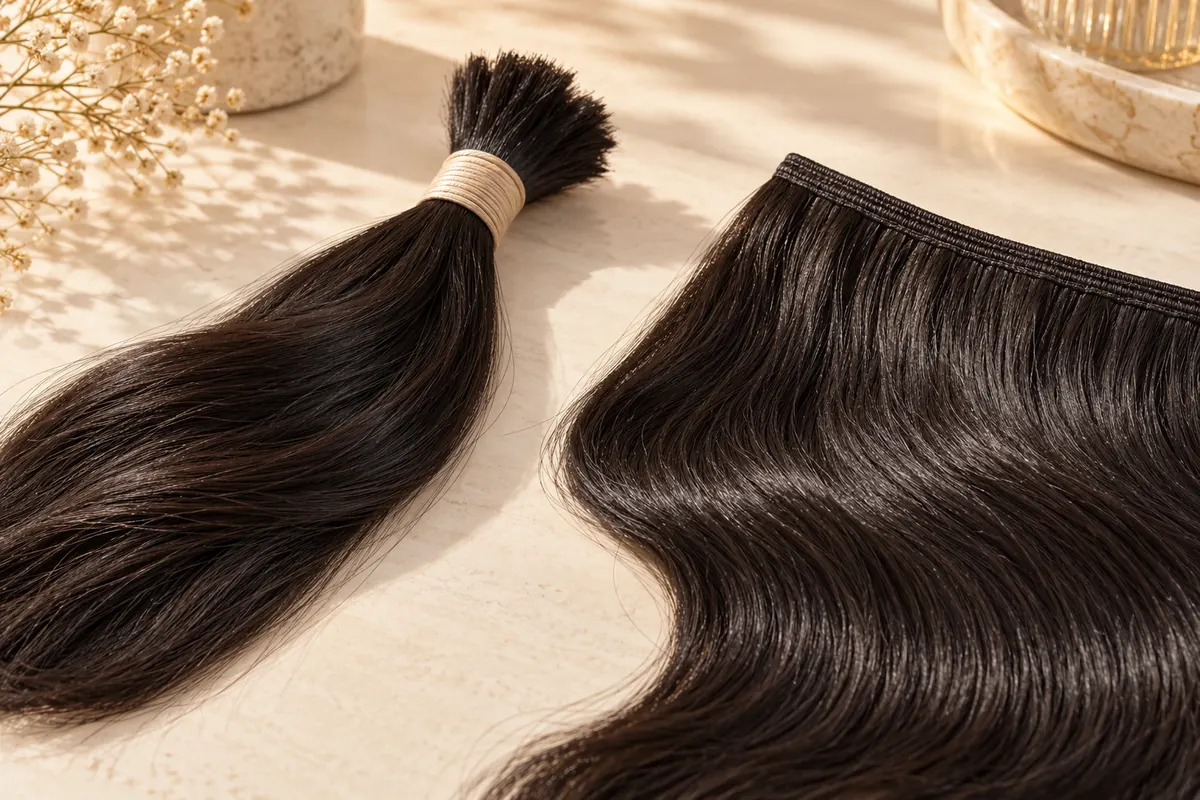
Bulk hair is loose hair without a sewn track; weft hair has strands secured along a continuous edge. That small construction difference decides much of the work your team must do next. A braider or ventilating workshop may need loose strands, while a sew-in specialist needs a prepared weft. Neither format is a quality grade. Royal Hair's current Hair Bulk catalogue shows machine wefts, so confirm loose-hair availability separately.
Identify the physical format
Loose bulk hair consists of strands gathered and secured for handling without a sewn track. A weft has a stitched edge holding the strands together. Request a close photograph of the root area to establish which format is being offered. Packaging can conceal this difference, especially when bundles are folded or tied with decorative bands.
Inspect the root end
The distinction matters for receiving and preparation. Loose hair must remain securely organised while it is handled. Weft hair should arrive with a track suitable for the intended use. Neither construction by itself proves hair origin, cuticle alignment, processing history or end fullness. Those characteristics belong in separate specification fields.
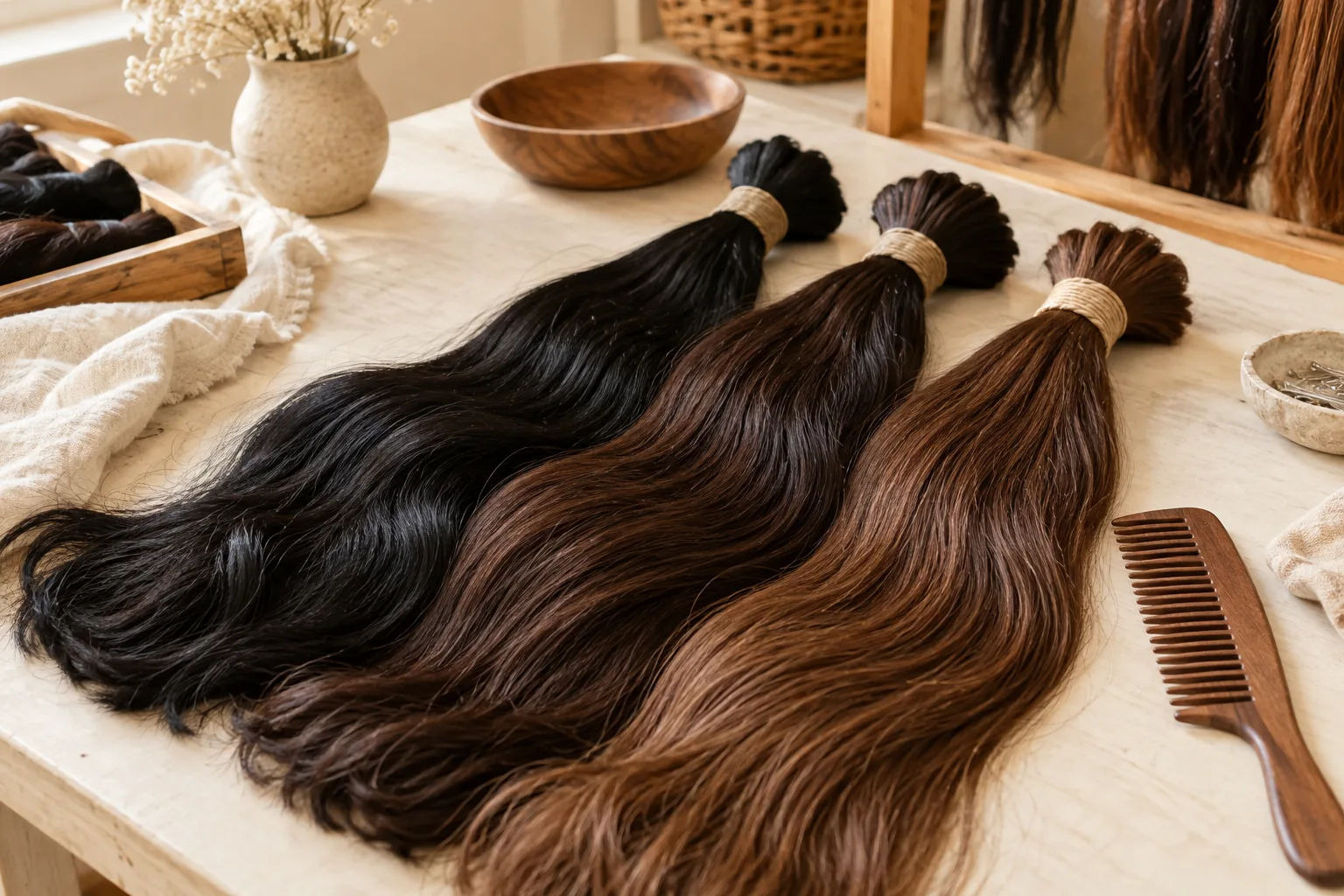
Match the format to the application
For example, a workshop ventilating a hairline needs access to individual strands; a sewn edge would have to be removed before that work. A salon building a sew-in style instead needs a track that can be positioned and secured. Loose hair can also be prepared for braiding or individual bonds by trained technicians, but that preparation is not included simply because the material is supplied.
Discuss the installer’s workflow
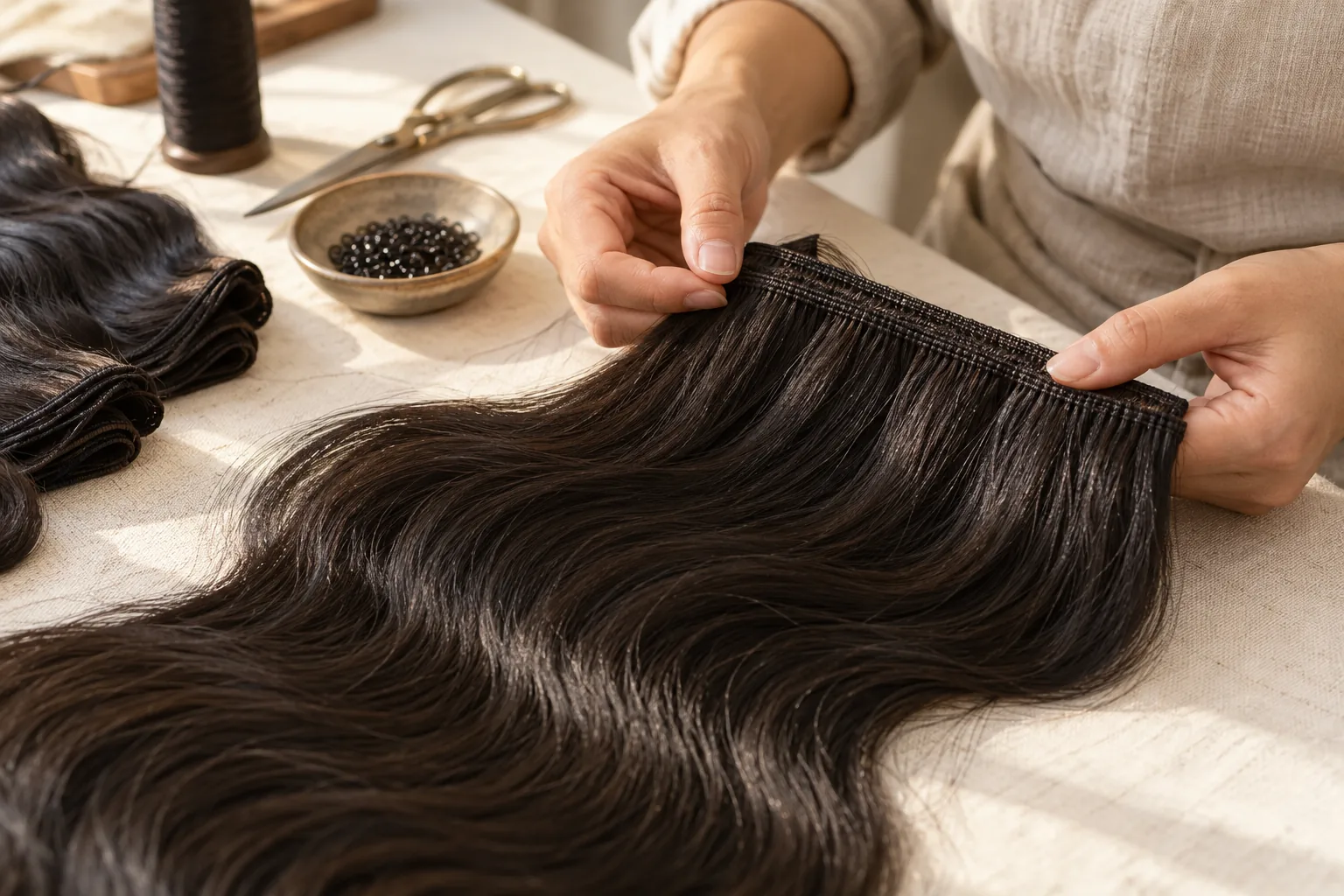
For wefts, ask for the total track length as well as bundle weight. A 100 g bundle is not a promise of a particular number of rows: hair length and track construction affect how much seam is supplied. Have the installer map the intended placement, then check whether the sample offers enough usable track without excessive stacking. Obtain model-specific guidance before cutting it.
Compare equivalent specifications
A fair quotation comparison keeps length, weight, colour, texture and fullness consistent. Loose hair and finished wefts may be quoted using different weight bases, so ask whether stitching or ties are included. A lower figure is not automatically better value if the products require different preparation or provide different usable amounts.
Keep the hair requirements constant
Use the same terminology questions for both formats. Ask whether the hair has been coloured, lightened or textured and what further processing is recommended. Words such as raw or virgin should describe a defined supply specification, not replace it. Request confirmation for the selected item rather than extrapolating from another catalogue model.
Order a sample with a purpose
Set a simple sample objective: confirm construction, assess handling and determine whether the format works in your intended process. Have the relevant stylist or technician inspect it. Record any preparation required before use. This turns sampling into a practical decision instead of a comparison based only on product photography.
Measure what your business needs
Keep the approved item and order notes as references for future purchases. Explore the guide to machine weft manufacturing if your application uses stitched tracks, and the bundle weight guide when calculating quantities. For Royal Hair enquiries, name the catalogue model and explicitly request machine weft construction so the order matches the product you reviewed.
Compare preparation costs with a small timed trial. Record how long a technician spends organising loose hair, forming the required construction and removing unusable material. Compare that with preparing a finished track for the same result. A cheaper material price can disappear once labour is included; equally, buying a construction your workshop must dismantle adds work you did not need.