
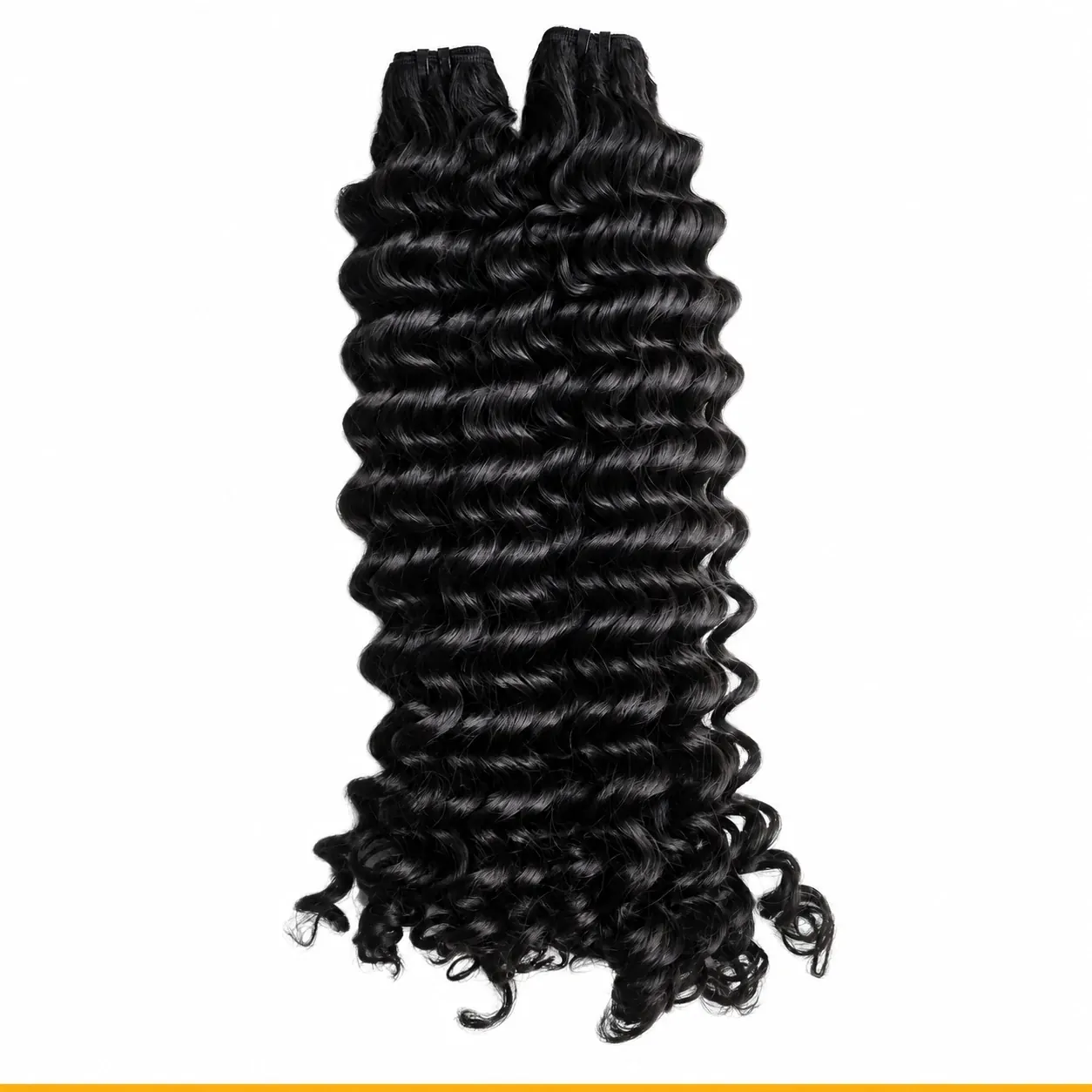
Machine weft hair is made by sewing prepared strands into a continuous track. The hair specification determines colour, texture and fullness; the stitched edge determines how that material is held and handled. Both deserve inspection. This overview explains a common construction sequence without claiming that every factory uses identical equipment. Royal Hair handles sales enquiries, while Phuc Thien Toupee handles production; confirm the exact track supplied for your selected model.
Prepare the hair specification
Production starts with defined material requirements. Hair must be organised for the intended length, shade, texture and fullness. Those choices affect the finished bundle before stitching begins. Ask how the selected product is described and avoid assuming that all machine wefts share a single sourcing or processing specification.
Sorting precedes construction
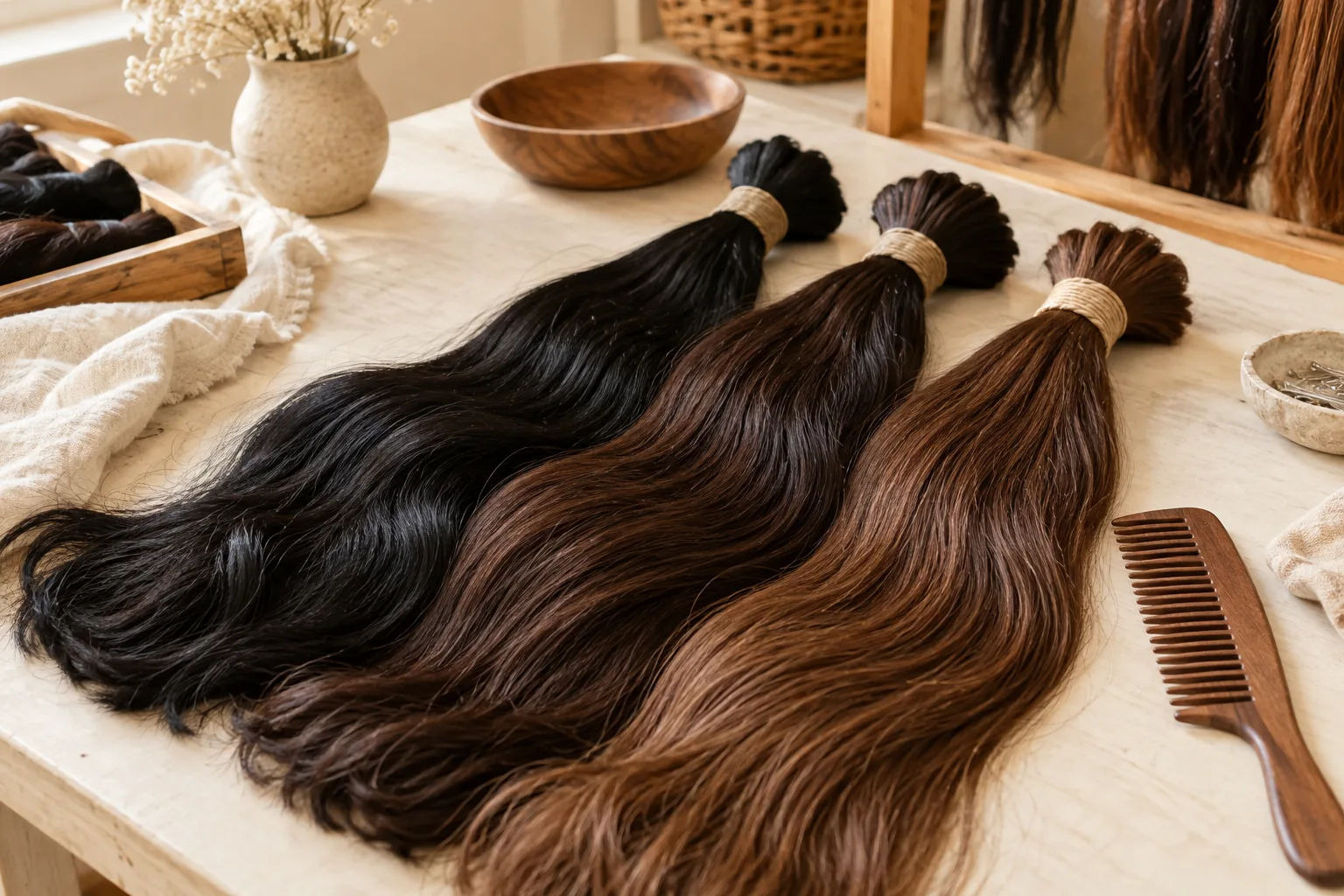
Sorting and preparation should reflect the approved order. End fullness is influenced by the mix of strand lengths, while colour and texture may involve separate treatment stages. The sequence can differ by product. A buyer does not need to prescribe every workshop step, but should clearly state the result expected from the finished sample.
Form the stitched track
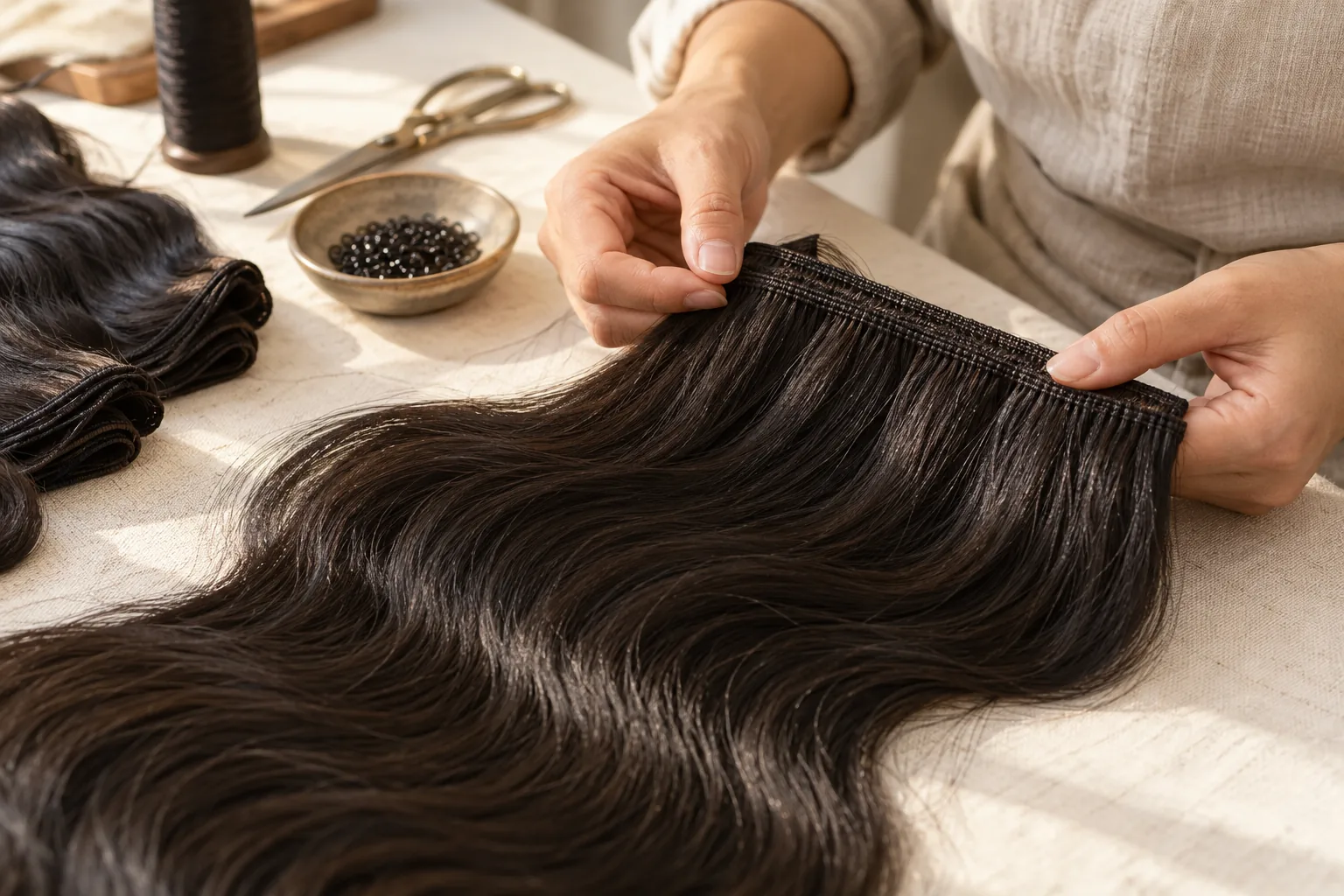
In a common multi-head process, the hair is spread evenly for the first securing stitches. The root ends are folded back, then additional stitching reinforces the seam. Those short folded strands are often called return hair or a beard. Some constructions receive a sealing treatment. This is a general example, not confirmation of the equipment or finish used for every Royal Hair product.
Construction affects handling
Discuss any plan to cut the track with the supplier and installer. A cut edge may require securing according to the construction and installation method. It should not be treated as automatically equivalent to an intact track. Obtain handling guidance before the stylist modifies a sample or the wholesale stock.
Finish and inspect the bundle
Finishing can include arranging, cleaning, drying or conditioning the hair according to the product process. Those steps influence its appearance when unpacked. Inspect the hair after appropriate sample care as well as on arrival. A glossy presentation is useful for photography but does not answer every question about long-term handling.
Review both edge and hair
Inspect the track from end to end, not only at the neatly rolled outer section. Look for gaps, loose threads, abrupt changes in thickness and areas where strands are poorly captured. Then check the short return hair and how the seam bends in the installer's hands. A visually small seam is only useful if it remains appropriate for the intended placement and handling.
Approve a repeatable order
Keep the sample, track photographs and agreed requirements together. Include length, weight basis, shade, texture and sorting description in the approval. Record any restrictions on further colour work and track cutting. When a reorder changes one requirement, review how that change might affect the rest of the construction rather than assuming it is purely cosmetic.
Specify the construction explicitly
Explore Royal Hair's Hair Bulk catalogue for machine weft products and ask about the chosen model. Use the colour processing guide for shade requirements and the storage guide for receiving and packing practices. A complete order brief gives the sales team and manufacturer a shared reference before production or dispatch.
Keep construction notes separate from hair-quality notes. For example, a sample may match the colour and end fullness yet have a seam the stylist finds too bulky for a particular row. That calls for reviewing the track specification, not automatically changing hair origin or sorting grade. Send a close-up of the problem area beside a ruler so the manufacturer can assess the same feature.