
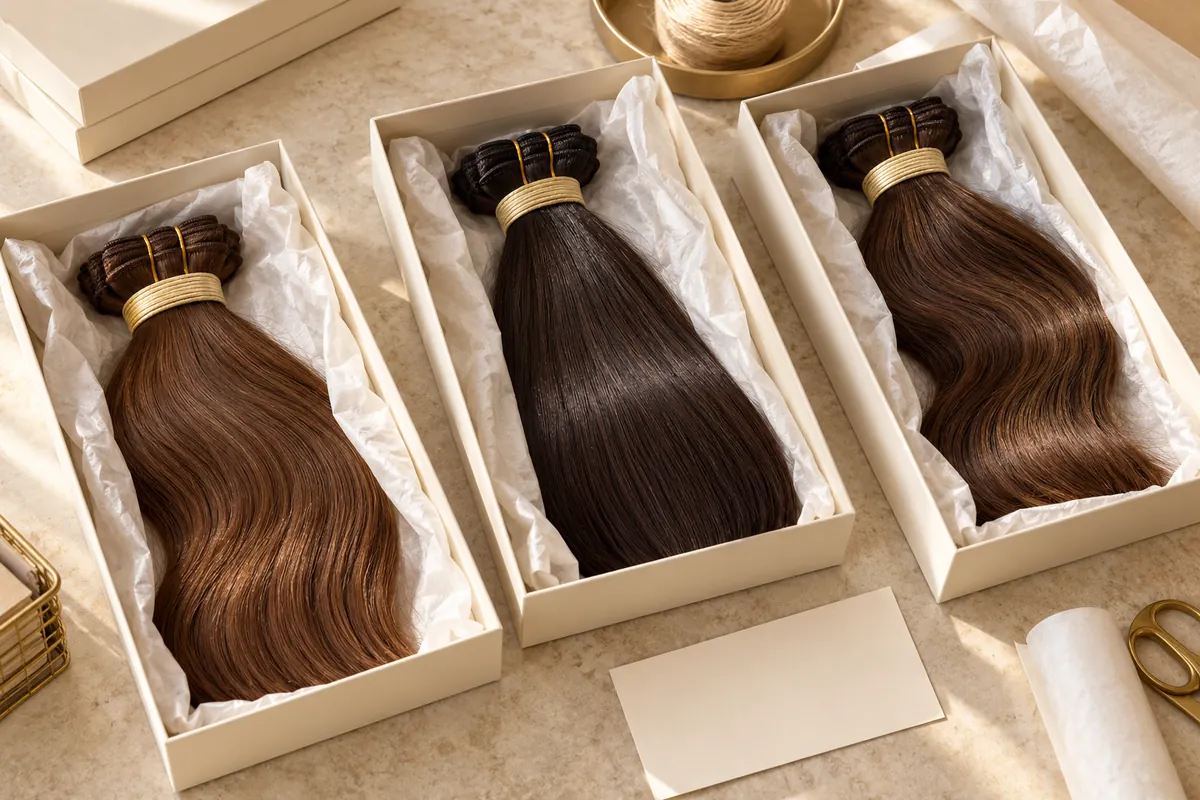
A storage system should let your team find the right bundle without repeatedly unpacking the wrong ones. Protecting the hair matters, but so do readable labels, stock rotation and separating tested samples from saleable goods. Start at receiving: check the delivery, identify each specification and choose a dry storage location. These practices support presentation and traceability; they do not repair damaged hair or replace the care instructions for the supplied product.
Inspect and identify incoming stock
Check the shipment against the order record before separating the bundles. Confirm model, shade, length, texture and quantities using a representative inspection approach. Preserve the packaging and take clear photographs if something needs clarification. Report discrepancies through the agreed process rather than altering the whole delivery before contacting the supplier.
Keep specifications attached
A stock label could read MW-20-NAT-STRAIGHT, followed by the receiving date and your supplier's order reference. Define the abbreviations once so staff do not invent several names for the same specification. If the supplier provides a batch identifier, retain it too. Place labels on protective packaging, not directly on strands, and keep adjacent lengths or similar brown shades in clearly divided locations.
Store clean and completely dry
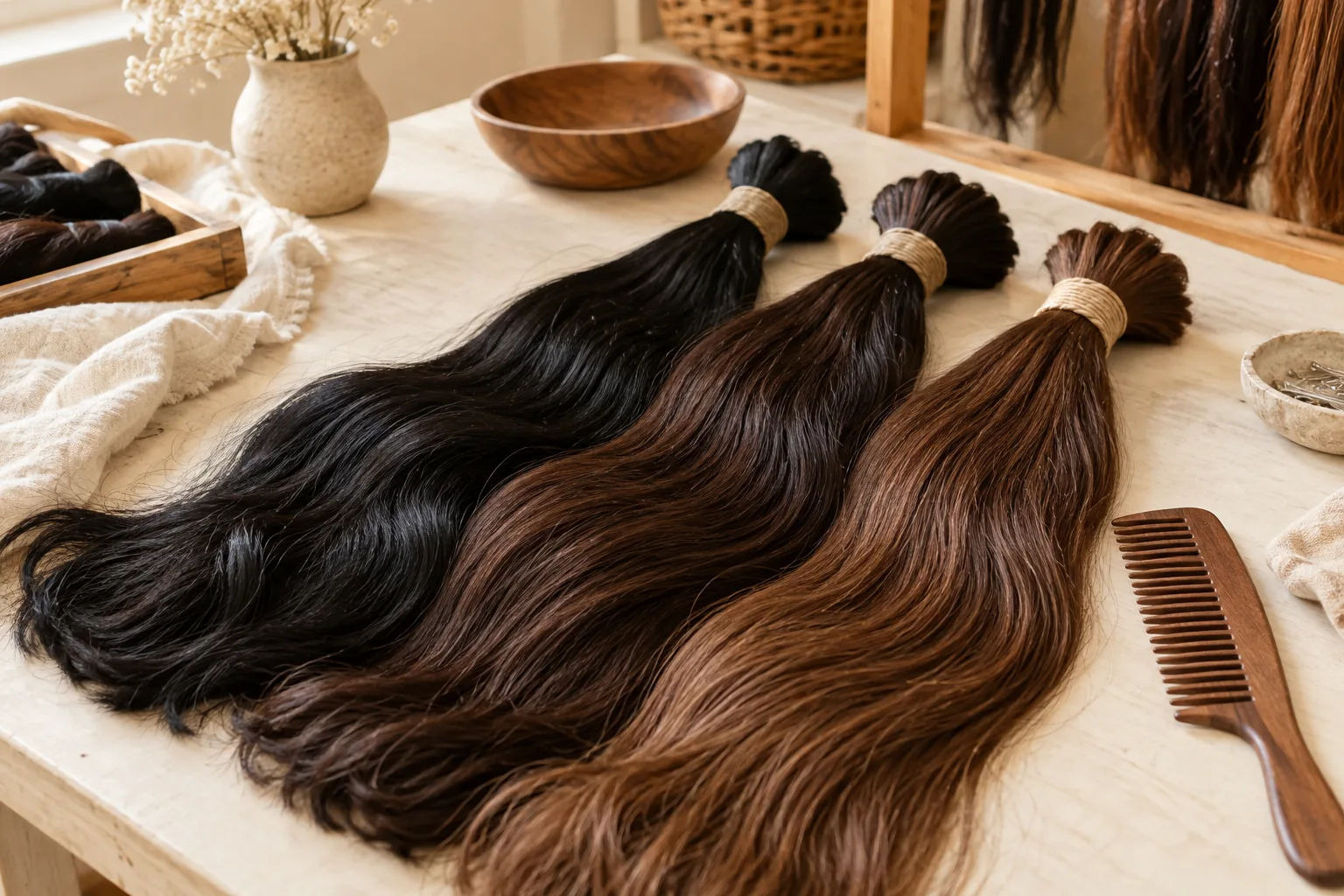
Choose a clean shelf away from sunlight, leaks and heat, and check the storage area rather than relying only on the room's general appearance. If a parcel arrives damp or with damaged packaging, photograph it and separate the affected goods while seeking handling advice. Never seal a recently washed sample while it is still wet; let it dry completely according to the product's instructions first.
Control the immediate environment
Avoid crushing or sharply folding the stitched track. Arrange bundles so they can be removed without pulling on the hair, and protect them from dust. Textured items should be stored in a way that respects the approved pattern. Excessive compression or repeated handling can make the presentation less tidy even before the product reaches a customer.
Choose packaging for the business workflow
A wholesale package should make the product easy to check, identify and transport. Discuss bags, labels and presentation requirements before ordering. If private label packaging is requested, confirm available options and any applicable minimums rather than assuming every small order can include custom printed materials. Keep product claims consistent with the approved specification.
Protect without obscuring information
Use colour, length and texture labels that your team can interpret reliably. Include care information relevant to the actual item, especially where colour or texture processing influences handling. Packaging should not claim raw, single-donor or unlimited bleaching suitability unless those statements are supported for that product. Attractive presentation and accurate description work together.
Manage samples and saleable stock separately
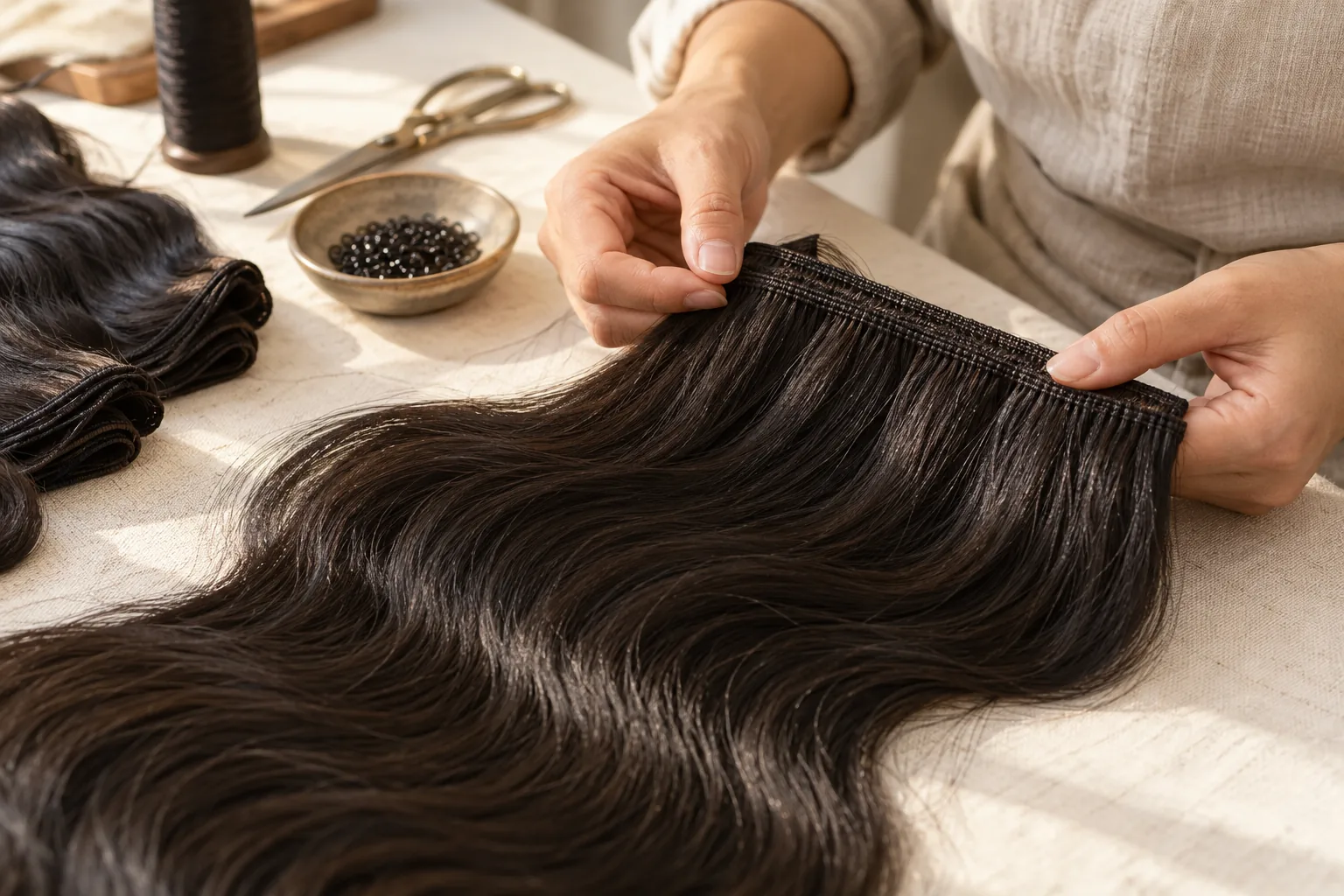
Separate approved reference samples, display pieces and saleable inventory. A sample that has been washed, cut or coloured should carry that history so it is not mistaken for untouched stock. Use stock records to track quantities and dates, and periodically inspect stored items without unnecessary unwrapping or restyling.
Retain a reliable order reference
Royal Hair's Hair Bulk catalogue presents machine wefts; include the catalogue model in packaging discussions and reorder notes. The sample quality guide explains what to retain as an approval record, while the machine weft guide outlines construction questions. Organised storage helps your business connect every received bundle to the specification agreed with sales and production.
Use older stock first within the same approved specification, while checking condition before sale. A practical review can compare the inventory record with one location at a time, including slow-moving shades. Keep washed display samples clearly marked and separate. If a bundle's label is lost, resolve its identity before returning it to saleable stock rather than guessing its length or shade from appearance.