
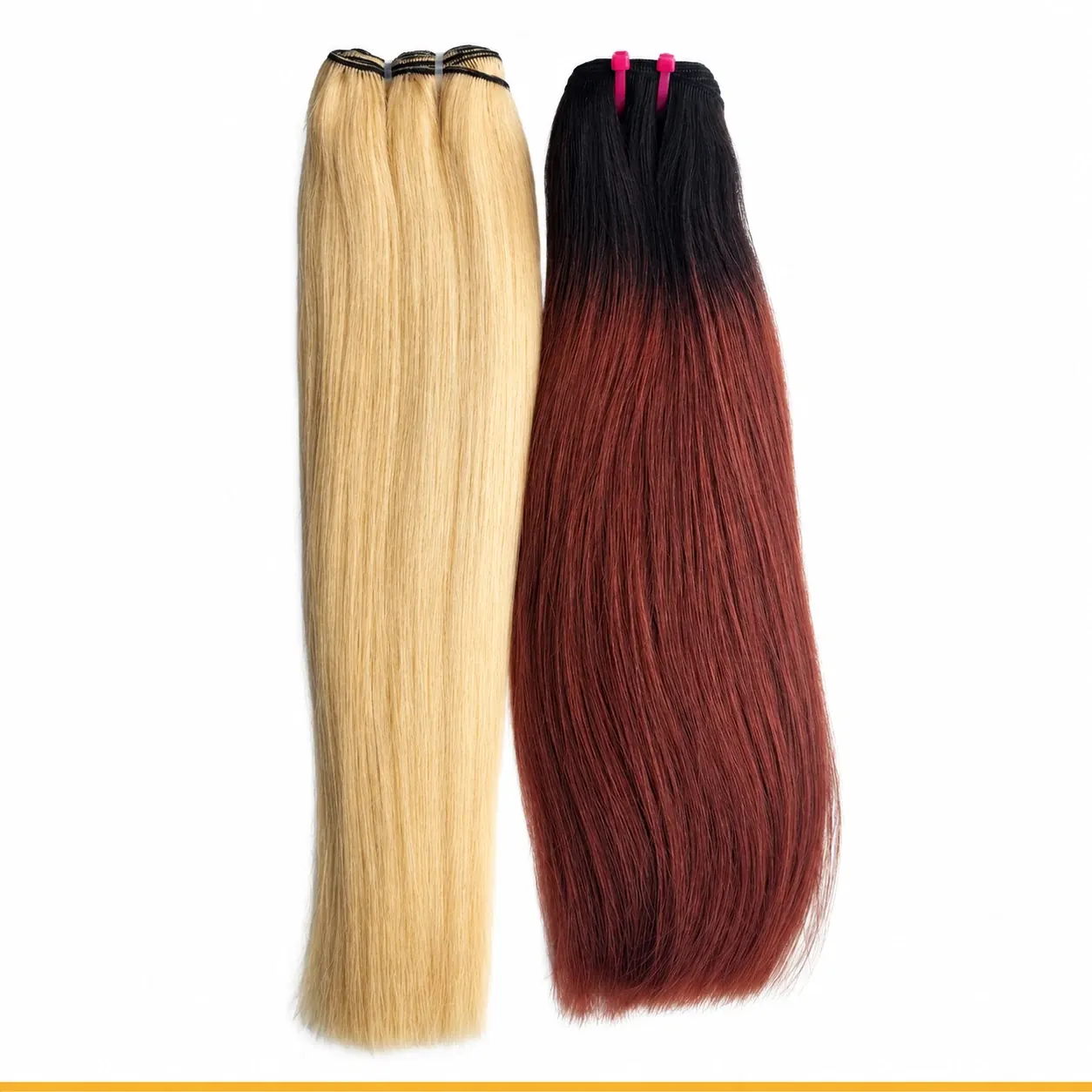
Treat a wholesale sample as a purchasing trial, not a display piece. Decide what must pass before you open it: construction, shade, measurements and behaviour during the care your customers will actually use. A sample that looks attractive but fails the intended installation is not an approval. The checks below help organise that decision; they cannot certify donor identity, prove every strand's composition or predict a fixed lifespan.
Start with the written order
Place the specification beside the sample. Confirm construction, stated length, weight basis, shade, texture and fullness description. Check whether the supplied item actually represents the model intended for the bulk order. A sample from a different shade or length can be useful for discussion, but should not be treated as full approval of another product.
Compare the sample to the request
Before washing or altering the sample, confirm the trial and claim terms in writing. Keep arrival photographs and flag an obvious specification mismatch first. Ask which treatments are permitted and whether a separate test piece is needed for colouring or cutting. Do not assume the supplier will treat an altered sample in the same way as untouched delivered stock.
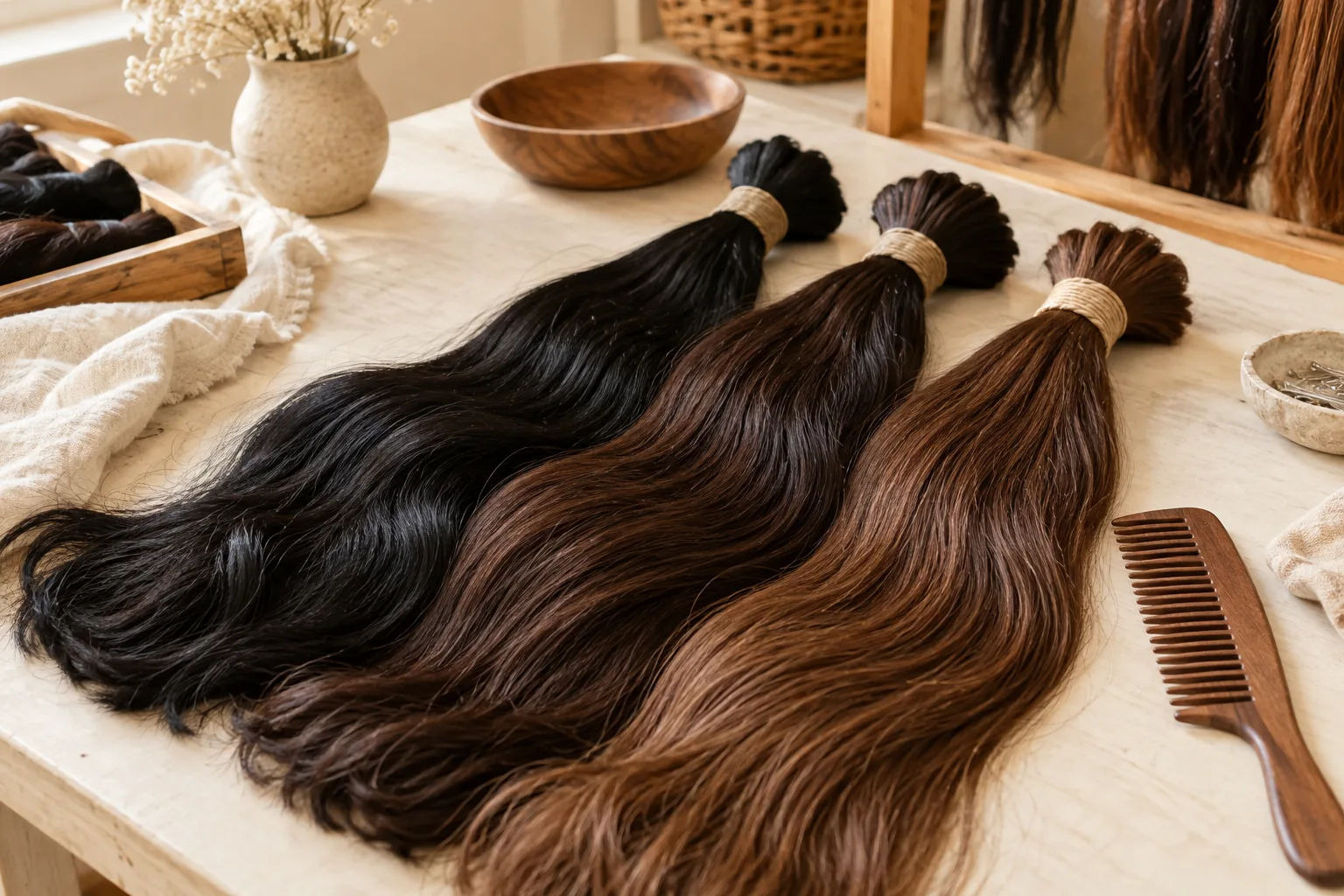
Inspect the track and appearance
Photograph both sides of the stitched track and inspect its flexibility with the intended installer. Look for visible unevenness or areas needing clarification. Check the hair laid out under neutral, consistent lighting and compare colour to the agreed reference. Avoid filtered photographs when documenting a potential mismatch.
Use consistent viewing conditions
Measure length according to the agreed method, especially for textured hair. Observe the lower portion to assess end fullness and record the weight using the agreed basis if you have suitable equipment. These details should be assessed together. A single weight number or an attractive close-up cannot describe the whole product.
Observe permitted care and handling
Use a simple log: sample ID, care products, wash date, drying method and observations once dry. Compare detangling, texture and end condition under the same conditions. When checking normal combing, distinguish complete strands released at the track from short broken fragments. Agree any acceptance limit with the supplier rather than inventing a universal number that every construction must meet.
Keep the trial reproducible
If professional colour work or installation is central to your business, agree a separate trial plan with the supplier and stylist. Significant processing should not be the first unannounced test. Photograph relevant stages and keep notes about technique. The objective is to establish fitness for your application under known conditions.
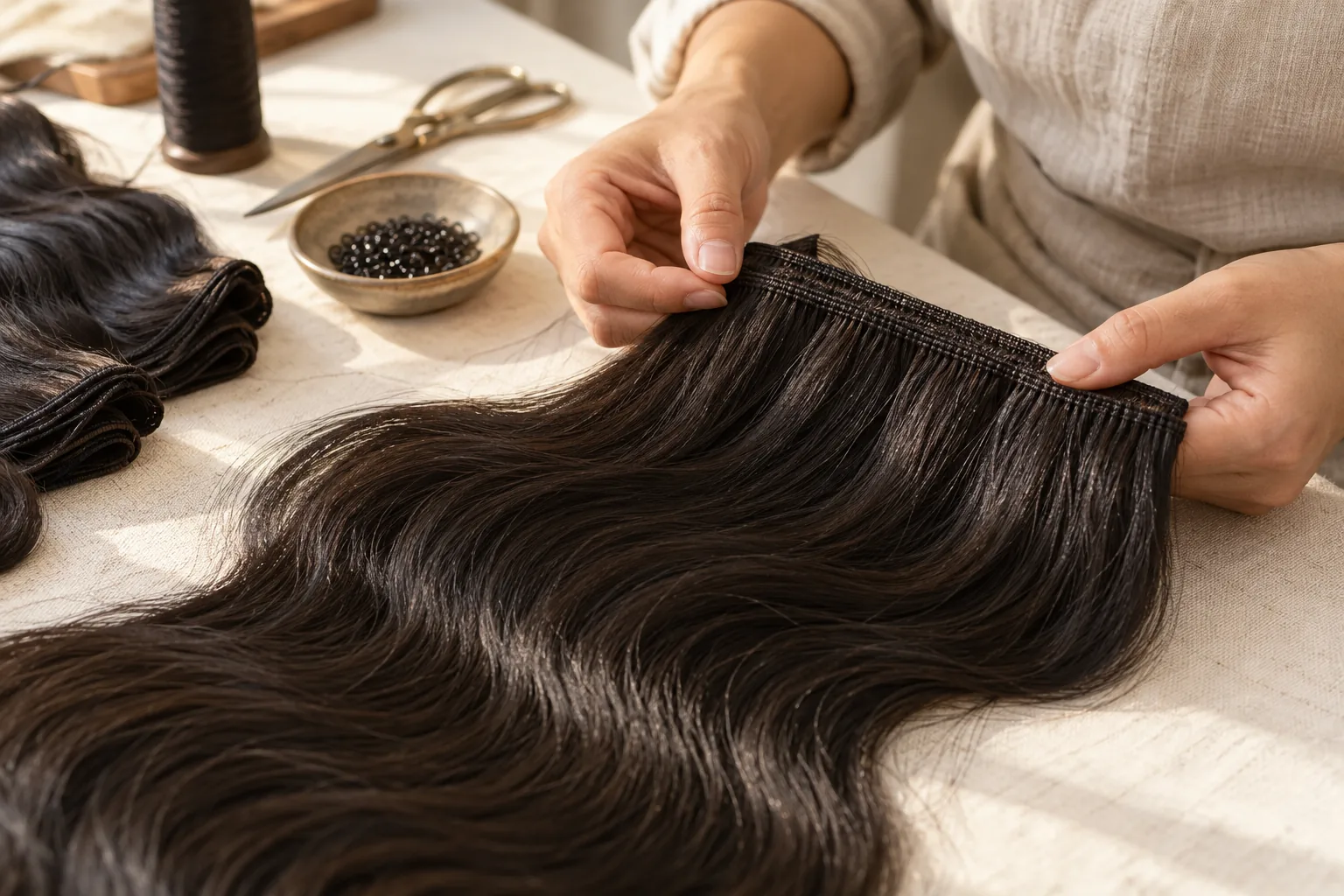
Approve and retain the reference
Issue an approval that states exactly what has been accepted and any changes still required. Retain an unmodified reference where possible, plus the written specification and photographs. If the trial sample has been cut or recoloured, record that fact so it is not later confused with the original delivered item.
Make the next order easier to assess
Use the Hair Bulk catalogue to identify the machine weft model you want Royal Hair to quote. Read the terminology and measurement guides when building your brief. Before scaling quantities, confirm packaging, timing and the procedure for reporting discrepancies. A documented approval supports a clearer production discussion with Phuc Thien Toupee and a more consistent receiving process.
Finish with a decision for each requirement: accepted, held for clarification, or not suitable. For example, matching measurements do not cancel an unresolved colour mismatch. List the change needed, attach the relevant image and identify who can approve the revised sample. This prevents a general message such as looks good from being mistaken for approval of every detail on a larger order.