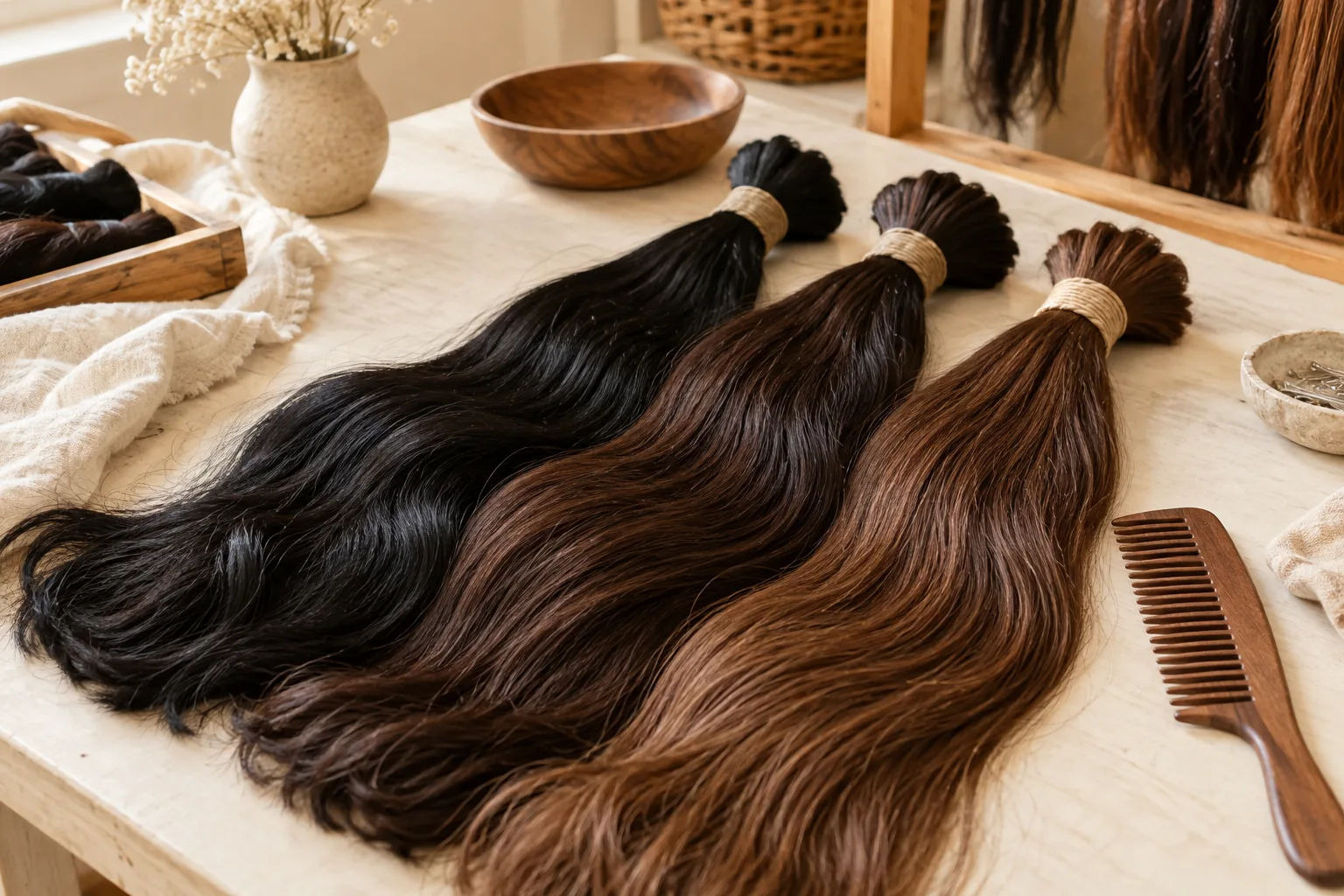
Remy usually describes cuticle alignment; virgin describes the absence of specified chemical treatments; raw is commonly used for minimally processed hair retaining its original character. These labels overlap, but they do not answer exactly the same question. A Remy bundle may have been coloured, and a loose bundle is not automatically raw. For a wholesale purchase, the useful next step is to turn each label into a written material specification.
Understand Remy terminology
Remy generally refers to hair managed with cuticles running in a consistent direction. This is a claim about strand organisation, not a guarantee of one donor, a particular country or untouched colour. Ask the supplier what the label means for the chosen product and whether any processing affects the original cuticle condition.
Ask about cuticle direction
Keep three questions separate: Where is the hair represented as coming from? Is it from one donor or several? Have the strands been kept in the same root-to-tip direction? For example, mixing aligned ponytails from several donors does not automatically reverse their cuticles. Equally, a single-donor label alone does not tell you whether the hair was later coloured or coated.
Separate virgin from raw claims
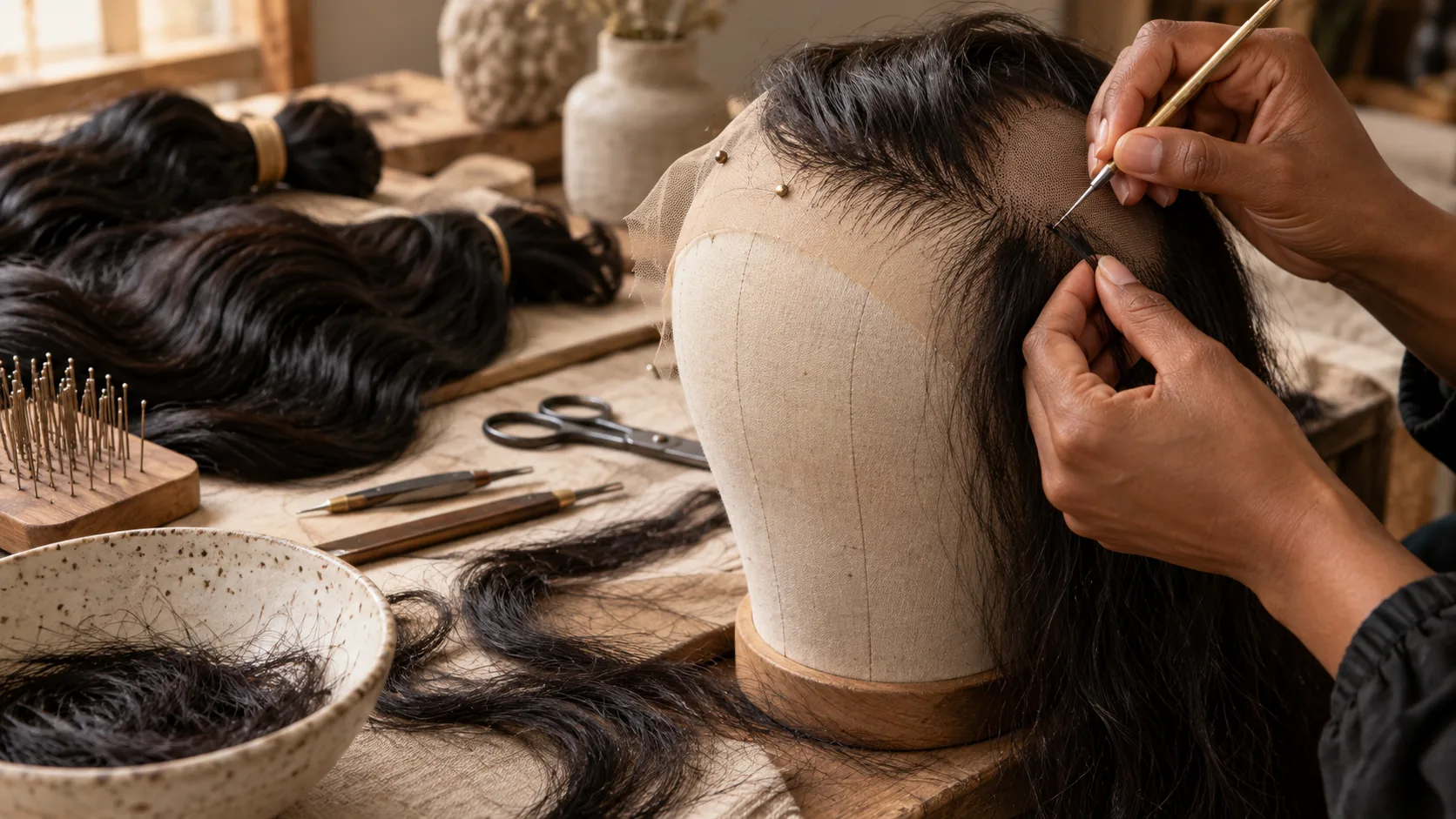
Request a processing checklist rather than a simple yes or no to virgin. Ask about colouring, lightening, chemical straightening or curling, steam texturing, cuticle treatment and finishing coatings. Record which steps were used and which were not. Suppliers differ over whether steam-set texture can carry a virgin label, so describe the treatment itself when that distinction matters to your customers.
Trace the processing history
Do not infer that a blonde or a defined curl pattern is unprocessed because another item in the same collection carries a virgin label. Each shade and texture can have its own production route. A supplier may also use different hair materials for different models. Check the selected bundle instead of applying a catalogue-wide assumption.
Relate terminology to your application
If your salon intends to change colour, explain the target shade before ordering. Ask whether the selected material and its existing treatments make that plan appropriate. Human hair is not a universal permission to bleach. The starting shade, previous processing and condition all matter, and the stylist should assess a sample before attempting significant alteration.
Further colour work needs confirmation
For natural-looking extensions, texture and end fullness may be just as important as a terminology label. A well-defined processed shade could fit a customer's requirements better than an unspecified natural bundle. Choose according to the finished result and care expectations, while keeping sourcing and processing claims accurate in your own marketing.
Document the approved specification
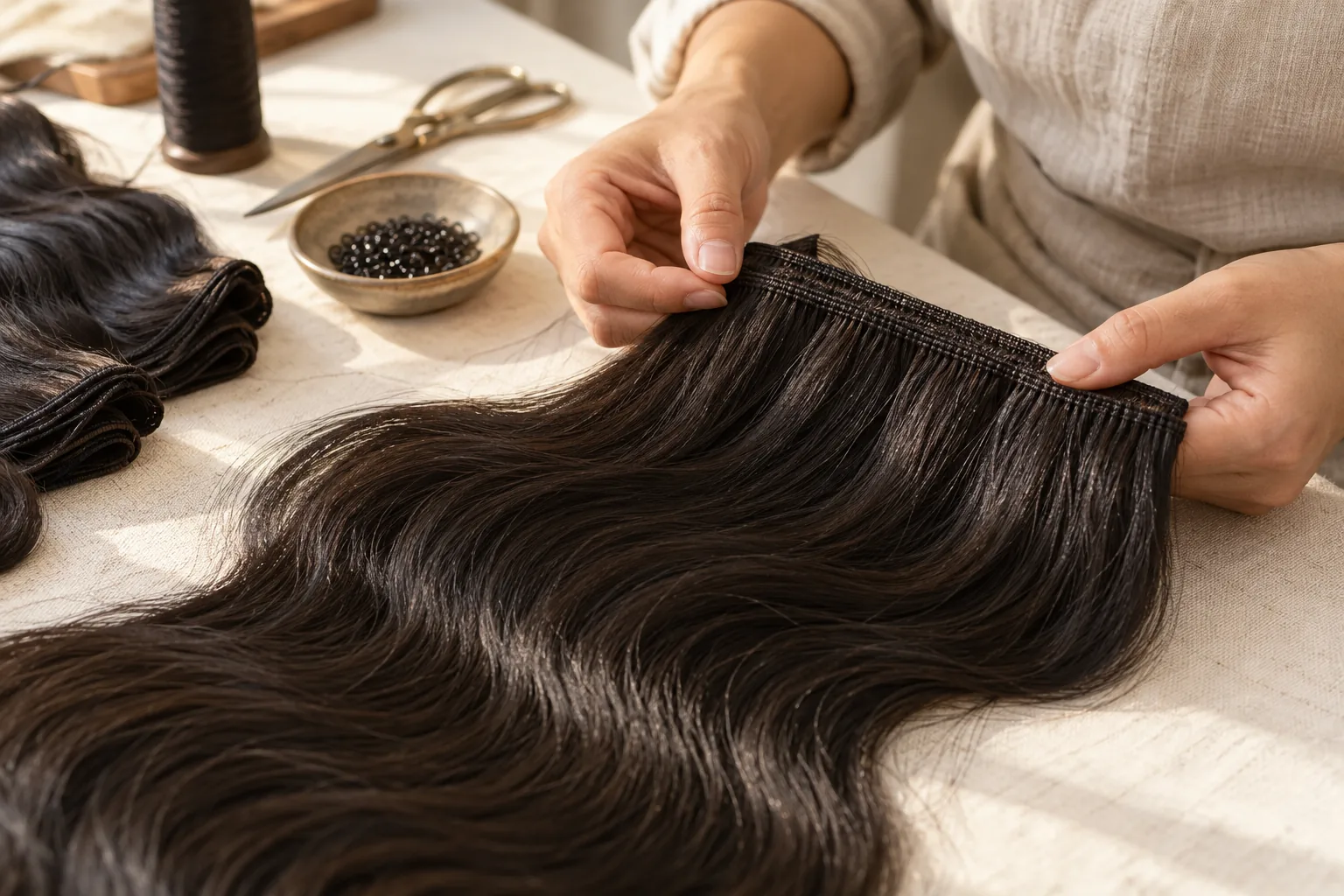
Create separate fields for construction, hair description, colour, texture, length, weight and processing information. If single-donor sourcing or a particular origin is essential, ask for explicit confirmation and appropriate supporting information. Do not add that claim to your listing because it appears on a different supplier's product page.
Avoid broad promises to customers
Royal Hair's Hair Bulk catalogue presents machine wefts; the hair specification should be confirmed for the model being ordered. Read the sample quality guide to plan practical observations and the colour processing guide before requesting blonde or ombre shades. Clear language helps your supplier prepare the order and helps your sales team describe it responsibly.
A clearer retail description is often more useful than a longer string of premium labels. For example: human-hair machine weft, aligned-cuticle specification confirmed, factory-coloured brown, with further lightening subject to a strand test. Only use details established for your actual product. This tells the customer what they are buying without turning an undefined grade into an unsupported promise about donor identity or performance.