
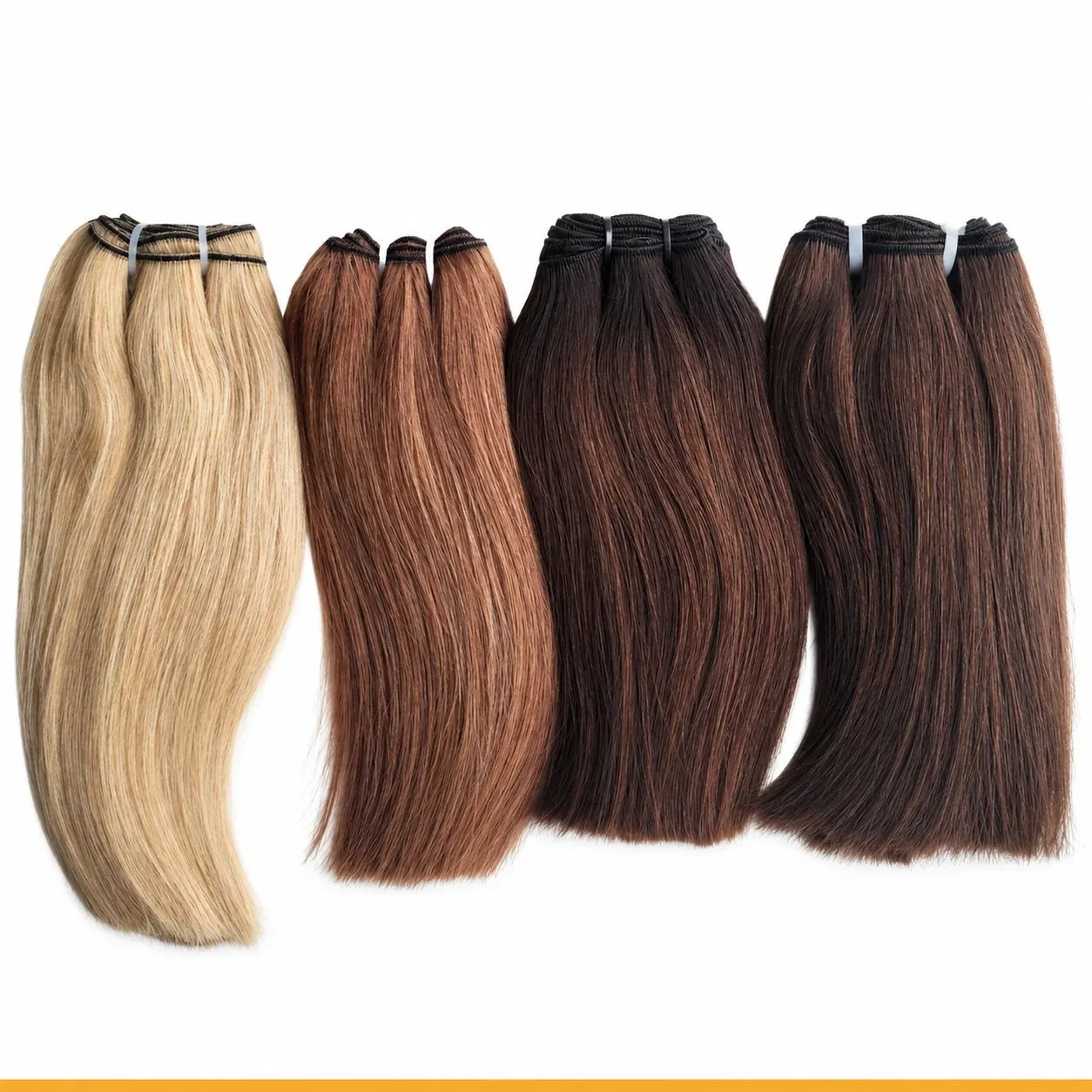
A 100 g bundle tells you its declared weight, not how many rows it will cover or how dense the ends will look. Length, track construction and the mix of shorter strands all affect that result. Compare quotations using the same units and weighing basis, then let the installer assess the actual sample. This guide separates those measurements so an apparently similar bundle does not become an unexpected quantity shortfall.
Confirm the length method
Ask where the length measurement starts and how textured strands are measured. Wavy or curly hair may be measured with the strand gently extended, giving a longer number than its natural hanging appearance. Record that method in the specification. A customer expecting the same visible length as straight hair may otherwise misunderstand the product.
Straight and textured hair need context
A bundle usually contains some variation in strand lengths, depending on the agreed sorting specification. The stated maximum or nominal length does not mean every strand reaches that point. Inspect the sample's lower section and ask how fullness is described. This is particularly useful for styles where a dense perimeter is important.
Clarify the weight basis
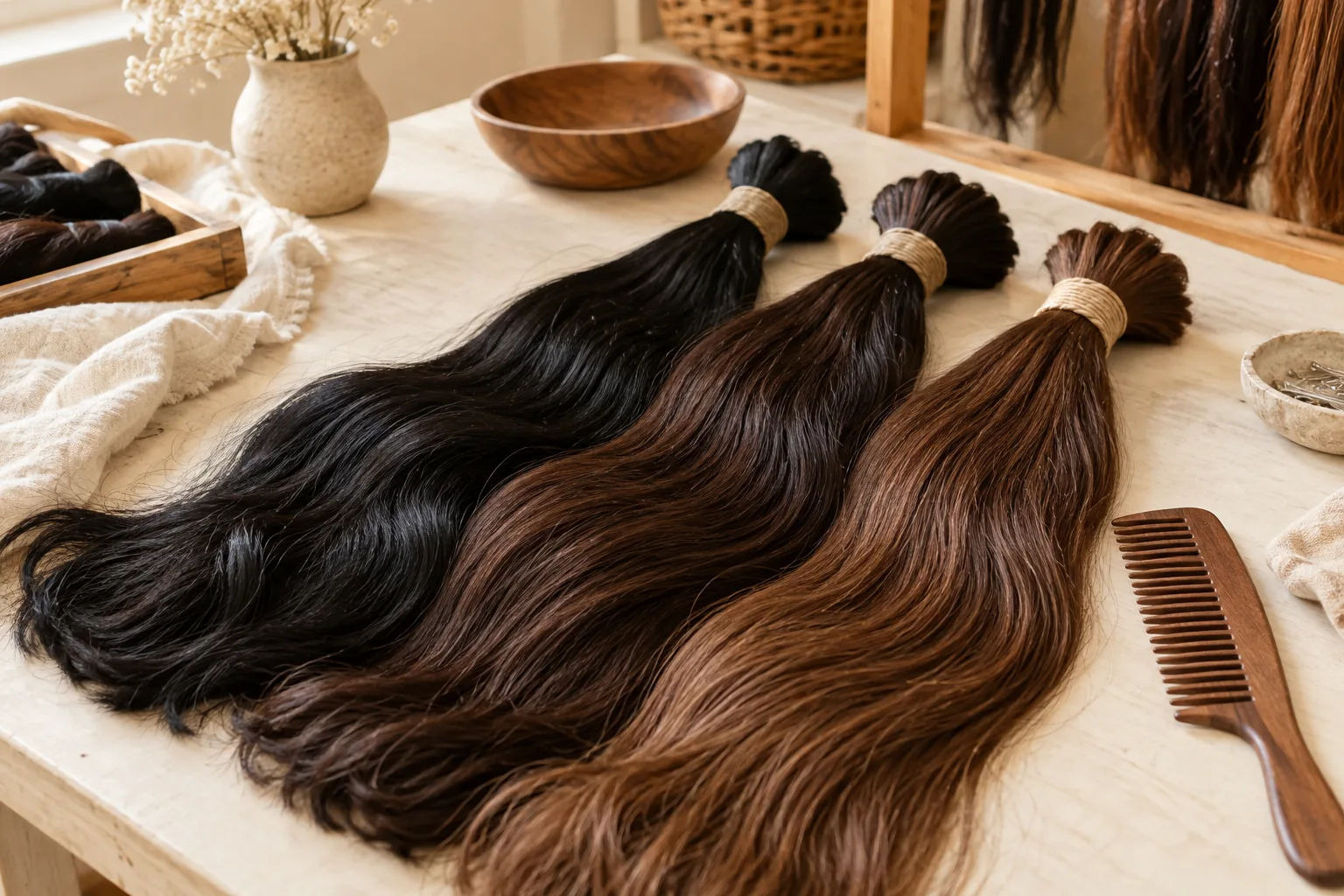
Ask whether weight includes the stitched track, ties or packaging, then compare the same basis. For unit conversion, 100 g is approximately 3.53 oz; a 3.5 oz listing is approximately 99.2 g, not automatically an underweight 100 g product. Remove only the packaging excluded by the agreed specification, weigh the dry sample and record the scale reading before discussing any tolerance.
Hair and construction are separate
At the same weight, longer strands leave less material available for strand count or track coverage than shorter strands of comparable thickness and construction. The precise seam length still depends on manufacturing, so request that measurement instead of estimating it from grams. End fullness is another variable: two equally heavy 20-inch bundles can distribute their shorter hairs differently and create different perimeters.
Estimate quantities with the installer
If a stylist's assessment calls for 250 g and the selected product is sold in complete 100 g units, the purchasing calculation is three units, with 50 g left before any trimming allowance. This is a worked example, not a recommended full-head quantity. The installer must also check usable seam length and placement; buying enough grams alone does not guarantee the planned rows can be formed.
The hairstyle drives the requirement
Consider any cutting or blending that will remove material. A long layered result and a dense blunt perimeter may use the supplied hair differently. Where multiple lengths are combined, record the intended assortment for the order. This helps the sales team quote the relevant quantities instead of supplying an unsuitable mix.
Keep a measurable reorder record
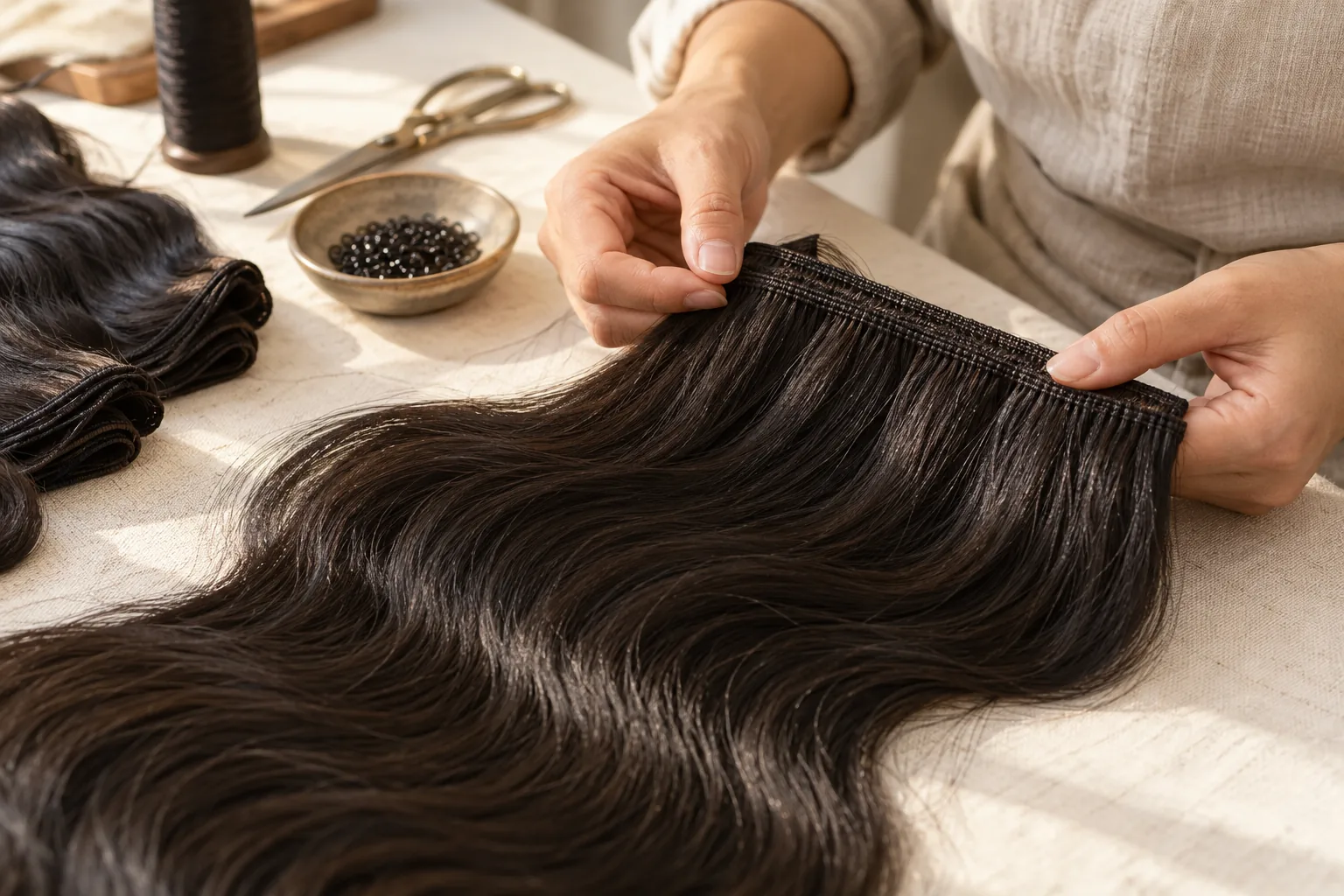
Save the approved sample with length photographs, weighing notes and a description of the end fullness. On receipt, inspect a representative selection using the same method. Document material differences with clear images and measurements before contacting the supplier. Consistent records make the conversation more productive than comparing differently styled product photos.
Use the same comparison each time
Royal Hair's Hair Bulk catalogue currently presents machine wefts. Confirm the declared length and weight for the selected model before calculating your wholesale order. Read the single and double drawn guide to understand end fullness and the sample quality guide for an approval checklist. Together, these details establish what your business expects to receive.
Give your sales staff a short explanation of the difference between stated strand length and the visible length of a textured style. Include a sample photograph demonstrating the agreed measurement approach. This helps customers understand the product before purchase and reduces avoidable misunderstandings about the delivered length.