
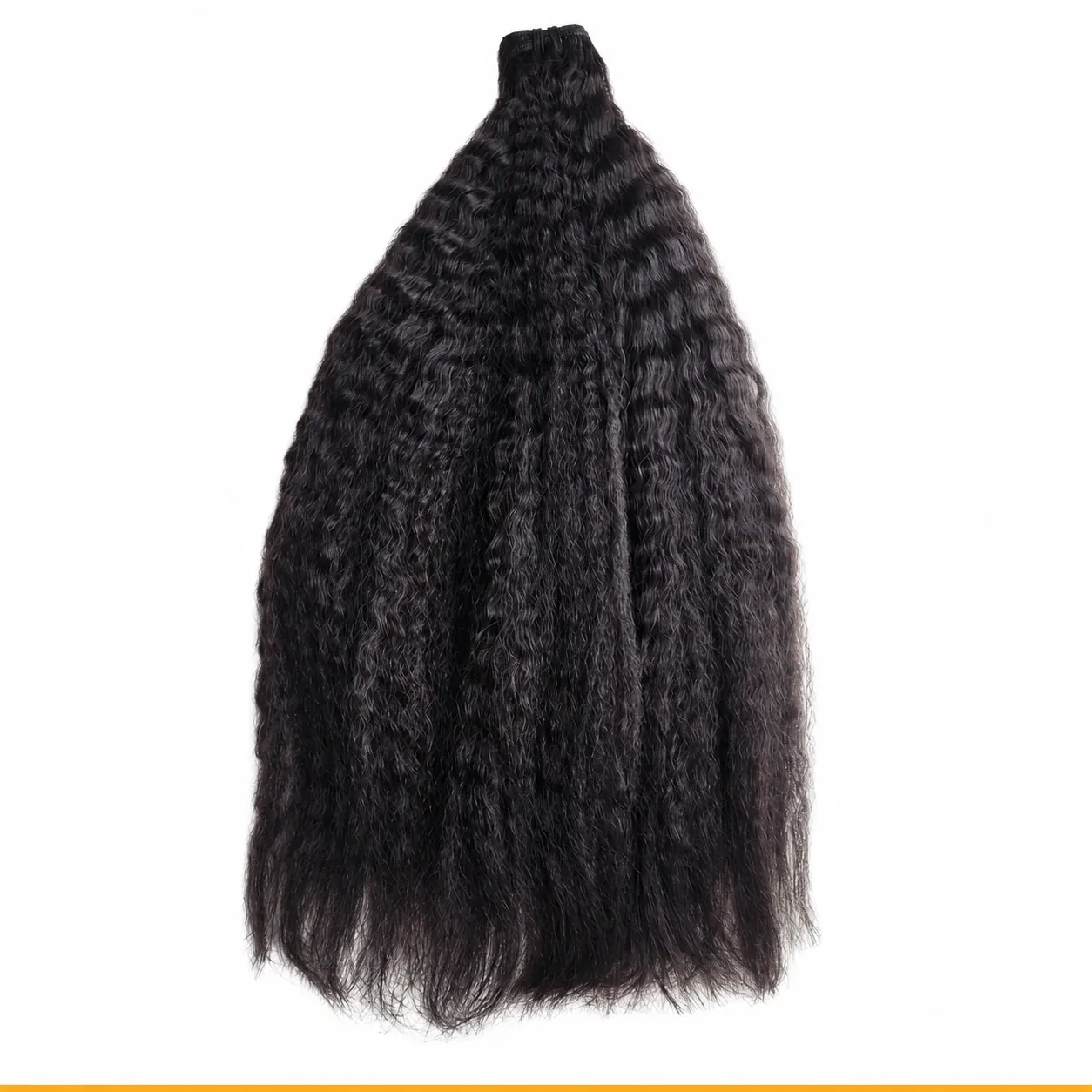
Single drawn hair normally has a more tapered finish; double drawn hair has been sorted to retain a fuller proportion of longer strands. The practical difference appears near the ends, not just at the top of a hanging bundle. Double drawn can suit a strong blunt perimeter, while a tapered bundle may blend well into layers. Compare physical samples because suppliers do not all use the same percentage thresholds for these names.
Look at strand length distribution
A bundle containing more shorter strands usually becomes less full towards its longest ends. A bundle with a greater proportion of strands close to the stated length tends to look fuller there. This difference influences the finished style, especially where a customer expects a strong perimeter. It is distinct from the weight of the complete bundle.
Why ends can appear tapered
Do not confuse double drawn with double weft. Drawn describes the distribution of hair lengths; weft describes the sewn construction. A double-weft bundle can still contain a tapered mix of lengths. Put the sorting requirement and track requirement on separate lines of the order, then assess each one separately instead of assuming that either word guarantees fuller ends.
Choose fullness for the hairstyle
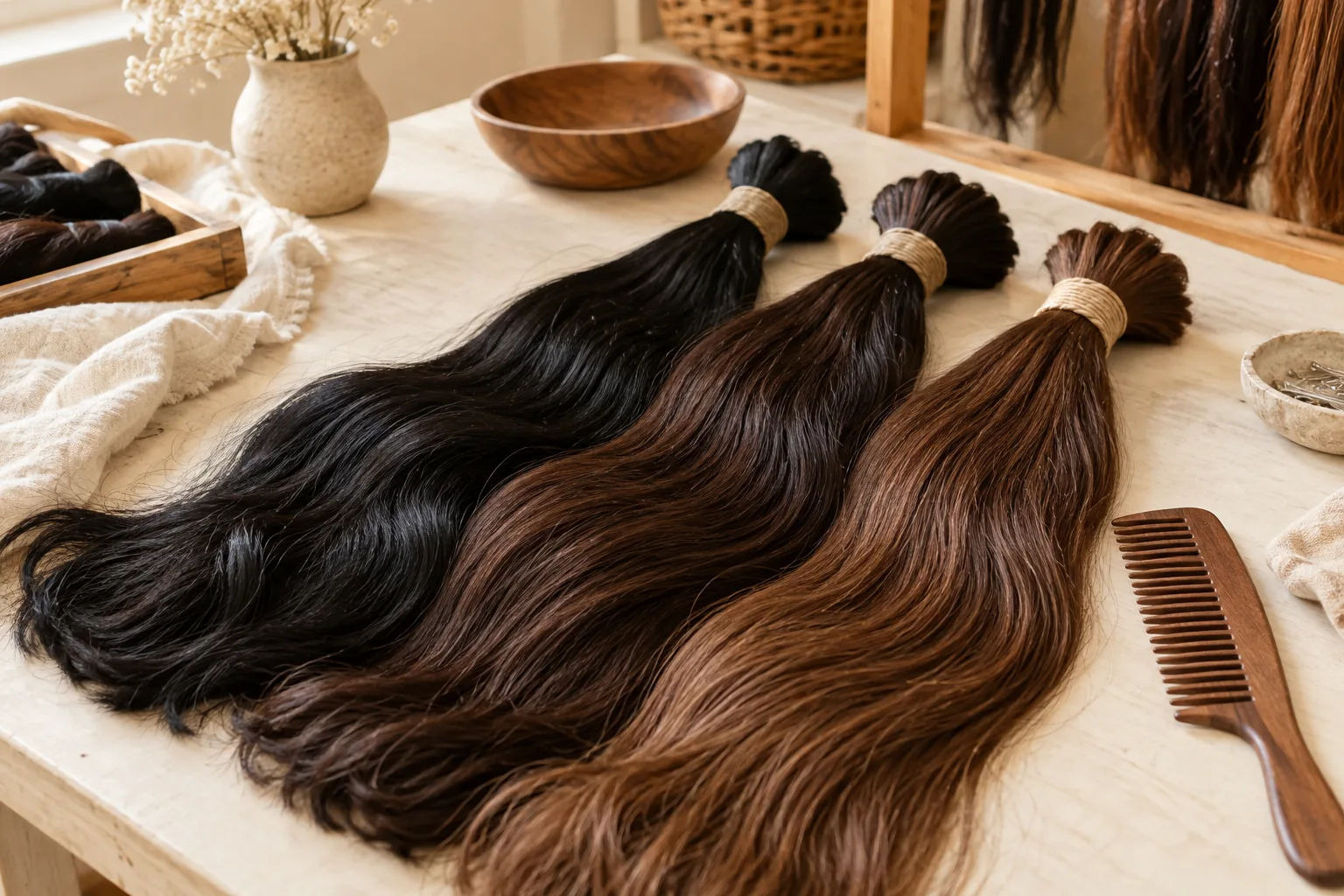
A tapered finish may suit a layered or softly blended style. Fuller ends may be preferred when the target is a more substantial perimeter. Neither option is automatically correct for every customer. Ask the stylist how much cutting and blending the installation requires before choosing the grade solely from a wholesale description.
Match the intended perimeter
Very long hair deserves particular attention because differences at the ends become easier to notice. Compare samples at the length you plan to sell, rather than approving a shorter sample and assuming the same visual result. Texture also changes how fullness appears: curls gather strands together differently from a straight bundle laid flat.
Compare bundles consistently
For a straightforward comparison, place equal-weight samples of the same stated length on a plain contrasting background. Align the tops, spread them to a similar width and photograph the middle and lower sections without concealing the tips. Use the same dry styling state for both. Treat this as a visual reference, not a laboratory measurement of the percentage of full-length strands.
Keep length and weight aligned
Keep the quoted weight basis clear. A heavier bundle may look fuller even if its strand distribution differs, so it does not establish that one sorting grade is superior. Compare like with like: the same construction, approximate length, shade, texture and declared weight. Then note the visible fullness and the stylist's practical assessment.
Write an approval that can be reused
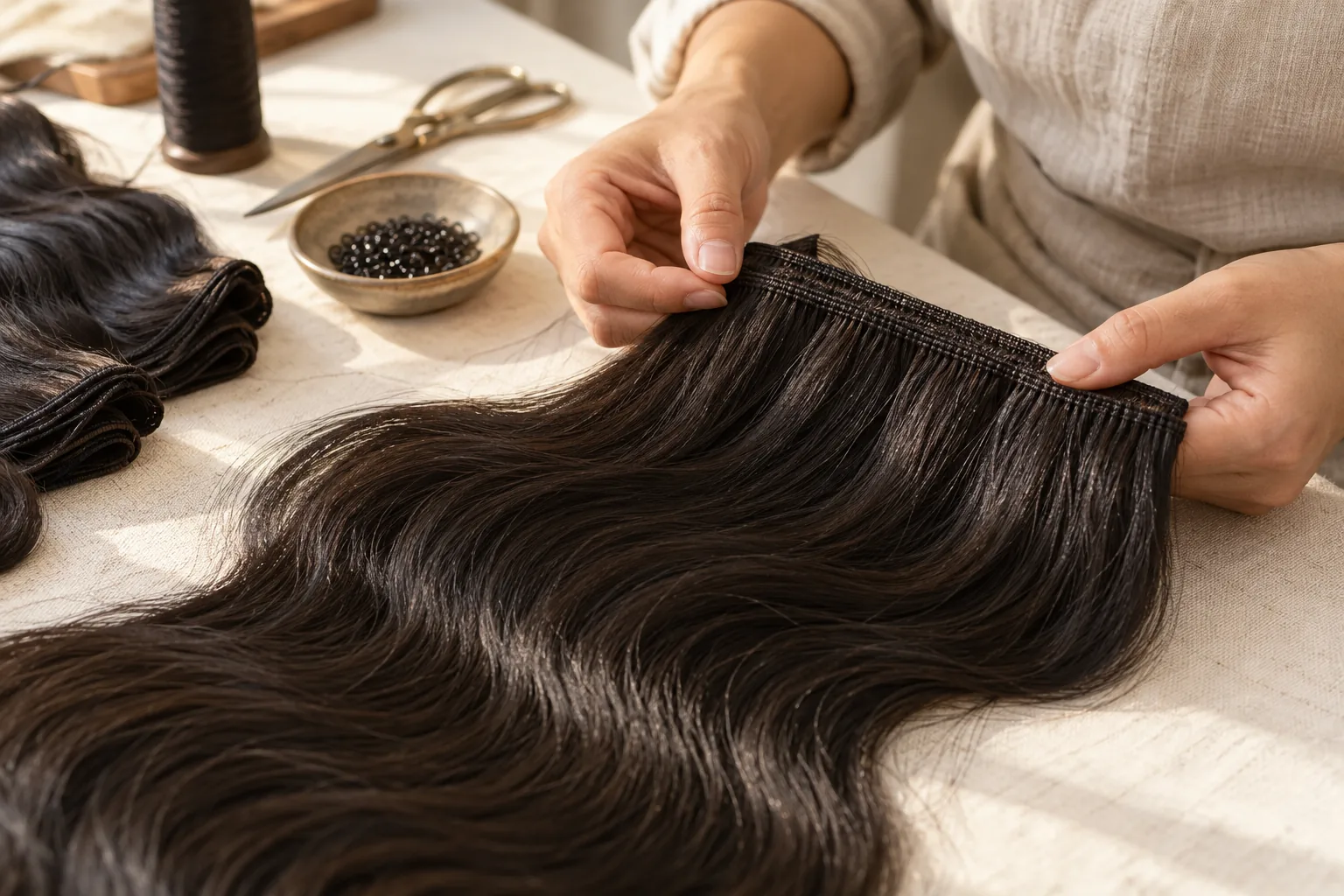
Record the grade name together with an approved sample and a description of the desired ends. If a particular fullness threshold is important, agree a measurable method with the supplier before ordering. Avoid relying on expressions such as luxury or premium to communicate a technical requirement. Those words do not define the sorting result.
Reference the physical sample
Review the Hair Bulk machine weft models and enquire about end fullness for the selected item. The bundle weight guide explains a separate quantity decision, while the sample quality guide helps build an approval record. Keeping these topics distinct lets Royal Hair and the buyer discuss the required product without confusing sorting, weight and length.
Ask the stylist to sketch the intended finished cut before choosing the grade. If a 20-inch bundle will be trimmed to an 18-inch blunt line, compare the samples at that proposed cutting point. Record what would be discarded and whether the remaining perimeter meets the brief. The relevant value is the hair that serves the finished style, not the fullest-looking untouched bundle.