
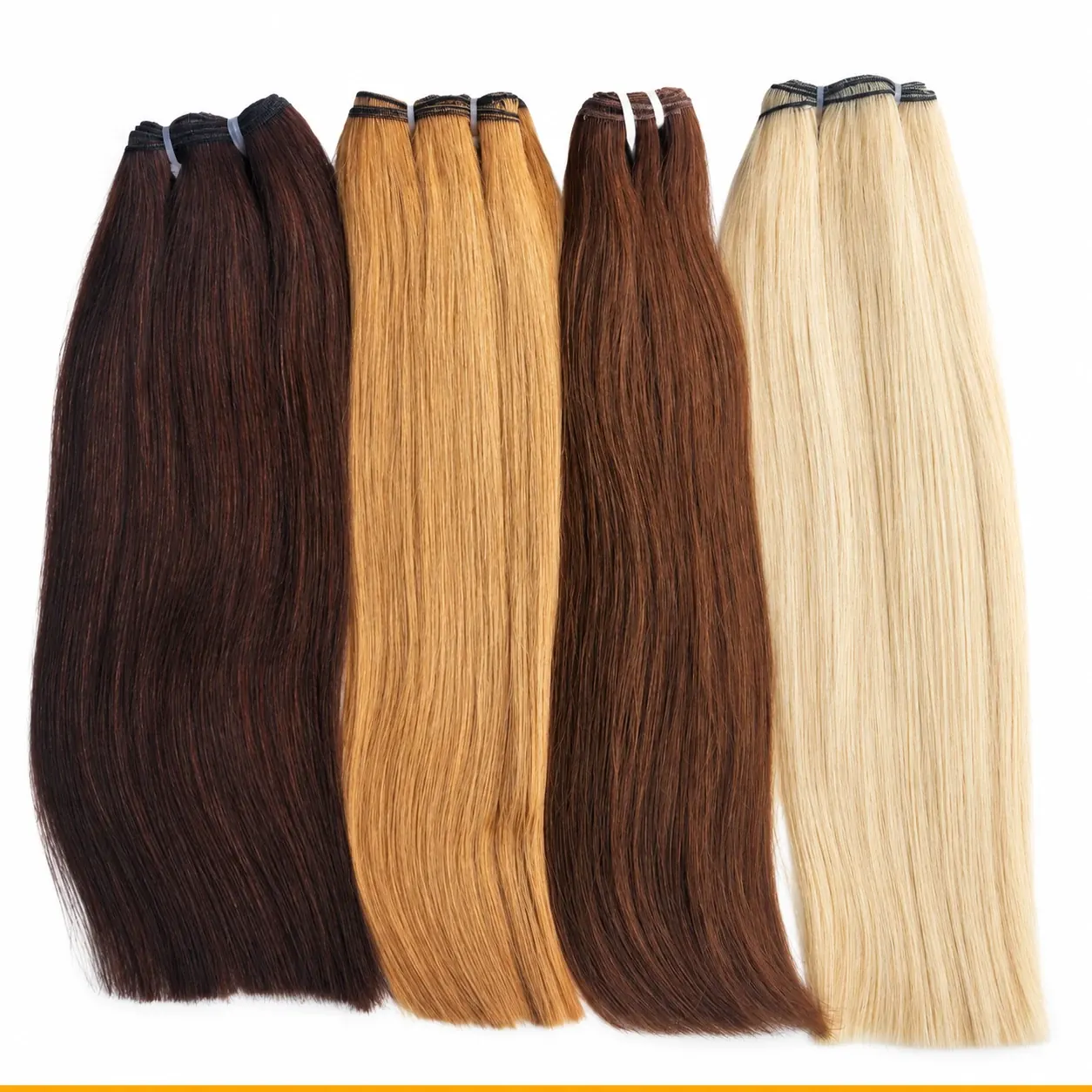
A curl pattern changes how a weft hangs, how much length is visible and how the finished style is maintained. It also raises a manufacturing question: did the pattern grow naturally, or was it created during production? Straight, body wave and deep curly are useful catalogue labels, but not complete specifications. Approve the dry appearance you want, then ask how that particular texture was prepared and how it should be cared for.
Define the visible pattern
Words such as body wave, deep wave or curly may describe different patterns across catalogues. Supply a clear reference showing the whole bundle and a closer view of the curl shape. State whether you want a loose flow, repeated waves or smaller defined curls. The desired appearance when dry is particularly important.
A reference is better than a broad label
Factories may shape waves by wrapping hair around forms and applying controlled steam; other textures can involve chemical treatment or heat straightening. Natural-pattern hair follows a different route. The method depends on the product, so do not describe every curl as natural or every straight bundle as untreated. Request the actual processing history and use that description consistently in your own listing.
Understand length and volume
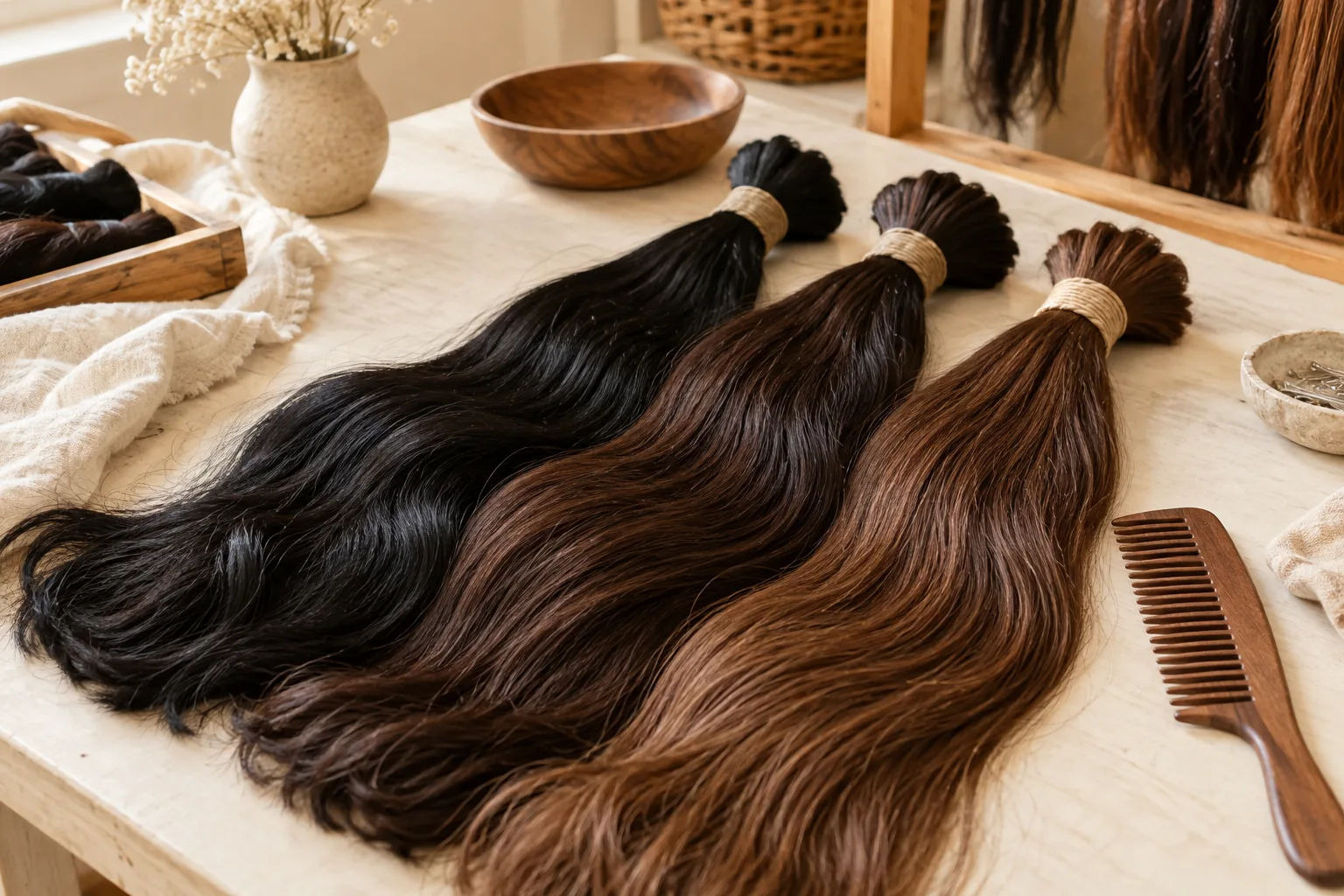
An 18-inch curly strand measured gently extended will normally hang above the endpoint of an 18-inch straight strand. There is no fixed number of inches to subtract because curl size and tightness differ. Record both the agreed strand length and the sample's dry hanging appearance, photographed beside a ruler. This gives the stylist a more realistic starting point for choosing the finished length.
Texture changes the presentation
Curl pattern can make a bundle appear more voluminous, but it does not establish greater weight or fuller ends. Keep construction, weight and strand distribution in separate fields. A stylist may need different quantities for a particular textured installation, so consult the installer rather than choosing bundle numbers solely from catalogue photographs.
Review a sample after permitted care
Ask for care instructions that match the selected texture. Where appropriate, gently wash a sample and let it dry fully using the recommended approach. Observe the resulting pattern and how easily it can be arranged. Avoid high heat or chemical treatment during an initial assessment unless those services are part of the agreed sample plan.
Check the dry result
Photograph the sample before and after care in a consistent setting. Note whether styling products, brushing or drying methods were used, because they can change the appearance. A useful comparison describes the handling conditions. It should not turn one informal observation into a promise that every curl will remain identical under every customer's routine.
Coordinate texture with the full order
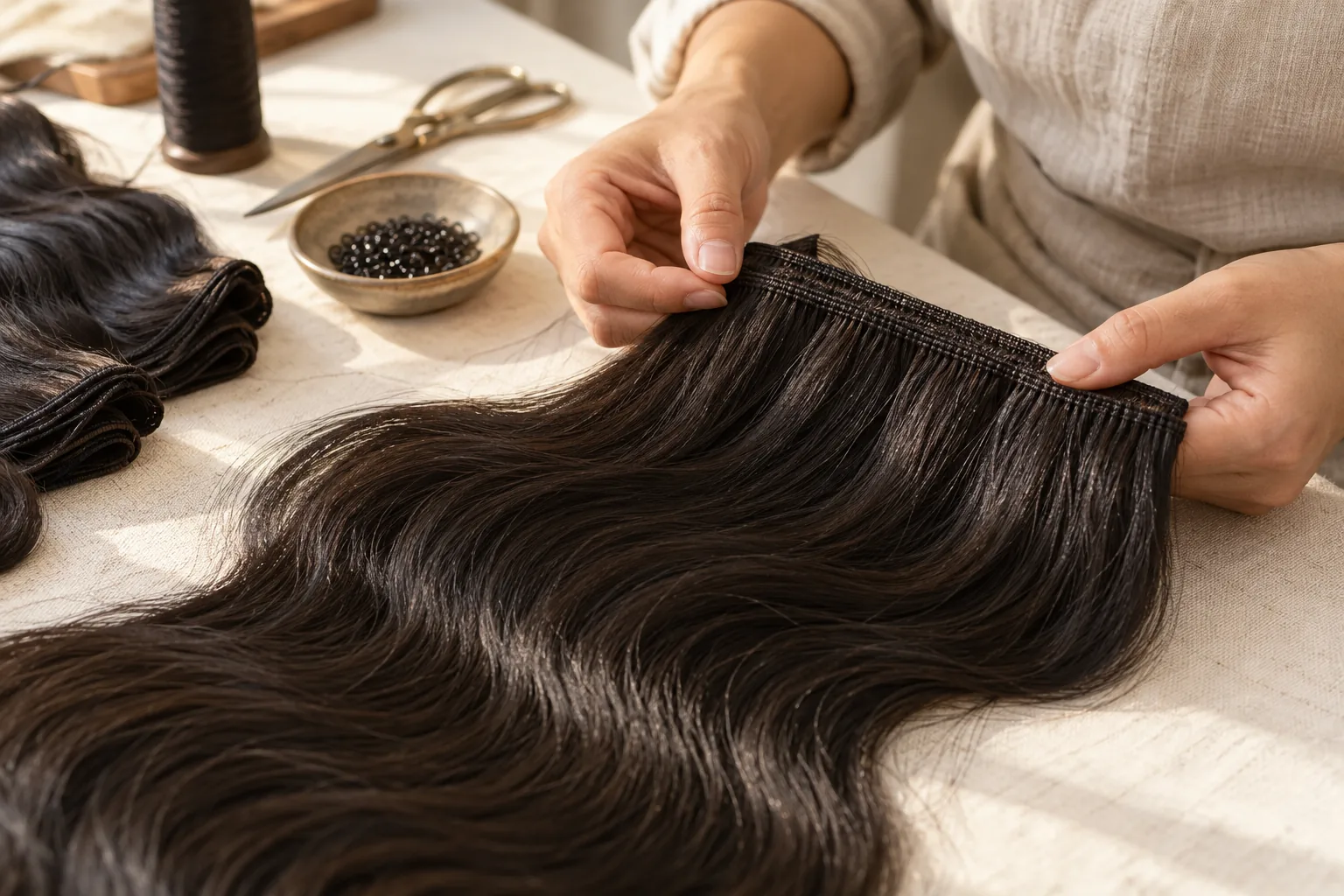
When ordering a coloured textured weft, approve the combination rather than treating shade and pattern independently. Also tell the supplier if the installer plans substantial cutting or heat styling. The final look depends on how the material is used, so those details help establish realistic expectations before production or dispatch.
Shade and cutting can affect the result
Review the machine weft options in Royal Hair's Hair Bulk catalogue and enquire about the texture shown on the selected model. Use the bundle measurement guide for length and quantity questions and the colour guide for shade planning. Keep the approved sample and its care notes so future orders have a reference beyond a general texture name.
Ask how the client plans to wear the hair most days. A person wanting wash-and-style curls needs to see the pattern after normal care, not just the factory presentation. Someone planning regular straightening needs separate product-specific advice on heat and texture recovery. Choose the sample trial around that routine rather than assuming one texture will tolerate every styling change equally well.