
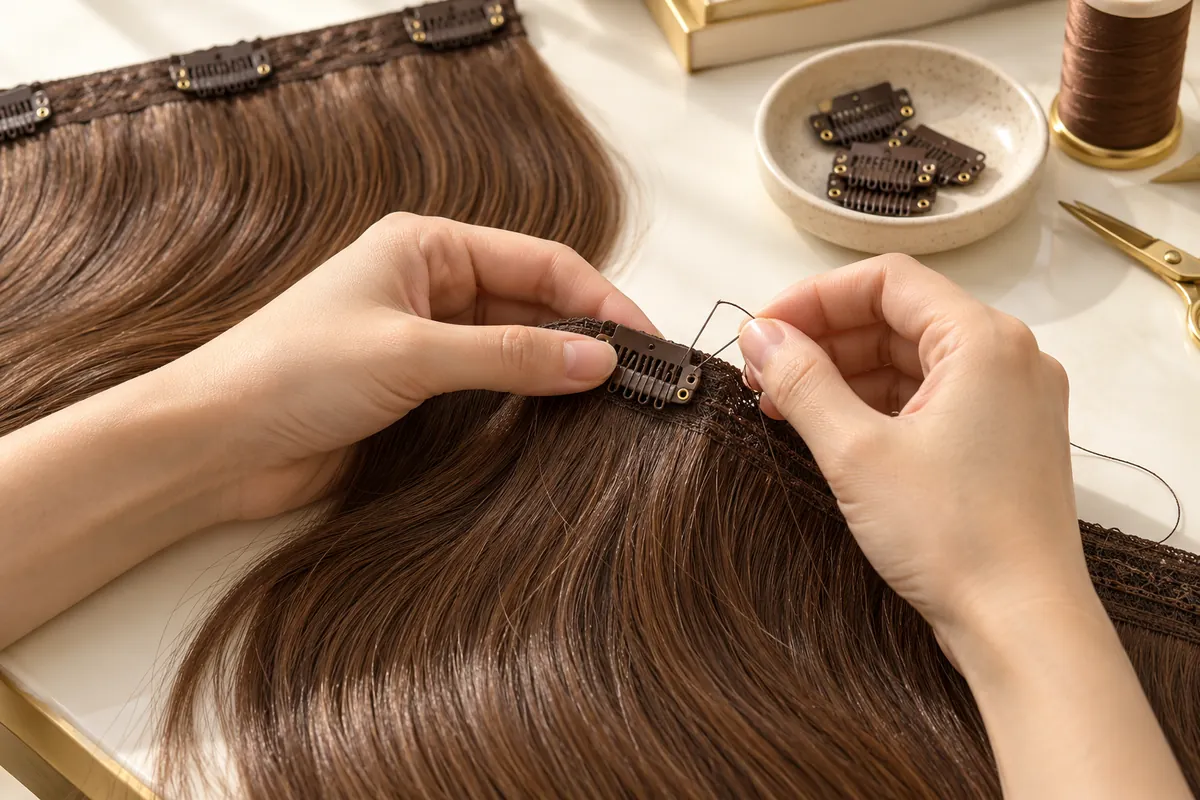
Human hair extension manufacturing has two linked jobs: prepare the hair, then build the attachment. Sorting, cleaning, colour work and texture preparation affect the fibre; sewing, bonding or clipping determine the finished format. For wholesale buyers, separating those jobs makes quotations easier to compare. A beautiful bundle is not yet an approved extension, and an excellent attachment cannot compensate for hair that fails the agreed wash test.
Start with the intended accessory
The usual production route begins with selecting and sorting hair, removing unwanted short strands through hackling, and cleaning it before any agreed colour or texture work. Prepared hair then moves to assembly. A sewn weft holds hair along a continuous seam; tape-ins use adhesive tabs; pre-bonded strands have formed tips; clip-ins add removable hardware to a supporting strip. These are construction categories, not a claim that every factory offers every format.
Define the wearing format
Royal Hair’s Hair Accessories collection includes halo hair, clip-in pieces, ponytails, buns, crown-volume pieces and hair caps with hair. Royal Hair handles sales communication in cooperation with Phuc Thien Toupee, which handles manufacturing. Ask the sales team to confirm the construction of the exact model being considered rather than applying one product’s details to the entire range.
Specify the hair separately
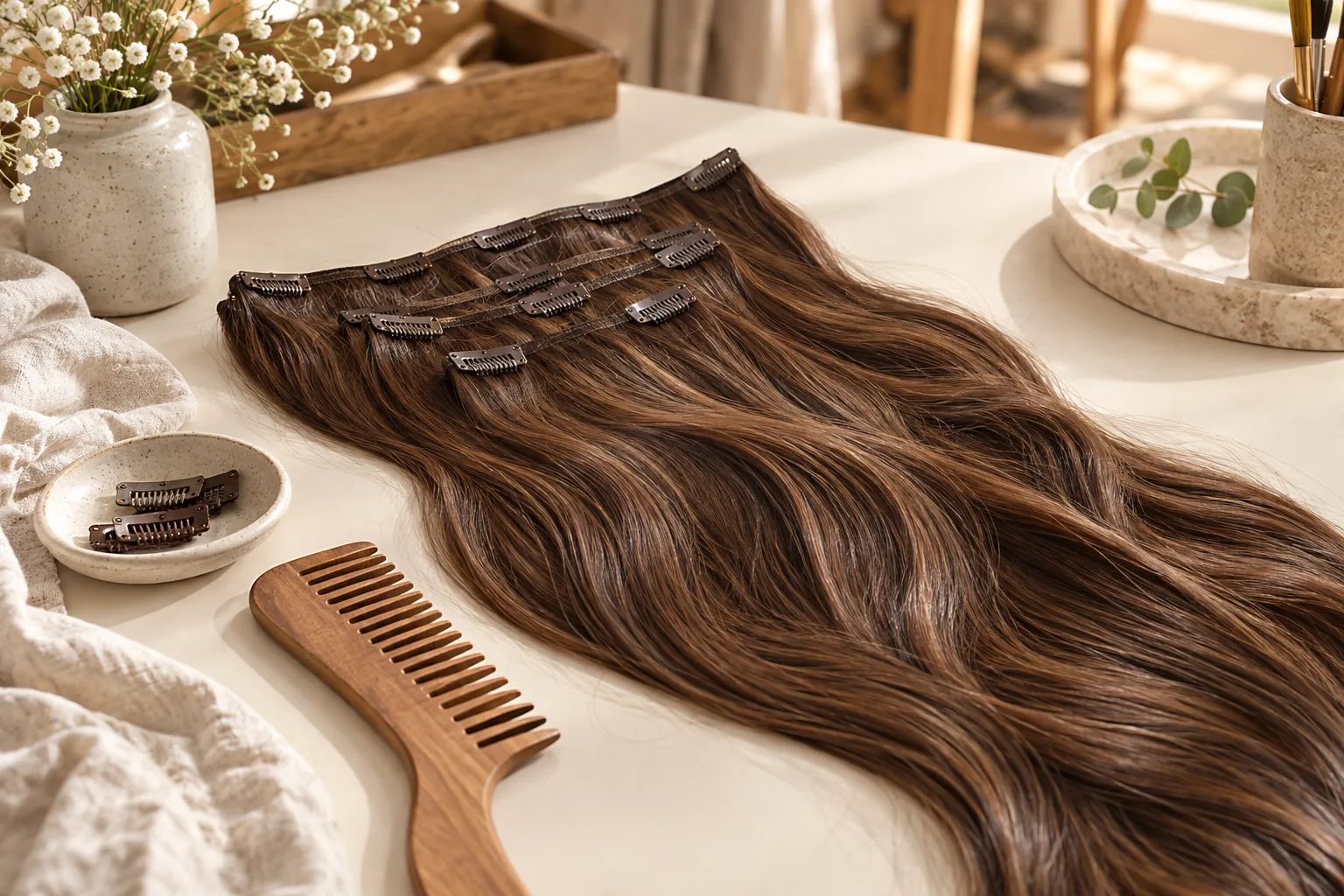
Ask what happened to the hair before it reached the assembly table. Record whether it was coloured, lightened, textured or treated with a surface finish, and whether root-to-tip direction is maintained. Remy describes alignment; it does not by itself establish an untreated processing history. If your brief requires uncoloured hair or a particular treatment restriction, put that requirement in writing rather than relying on a grade name.
Record colour, texture and length
Also separate hair weight from total accessory weight. Clips, fabric and other components contribute to the assembled product’s weight. Two pieces with the same total weight may contain different amounts of hair. For a meaningful comparison, record both values where the supplier can provide them and agree which value the order specification will control.
Inspect the finished construction
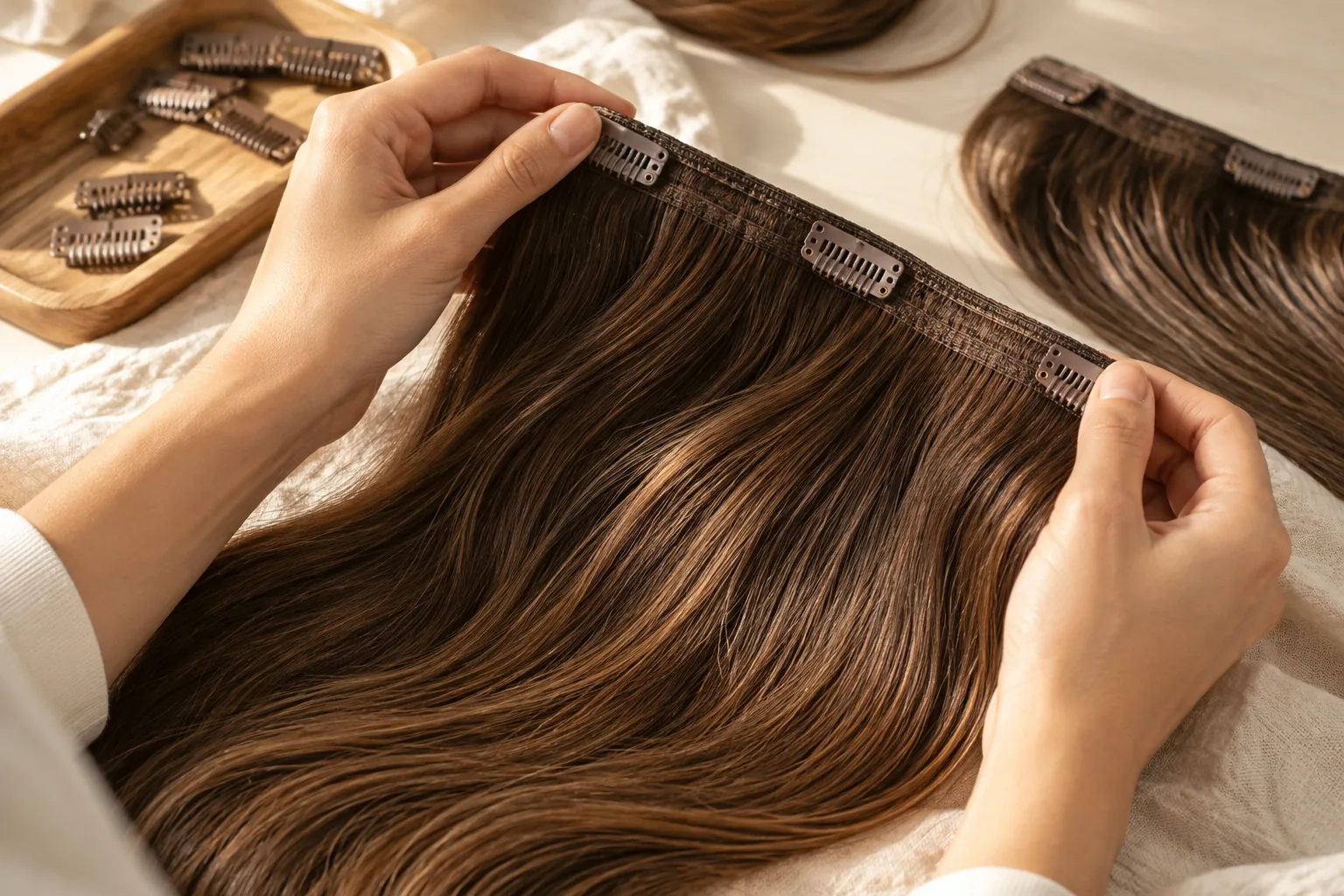
Review the underside as carefully as the front. Check seams, clip placement, exposed edges and the connection between hair and its supporting base. Open and close detachable hardware without forcing it, and inspect whether the surrounding stitching remains tidy. These observations are more useful than assuming that a polished catalogue photograph demonstrates every construction detail.
Look beneath the styled photograph
Compare the sample before and after an agreed wash-and-dry routine. Keep the same shampoo, water conditions, detangling method and drying approach for each sample, and record any shed strands, new tangling or noticeable colour change. Inspect the attachment again once dry. This is a practical comparison, not a lifetime guarantee: one wash cannot establish months of wear, and different constructions may need different handling instructions.
Turn a sample into a repeatable order
An approved sample should become a named reference with its own revision number. List the features that must remain unchanged and the variations you permit, such as alternative colours or lengths. Keep the original attachment photographs with the written specification. A statement such as same as last time is less reliable when multiple sample versions have been exchanged.
Approve measurable production references
Before production, confirm quantity, packaging, inspection expectations and the information needed on labels. Explore the Hair Accessories collection to identify suitable starting models, then review the linked guides on attachment checks and sample approval. This approach gives both buyer and factory a clear basis for discussing changes, without turning generic extension advice into an unsupported product promise.