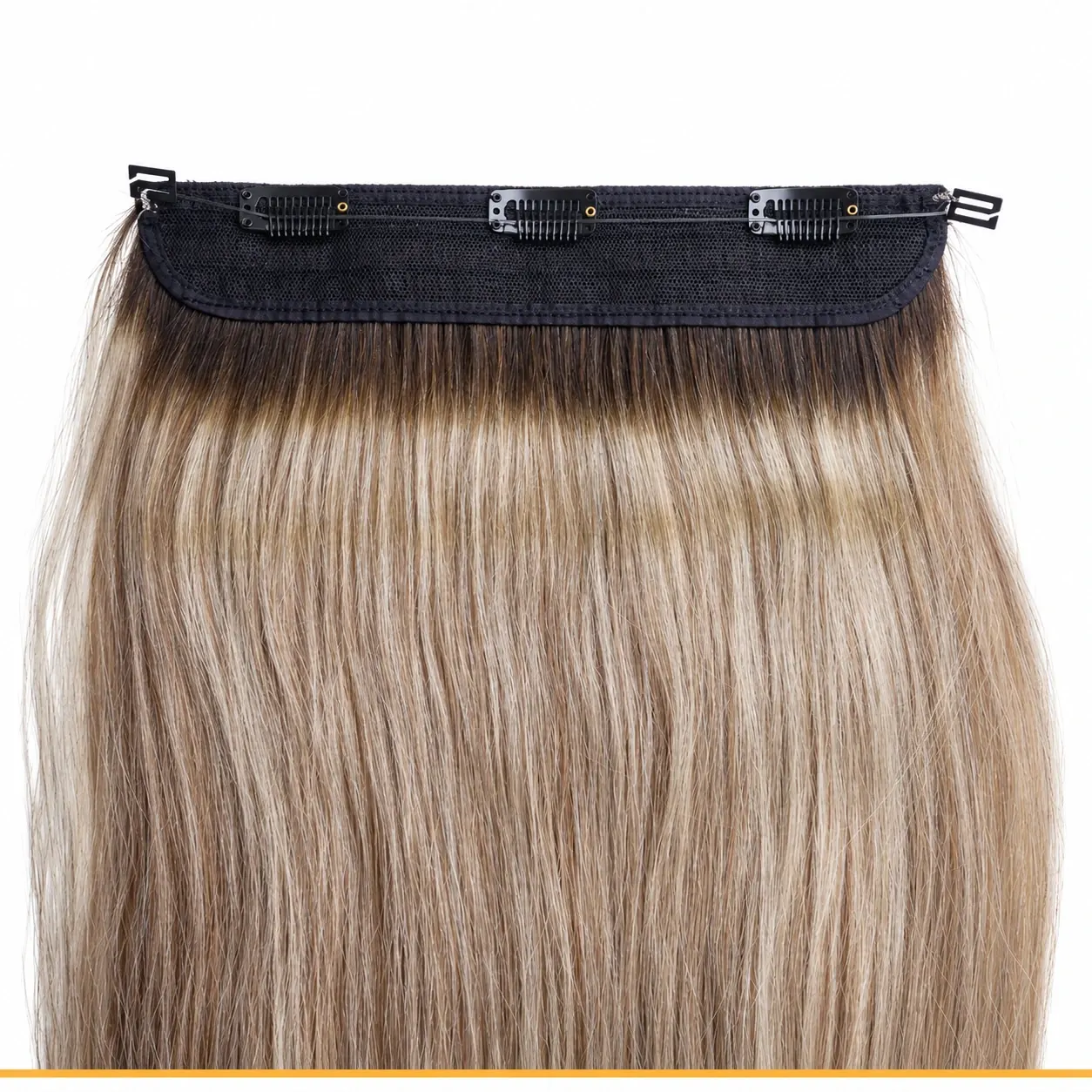
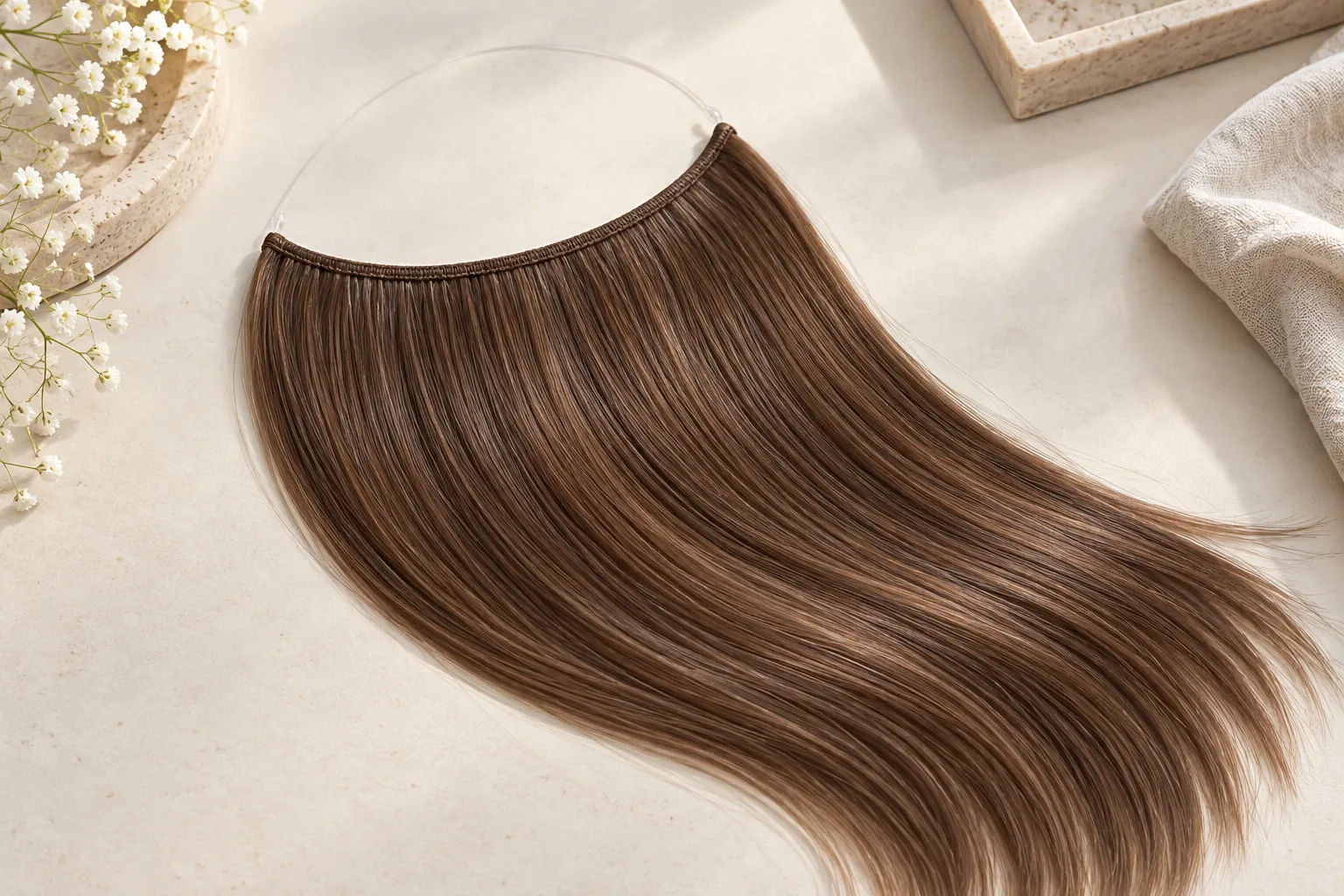
A halo extension places a curved hair weft around the back of the head, supported by a fine line across the crown. Its fit depends on the relationship between that line and the weft, not on hair weight alone. When evaluating a wholesale sample, first establish where it sits, whether natural hair can cover the support, and how the connections are finished. A loose or tight fit should be investigated before adding hair.
Understand the exact supporting design
Request underside photographs and a simple diagram identifying the hair-bearing section, line connections and any additional attachment components. Halo designs vary between suppliers, so avoid assuming that every version is adjustable or supplied with spare lines. Ask what the current Royal Hair model includes and which changes can be considered before describing those features in your own catalogue. Keep the confirmed component list with the signed sample approval.
Confirm the parts on the actual model
A shorter line brings the weft into a different position from a longer one. During a fitting trial, note whether the support rides up, sits too low or creates pressure, then change the fit only according to that model’s instructions. Some brands supply interchangeable lines; others use an adjustment system. Record which arrangement the sample actually has, including connection type and replacement instructions, rather than assuming another brand’s accessories will fit.
Evaluate the position and distribution
Check the blend in profile, not only from behind. Lift the natural hair that will cover the line, position the halo as directed, then release that hair and inspect both temples and the back. A dense blunt haircut can leave an obvious step above the extension ends; very sparse covering hair may reveal the support. These are fitting considerations to assess with a stylist, not defects that extra grams automatically resolve.
Weight belongs alongside the dimensions
Keep attachment weight and hair weight distinct in the specification. The line, base and other components contribute to the complete assembly. If a supplier reports only finished weight, record that limitation rather than presenting it as net hair weight. This is particularly useful when comparing a halo with another accessory format, where supporting materials may differ substantially.
Match the hair in a repeatable condition
Colour matching should include the areas that will be visible around the sides and ends, not just a top view. Photograph the reference under neutral lighting and avoid filters that warm or cool the colour. For mixed shades, explain the intended distribution. A uniform blend and a concentrated lighter surface can look different despite using similar individual colours.
Use consistent light and measurement
Agree how finished length is measured. Straight, waved and curled hair can present different resting lengths, so describe the measurement condition explicitly. If a supplier sends a styled sample, record the styling before testing or changing it. This protects the approval reference from being confused with a buyer’s later cutting, washing or finishing work.
Prepare the order and review file
For the approval file, photograph the weft flat with its line attached, then take close-ups of both connection points. Note the line size used for the fitting trial and whether any optional clips were fitted. Ask Royal Hair to confirm which components accompany the exact halo model in the Hair Accessories collection. Keep the wearer’s fitting notes separate from the dimensions that production is expected to reproduce.
Approve the construction before scaling
Retain close-up photographs of connection points and state which dimensions must stay consistent in repeat orders. Follow the linked articles on custom length and attachment checks to build the inspection list. Avoid making universal comfort or security claims from one sample; a clear product description should explain the construction and the confirmed options rather than promise the same experience for every wearer.