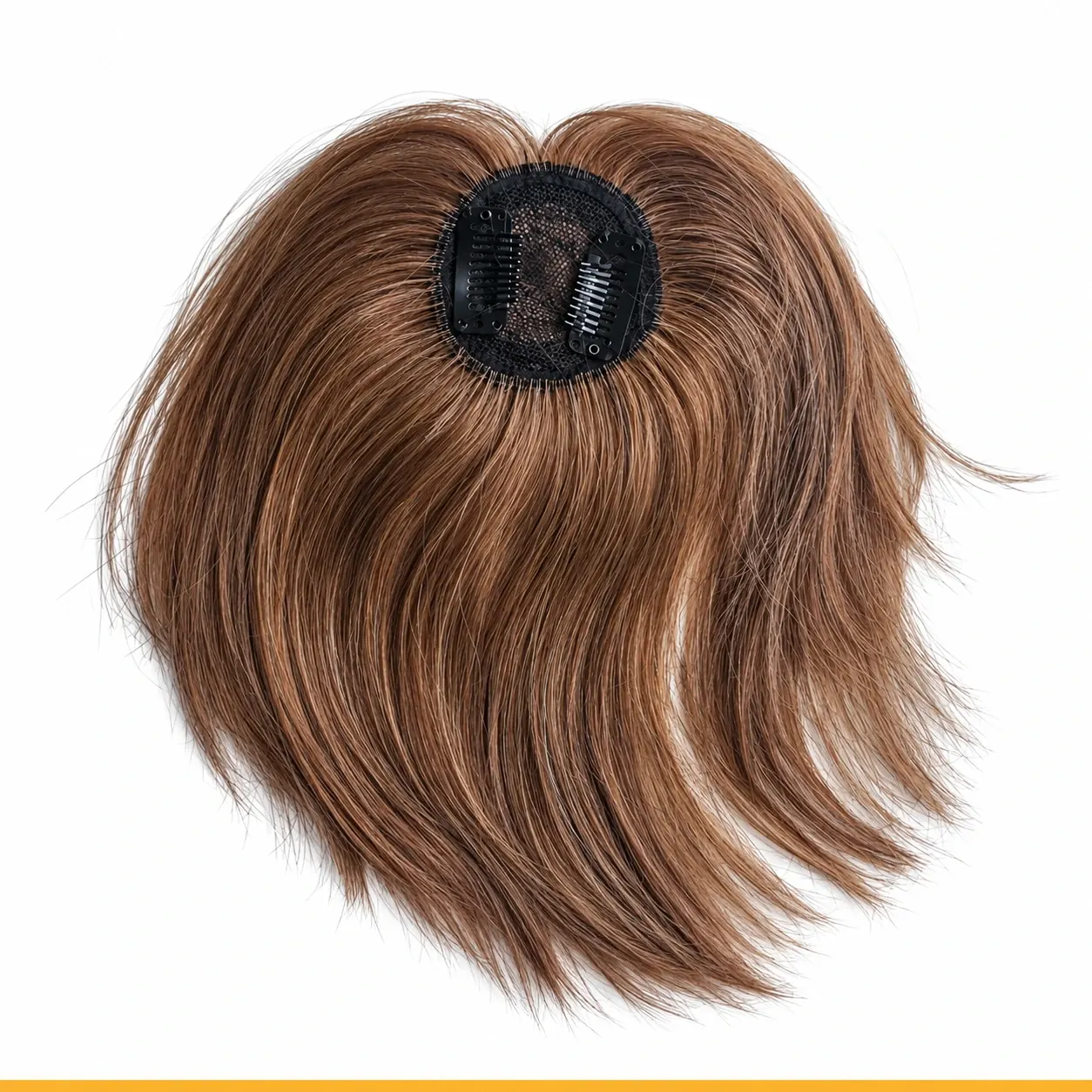
Grams describe mass, not a finished hairstyle. A longer extension spreads its hair over more length, so the same weight can look less full than a shorter piece. Width, strand-length distribution and the wearer’s haircut matter too. For a custom order, agree the measurement points and the desired end shape together. Otherwise a sample can meet both headline numbers and still miss the look the buyer expected.
Agree the length measurement
Mark the start point on the sample itself: for a weft, this is usually the agreed top edge, while a ponytail needs a defined attachment reference. Lay the hair straight without pulling it forcefully and photograph the ruler beside it. For curls, record both the extended measurement used for ordering and a resting-style photograph if appearance matters. A model’s waist or shoulder is not a repeatable factory measuring point.
State the starting point and styling condition
For waved or curled hair, state whether length is measured in the resting texture or when gently extended. Record the agreed method with the approved sample. Do not stretch a curl forcefully during inspection. Use the same routine for future samples, and distinguish any buyer-applied cutting or restyling from the original finished length supplied by the factory.
Separate hair weight from assembly weight
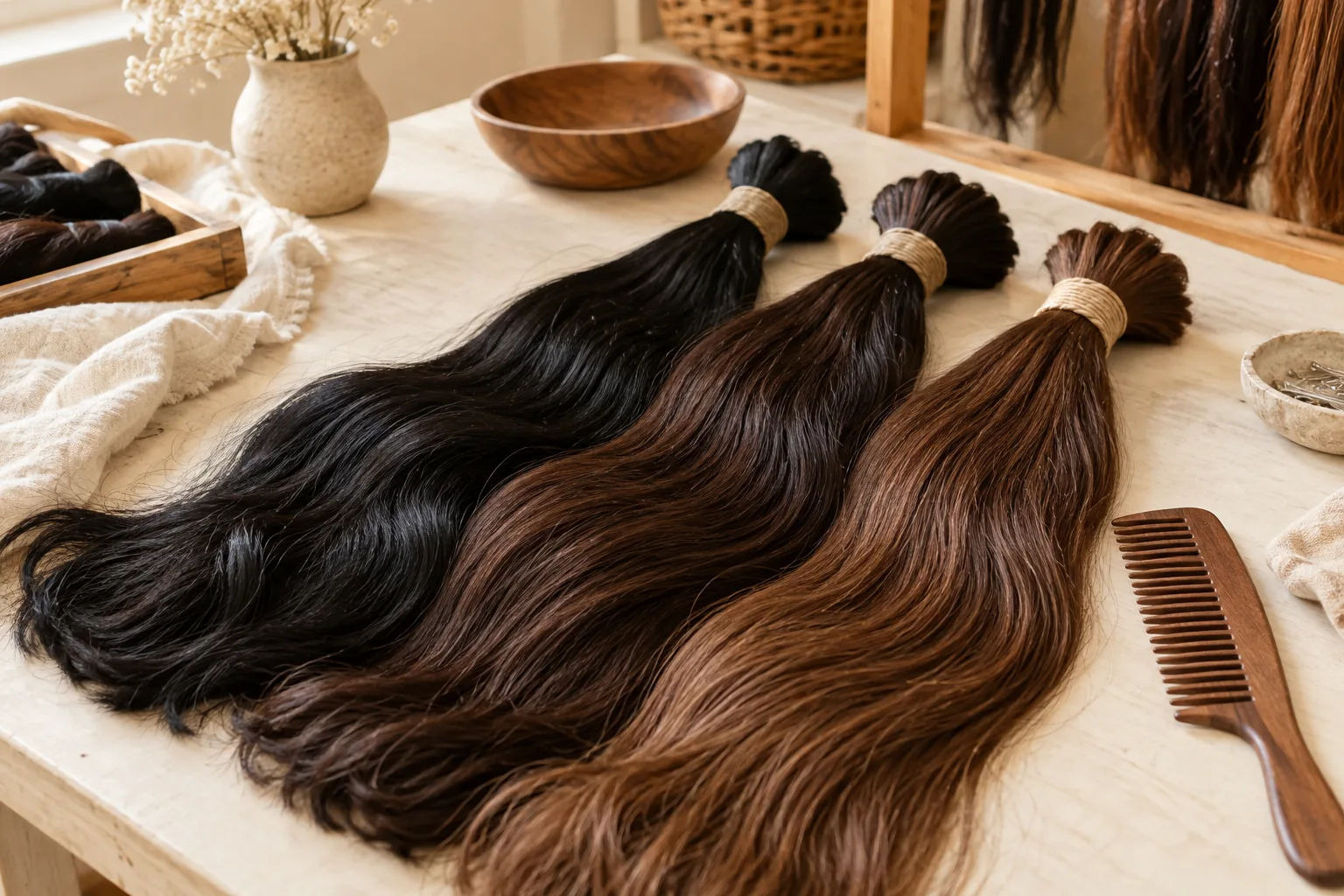
Clips, fabric, lines and other supporting components add to the weight of a finished accessory. Ask whether the supplier’s figure means net hair weight or complete product weight. Record that convention in the specification. If only assembly weight is available, describe it accurately rather than using the figure to claim a precise amount of hair.
Define what the stated grams include
Use a simple comparison sheet before judging value. If a finished set weighs 150 grams and its separately measured hardware and supporting components weigh 12 grams, the remaining 138 grams is the calculated hair portion for that example. Do not present an estimate as a factory-certified net weight. When components cannot be separated reliably, report assembly weight and ask the supplier how it controls the hair quantity during production.
Describe the distribution and end shape
Compare fullness at equal lengths first. Longer hair of the same total weight may have fewer strands crossing a particular point, and a tapered mix of strand lengths can make the ends look lighter. Ask for the sample hanging freely against a plain background, then compare its upper section, middle and ends. If the goal is a fuller end line, approve that visual reference rather than assuming an extra gram figure guarantees it.
A gram figure does not define fullness
For a set, discuss how weight should be allocated across wide and narrow pieces. For a bun or ponytail, separate decorative strands from the main body if they matter to the design. These details help the manufacturer understand which visual characteristics the weight supports. They also prevent a numerical target from becoming a substitute for reviewing the finished sample.
Approve dimensions alongside the appearance
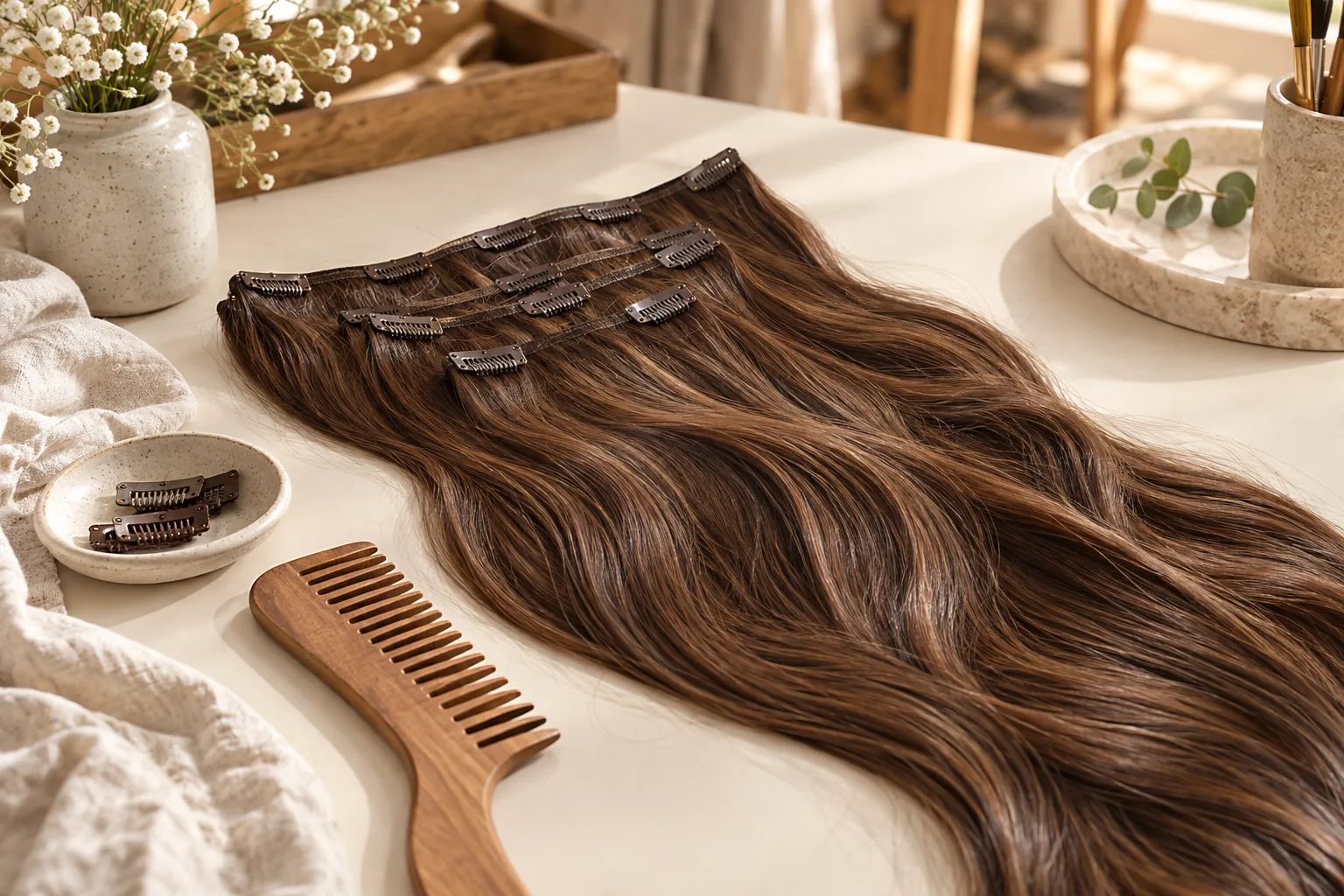
Royal Hair’s Hair Accessories collection includes human hair formats such as halo hair, clip-in pieces, ponytails and buns. Confirm the dimensions of the exact model before requesting variations. Royal Hair coordinates sales while Phuc Thien Toupee handles manufacturing, so an order file should connect the numerical specification with the approved product images rather than leaving them in separate messages.
Create a repeatable sample record
Agree permitted variation with the supplier instead of inventing a universal tolerance. Record the measurement method, weight convention and approved revision together. Inspect the sample before any buyer modifications and preserve those original observations. The linked colour-matching and sample-approval articles help complete the brief, allowing future deliveries to be compared against both measurable dimensions and the intended finished shape.