
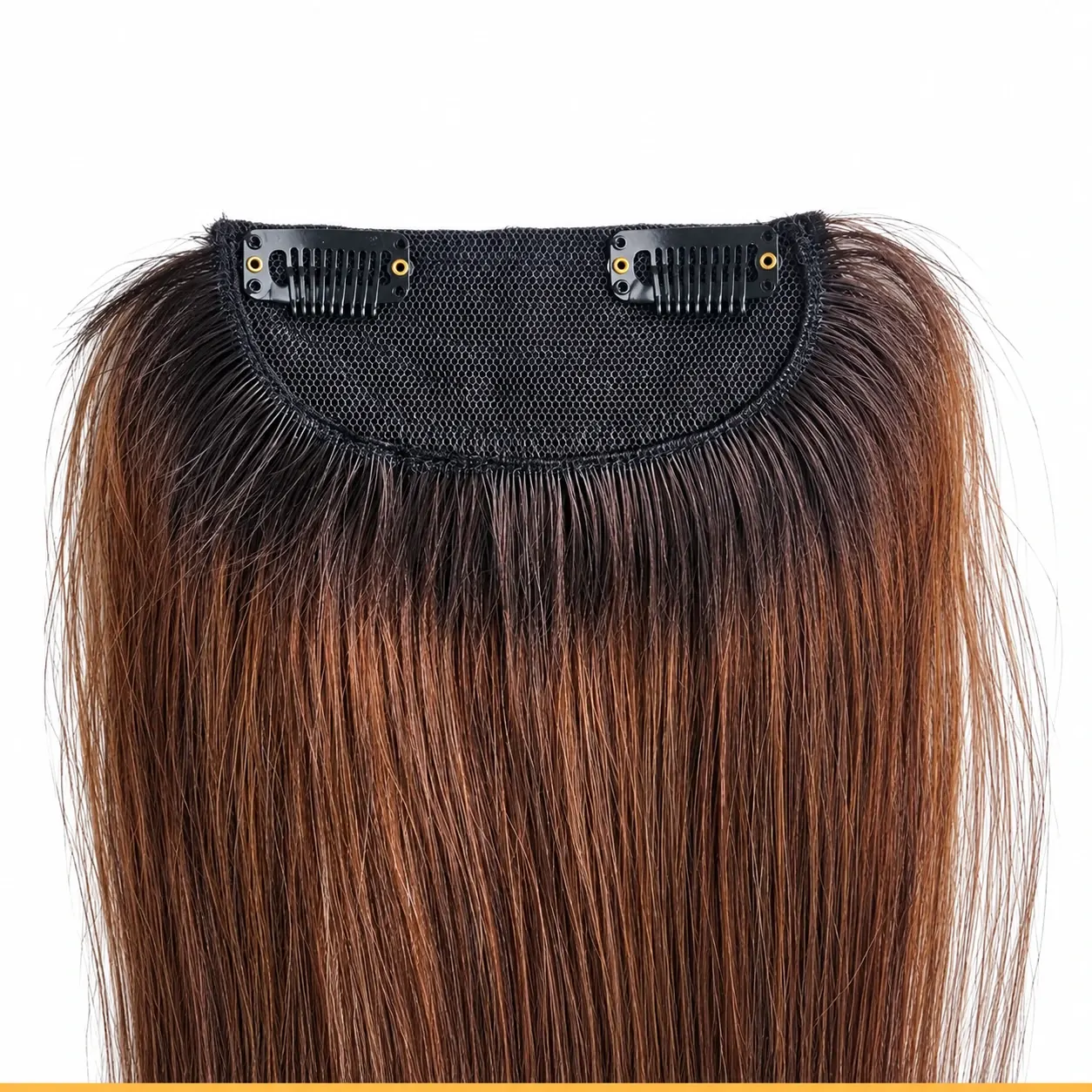
A brown extension can have the correct depth and still look wrong because its undertone is too red, gold or cool. Matching therefore needs three decisions: how light the hair is, which tones are visible, and where each shade appears. Texture adds another variable. For a wholesale range, use a physical reference and a repeatable comparison routine so the approved result means more than a colour name on a screen.
Create a usable colour reference
For extensions worn through the lengths, compare the swatch beside the wearer’s mid-lengths and ends rather than only the roots. A crown piece may need a different reference because it blends nearer the scalp. Check in indirect daylight with the swatch underneath the natural hair, then look again against a neutral background. Send unfiltered full-length and close-up photographs; an overhead salon light alone can hide a warm or cool mismatch.
Combine a sample with consistent photographs
Digital references remain useful, especially during early discussions, but acknowledge their limits. Screens and lighting can change perceived warmth and darkness. If a colour decision is important, request a sample confirmation before approving a larger order. Record the approved reference name in the order so the production team does not have to choose between several similar images from an earlier conversation.
Describe blends and transitions
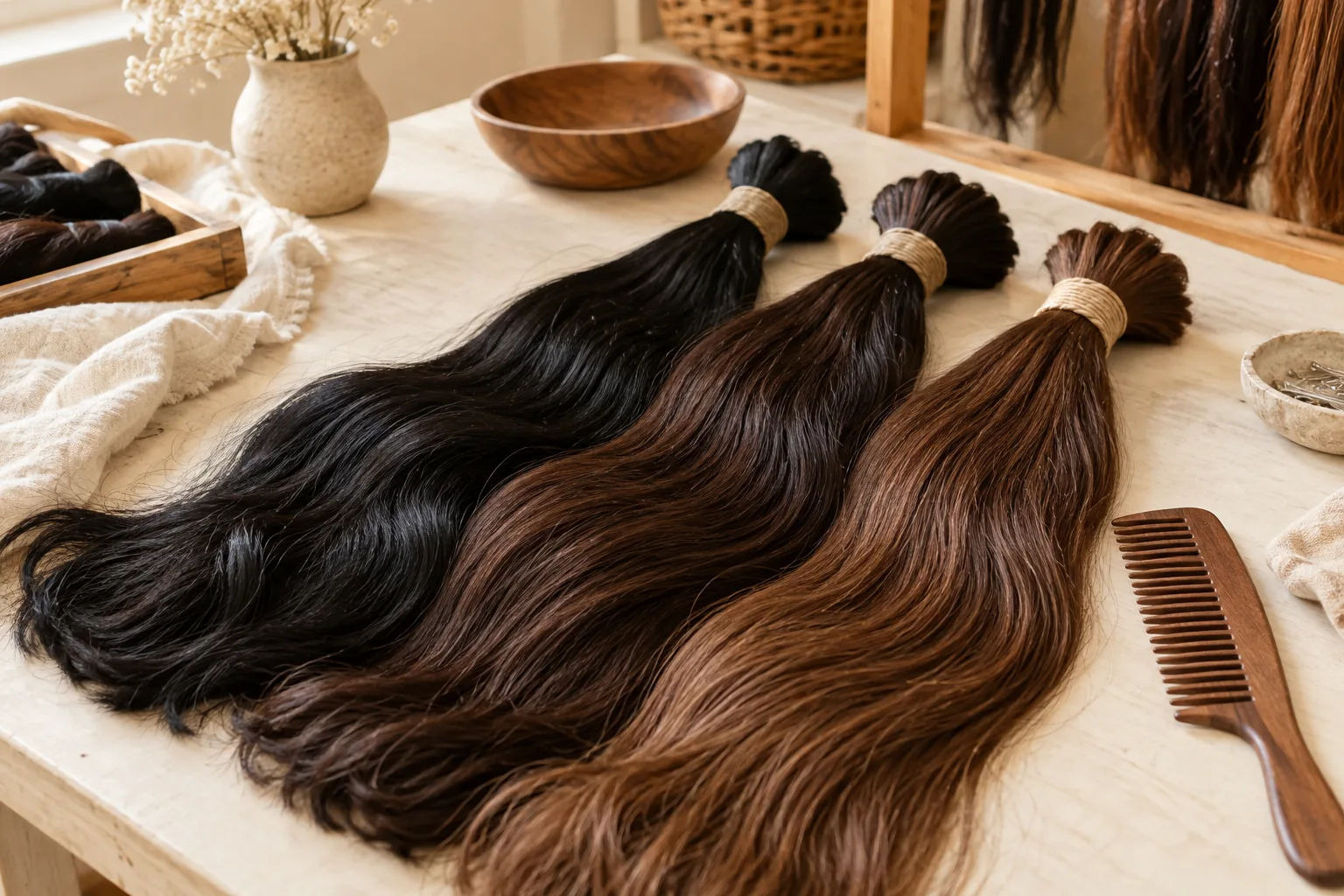
Separate shade depth from undertone in the order notes. For example, two medium-brown references may differ because one looks golden and the other ash-toned. For a rooted design, mark the root area, the transition and the lighter lengths on a photograph. For highlights, show whether lighter strands are evenly dispersed or concentrated on the surface. These practical placement notes are more informative than sending several shade numbers without an arrangement.
Placement matters as much as shade names
Inspect the top, underside and ends of an accessory. A ponytail covering strand, clip-in base area or bun’s loose strands may need particular attention because these portions remain visible in the finished style. Keep construction and colour instructions aligned. If a buyer approves a shade on loose hair, confirm how it will be distributed in the assembled accessory.
Define the texture and length condition
Separate straight, waved and curled references from the method used to measure length. Curled hair looks shorter in its resting shape than when gently extended. Agree which condition controls the specification and record it with the approved sample. This simple step prevents apparent length differences from being treated as manufacturing errors without first checking the measurement convention.
Compare samples in the same presentation
A newly curled sample and a naturally waved sample can resemble one another before washing. To compare texture, keep a supplied-condition photograph, then follow an agreed wash-and-dry method without adding a new heat style. Review wave spacing, direction and the appearance of the ends. Record any styling needed to reproduce the approved finish. This does not predict every future wash, but it avoids approving a temporary curl as though it were the hair’s untreated state.
Keep colour changes under revision control
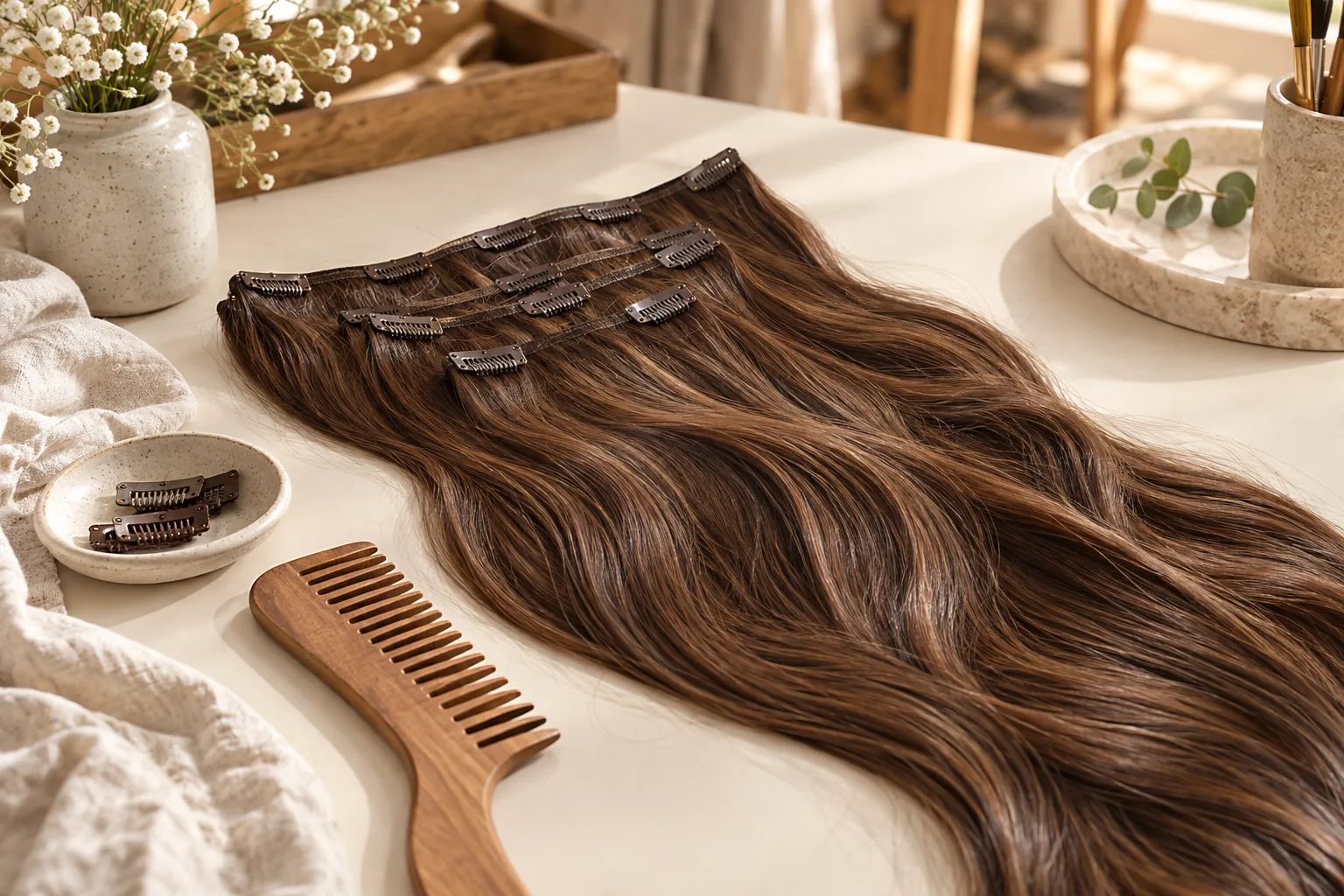
Royal Hair’s Hair Accessories collection offers several human hair accessory formats, including clip-in pieces, halo hair, ponytails and buns. A colour reference can be shared across an order, but inspect its appearance on each construction. Royal Hair handles sales communication while Phuc Thien Toupee manufactures; a labelled reference file helps carry the same instructions through that process.
Approve each meaningful variation
When a shade or texture changes, create a new sample revision instead of overwriting the old record. Retain the previously approved version so technicians can see precisely what changed. Link the colour reference to the model, length and quantity in the purchase specification. Review the custom-length and repeat-order articles to make the complete accessory brief more consistent, rather than relying on shade names alone.