
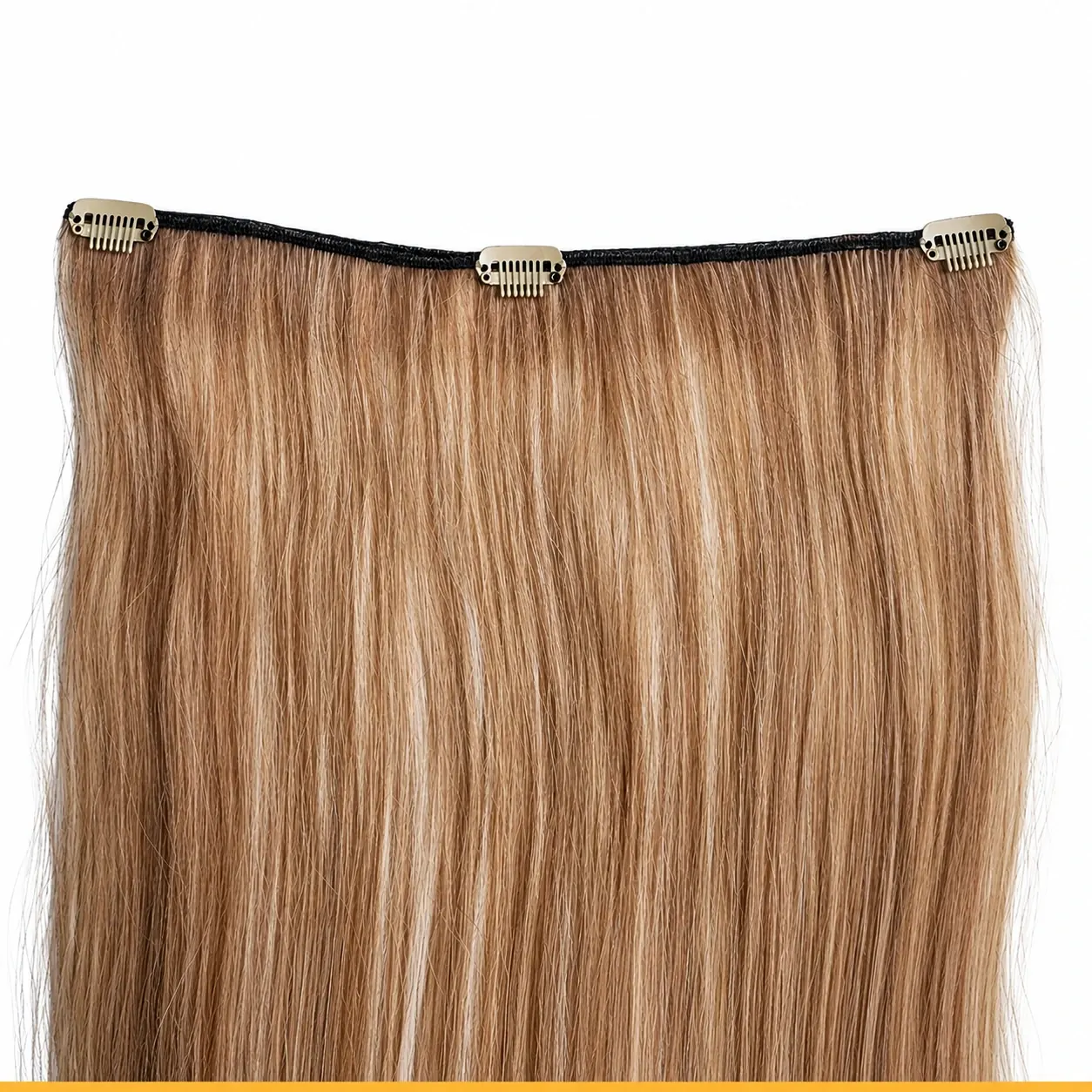
The seam is the easiest place to start when comparing clip-in hair extensions. A fabric-stitched construction and a flexible PU-based construction may carry similar hair, yet create different base profiles. Neither the word seamless nor a photograph tells you the full specification. Turn the piece over, check how the clips are fixed, then compare the complete set layout before deciding which construction suits your range.
Map the pieces before production
Make a set map with one row for each piece: width, hair length, hair weight, clip count and clip positions. For example, a trial layout might contain two wide back pieces and four narrow side pieces; this is a development example, not a standard set size. Ask the supplier to mark the actual widths on an underside photograph. A quotation for one strip is not comparable with a quotation for that whole set.
Width and placement belong in the brief
Reference photographs should show both the hair side and the underside laid flat. Styling can hide the actual strip width and make an accessory look wider than its attachment area. Include a ruler in a sample photograph when possible. This gives the factory a useful dimensional reference and reduces misunderstandings caused by cropped product images.
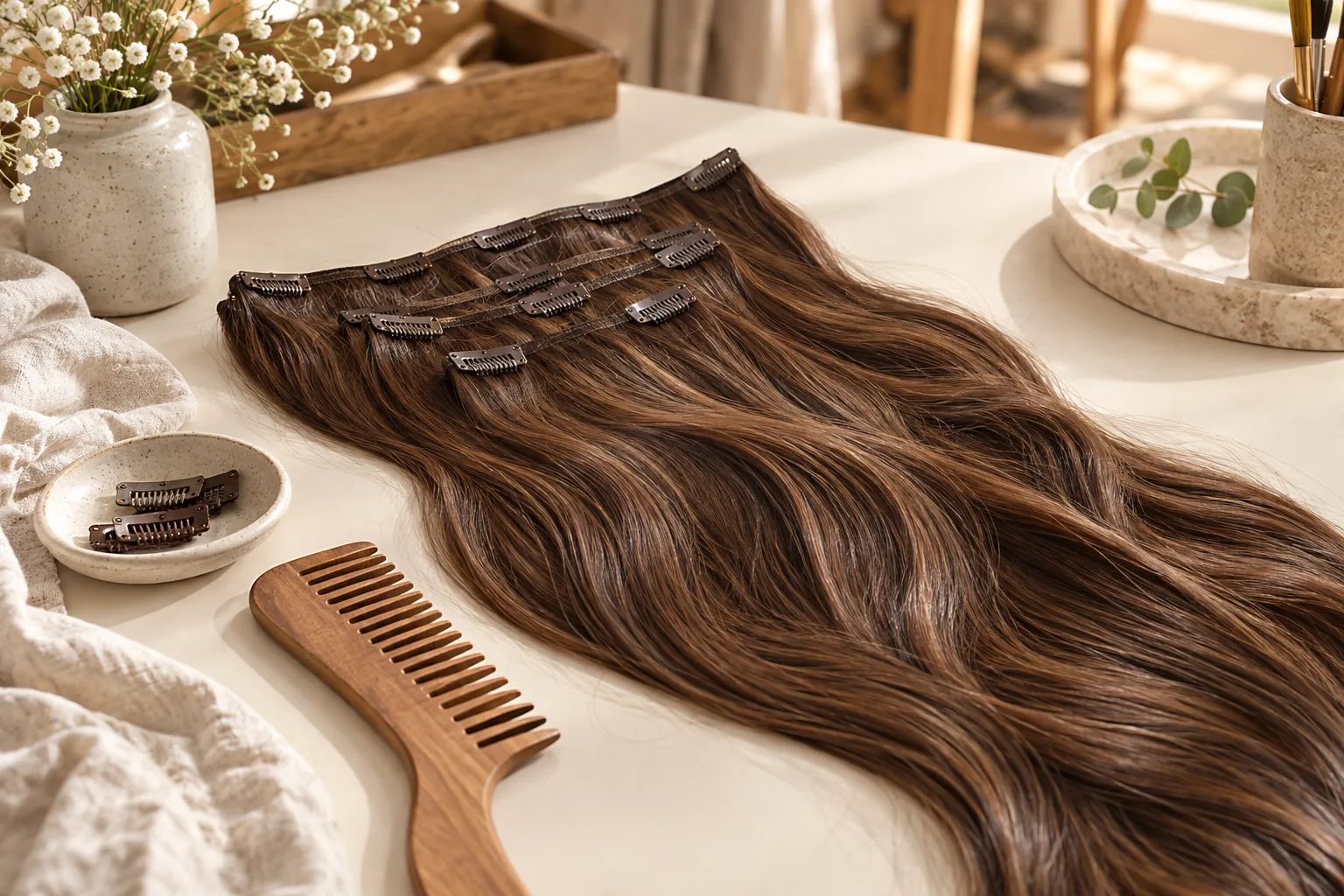
Inspect clips and their stitching
Check the base before testing the clips. On a stitched weft, look for uneven seams, loose thread and short return hairs that protrude where the piece will sit. On a PU-based piece, inspect the strip for rough edges, splits and visible separation. Bend it gently only as intended for fitting. Record its profile beside a ruler so a thinner-looking replacement can be checked rather than accepted from a marketing label.
Test the hardware gently
Open and close each clip repeatedly under the same routine, noting any difference between clips on the same piece. Record the hardware finish, size and orientation in the approval file. If a buyer requests a different clip, inspect another sample because the replacement may alter spacing, overall weight or the amount of exposed support material.
Balance coverage with the hair specification
Divide the requested weight across the pieces rather than giving only one total number. A heavier centre section and lighter side pieces can produce a different silhouette from an evenly divided set. Neither arrangement is automatically correct. The intended style and placement should determine the distribution, supported by a reviewed sample rather than a vague request for more volume.
Total weight does not describe distribution
Specify colour and texture independently from the clip arrangement. Check the top, middle and ends under consistent lighting, and assess the piece in the agreed styling condition. A curled sample should not be judged against a straight sample solely by apparent length. Record whether measurements are taken in the resting style or with curls gently extended.
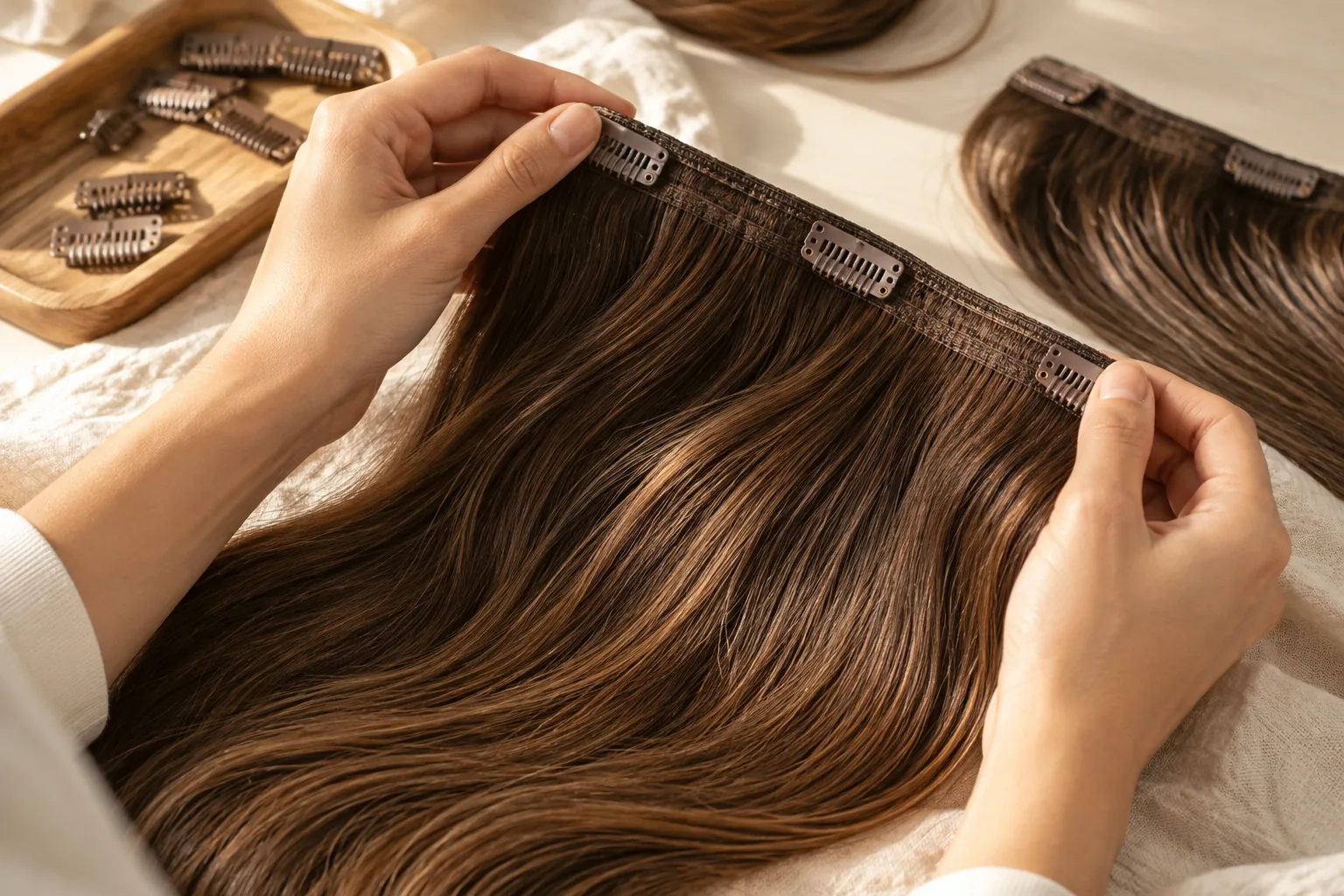
Approve a complete accessory reference
A fitting review should answer a different question from a factory inspection: can the intended wearer conceal the pieces and distribute their weight comfortably? Leave enough natural hair above the base to cover it, and check the sides as well as the back. Do not solve poor placement simply by adding more clips. Have a stylist assess the sample where fitting is uncertain, and remove any piece that pulls or causes discomfort.
Keep underside evidence with the order
For repeat orders, retain the approved layout, labelled underside photographs and permitted tolerances. Separate a colour change from a construction change so each revision can be checked. Read the guides on attachment quality and sample-to-repeat orders for related inspection steps. A well-defined clip-in reference helps buyers compare future deliveries by construction as well as by their styled appearance.