
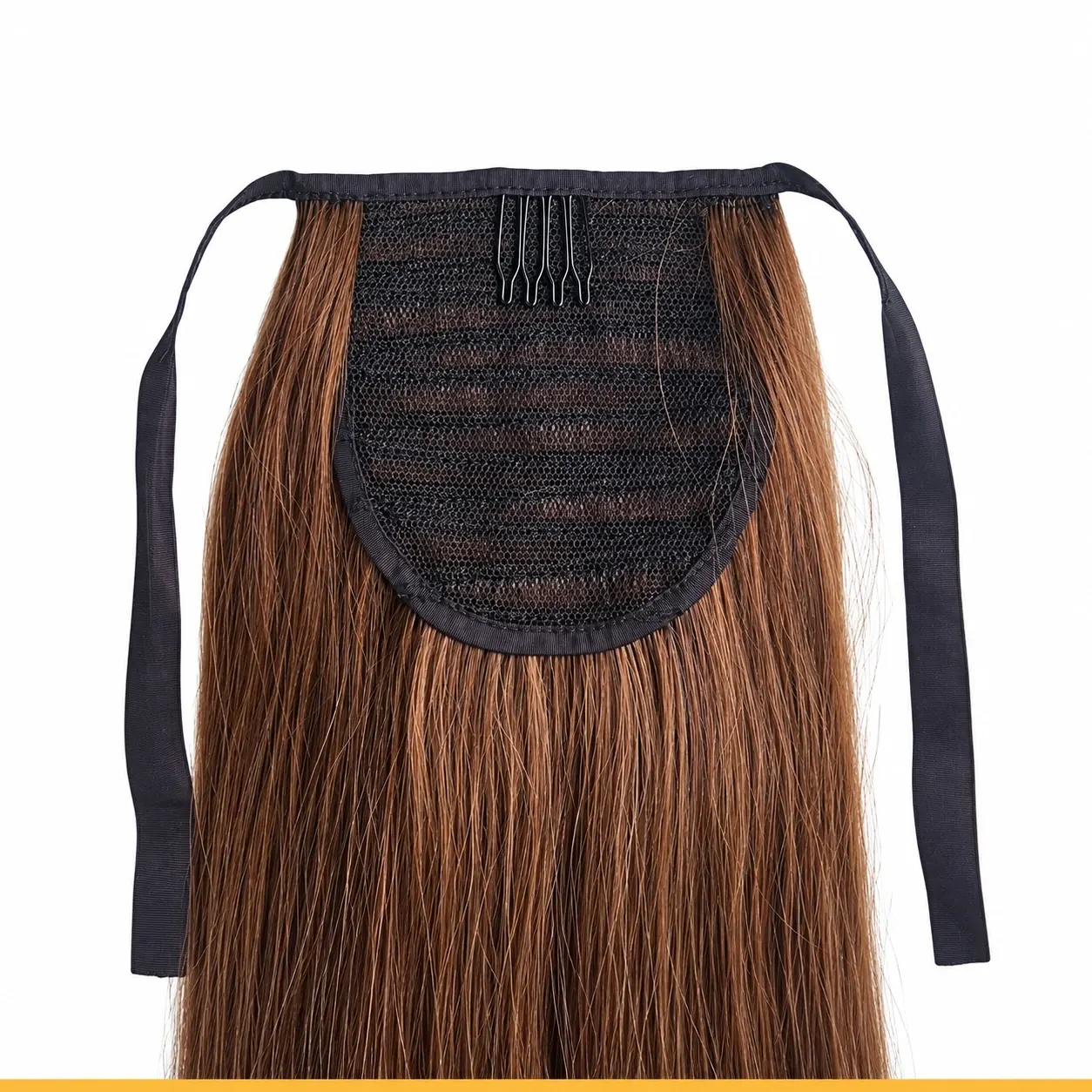
A ponytail extension must blend with the wearer’s hair while concealing the structure that holds it in place. That makes its base just as important as its colour and length. Wholesale samples should show the fastening open, the covering strand separated and the hair hanging freely. Those three views reveal much more than a finished high-ponytail photograph, especially when two suppliers quote different constructions under the same product name.
Define the attachment and base
Common removable designs use a comb with a wrap fastening, a drawstring base or a claw clip. They are not interchangeable: each transfers weight and covers the attachment differently. Identify the actual comb, strap, elastic or clip on your sample, then record its dimensions and position. A wrap-around strand may hide the base but should not be mistaken for the only fastening. Confirm the chosen construction with Royal Hair before ordering.
Do not infer hardware from the hairstyle
If a covering section or wrap strand is part of the design, identify it in the sample reference. Record its length, width and colour relationship to the main ponytail. A buyer may want a subtle blend or a visible contrast, but the factory needs that instruction in writing. Avoid using a heavily styled image as the sole construction guide.
Specify the ponytail silhouette
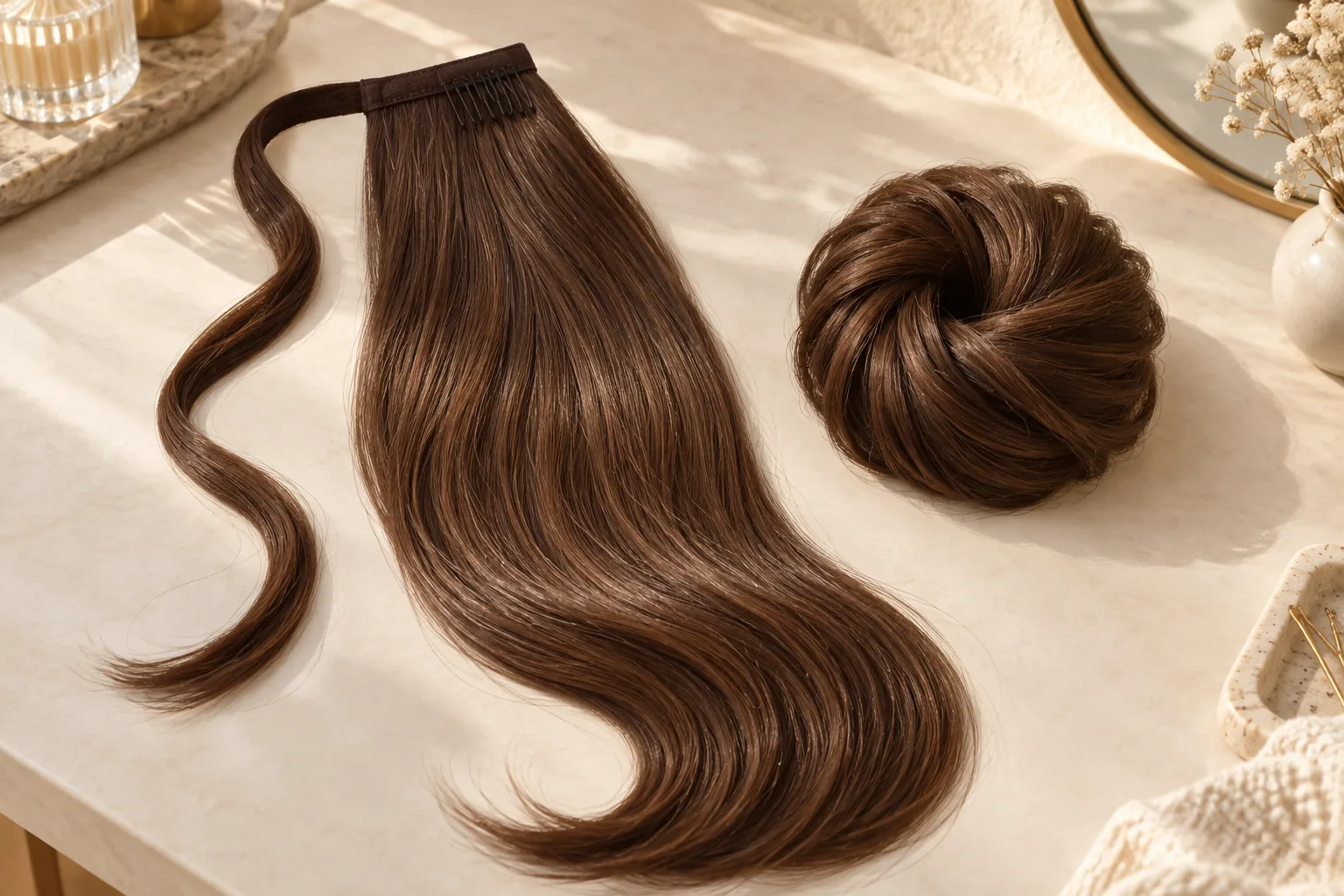
Two ponytails with the same weight can have different fullness at the attachment area, middle and ends. Ask whether your preferred sample has a tapered finish or a more even-looking end shape. Photograph the piece against a plain background with the hair hanging freely. This makes the distribution easier to compare than a curled or fanned-out advertising pose.
Hair weight and shape are separate choices
Measure from the defined attachment point to the ends, with the hair in the agreed texture condition. Also show where the ponytail is intended to sit on the wearer: the same accessory looks shorter when placed higher on the head. The natural ponytail or bun must provide an appropriate anchor for the design. If the assembled weight pulls or shifts during a gentle fitting trial, stop and review fit rather than tightening it repeatedly.
Approve colour through the full length
Colour review should cover the attachment area, body and ends. For an ombré reference, describe where the transition begins and how gradual it should appear. A colour name alone will not communicate the position of the blend. Use an approved physical sample where possible, supported by photographs under consistent lighting rather than edited social media images.
Check the transition and underside
Look for visible differences between any covering strand and the main hair section. Inspect the underside too, since styling can hide a contrasting seam or exposed material. These observations should be recorded before the sample is restyled or cut. A buyer’s later alterations can change the appearance and should not silently replace the original manufacturing approval.
Create a practical repeat-order record
Inspect how the hair-bearing panel joins the attachment base. Look for an uneven edge, loose stitching, exposed fastening and a covering strand too narrow to hide the assembly. Open and refasten the sample using the supplier’s method, keeping the wrap strand clear of the fastener. Photograph any snagging point before trimming or altering it. That gives production a specific correction instead of a general request to make the ponytail neater.
Control changes with sample revisions
For repeat orders, preserve the attachment specification, shade reference, length method and approved silhouette. Give each revised sample its own name so a colour update is not confused with an attachment update. Read the colour-matching and sample-approval guides for related checks. This record supports consistent purchasing without assuming that every accessory photographed in a similar hairstyle has the same construction.