Putting a logo on a stock accessory and developing a new accessory are different projects. The first changes presentation; the second can change the hair, base, hardware or set layout as well. Before asking for private label pricing, decide which work you actually need. A small range with clear model codes, approved packaging and accurate care instructions is easier to launch than many similar-looking products with unclear specifications.
Build the range around defined models
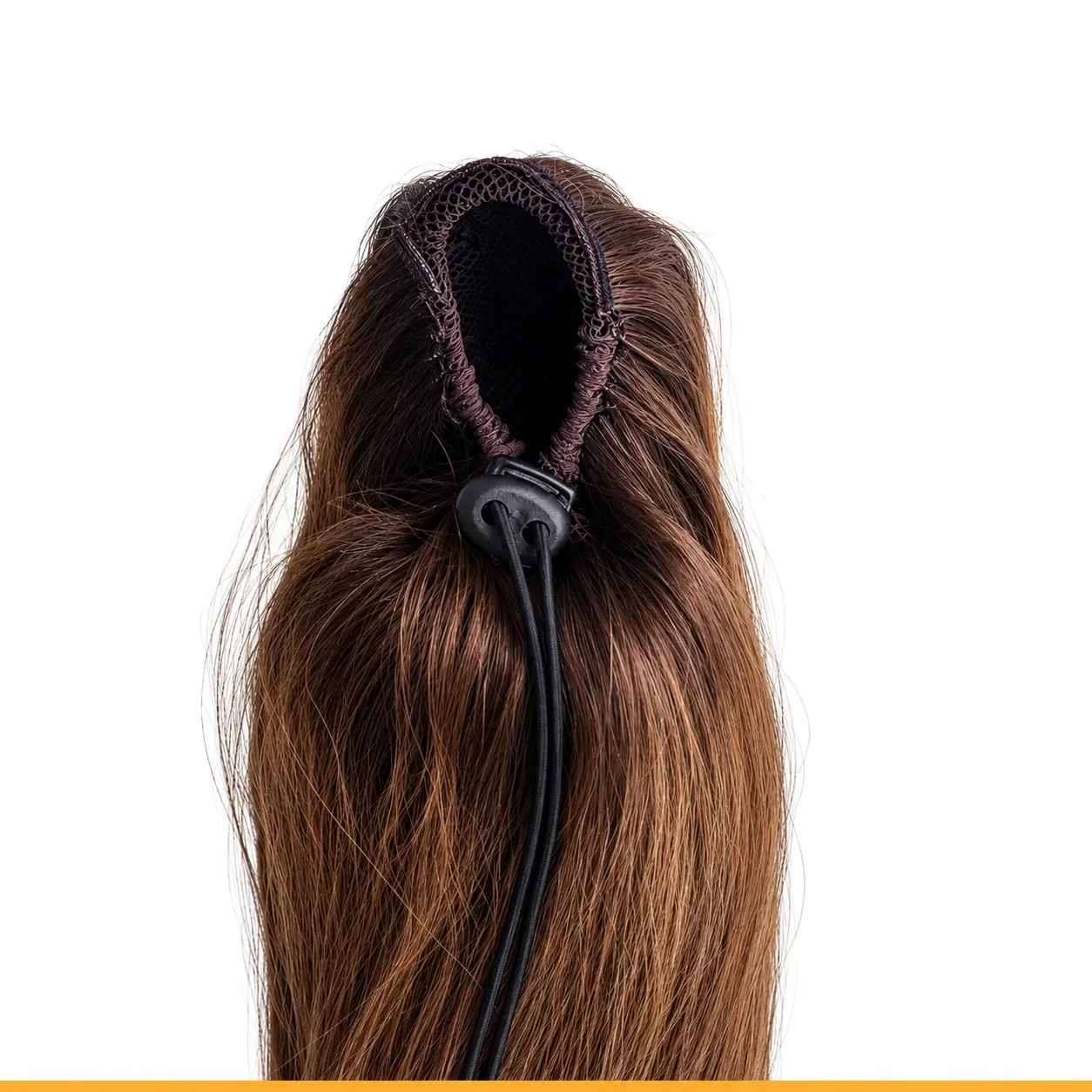
Choose the accessory formats that fit your sales channel: halo hair, clip-in pieces, ponytails or buns may serve different customer requests. Use the current Royal Hair Hair Accessories collection as a starting point and ask which custom options can be confirmed. Do not assume that products seen on another supplier’s website are automatically available from the same factory.
Keep assortment decisions manageable
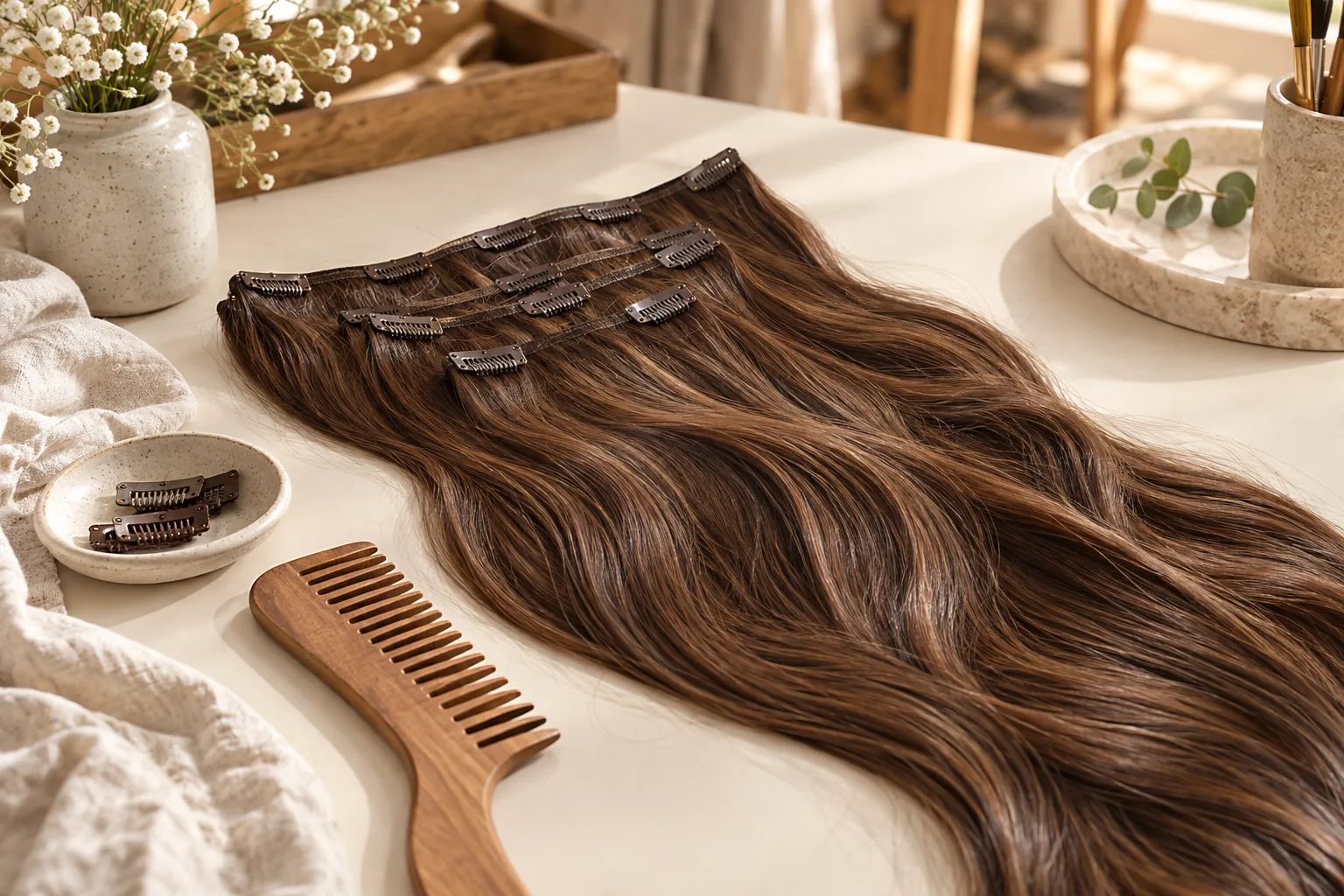
Build a SKU matrix with model, construction, colour, length, set contents and packaging version. A code such as CI-20-BR-A can identify a particular clip-in variant in your own system; the code itself does not define the product. Link it to the approved specification and photographs. Keep a separate field for a retailer barcode if needed, and agree who supplies it rather than expecting the factory to invent a valid identifier.
Confirm branding and packaging requirements
Discuss label and packaging options with the sales team before ordering printed materials. Royal Hair offers OEM and private label service, but minimum quantities for pre-printed labels or packaging must be confirmed for the project. Do not assume a custom accessory order automatically includes individually printed packaging. Record which components the supplier provides and which the buyer will arrange.
Approve the complete presentation
Approve a fully packed sample, not only a flat logo proof. Check that the right accessory fits without crushing the base, clips or styled hair, and that the label matches the actual piece count and colour. Confirm the artwork size, print position and care-card version. Also separate product minimums from printed-box minimums: a small hair order may leave unused packaging, so agree ownership, storage and later use of any surplus.
Set a sample approval workflow
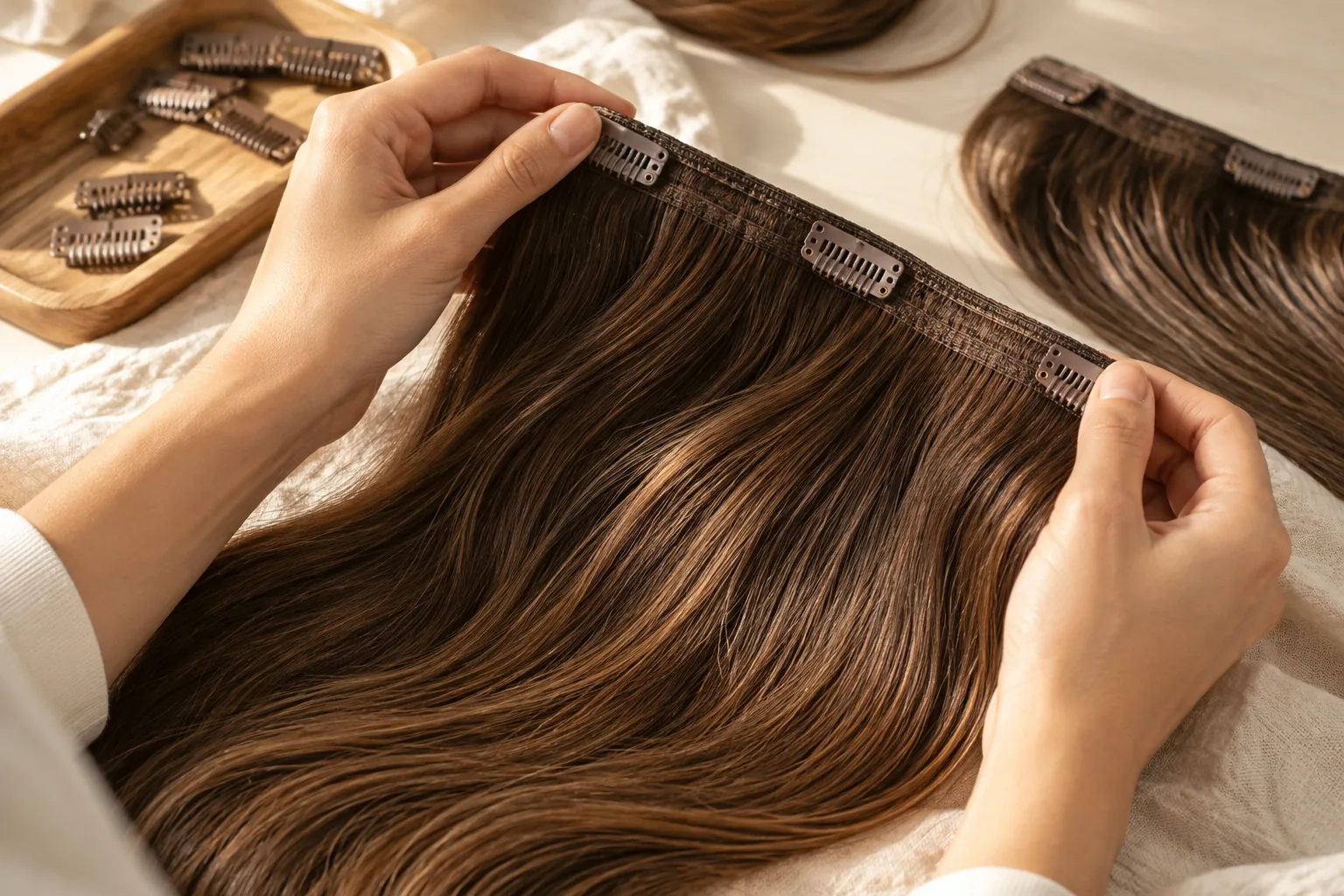
Inspect the accessory without letting attractive packaging dominate the evaluation. Confirm hair colour, length method, weight convention and attachment construction. Take underside photographs and document the approved sample revision. A label can be replaced easily, but an unclear construction brief can affect every item in the production run. Treat branding approval and product approval as related but distinct checks.
Review the product beneath the branding
Write down requested corrections after the first sample and identify which version is finally approved. If a hardware substitution changes the assembly, review that change before production proceeds. Preserve the reference file so future orders can distinguish a new colour variant from a redesigned accessory. This helps both sales and manufacturing teams follow the same instructions.
Plan repeat orders and catalogue claims
Ask Royal Hair to confirm sample charges, current production timing, packaging responsibilities and the changes included in the quotation. Where a project needs exclusive artwork or a custom construction, agree those rights explicitly; private label does not automatically mean an exclusive product. Do not copy another brand’s origin, certification or performance claims onto the box. Customer-facing wording should describe the approved item and evidence available for that specific order.
Make customer information match the specification
Prepare customer-facing descriptions using the approved features, supported by clear product and underside photographs. Keep catalogue wording linked to the final specification whenever a model changes. Read the manufacturing guide and repeat-order article to organize that record. A practical private label range grows from repeatable products and accurate information, giving the buyer a stronger foundation than a logo added to loosely defined samples.