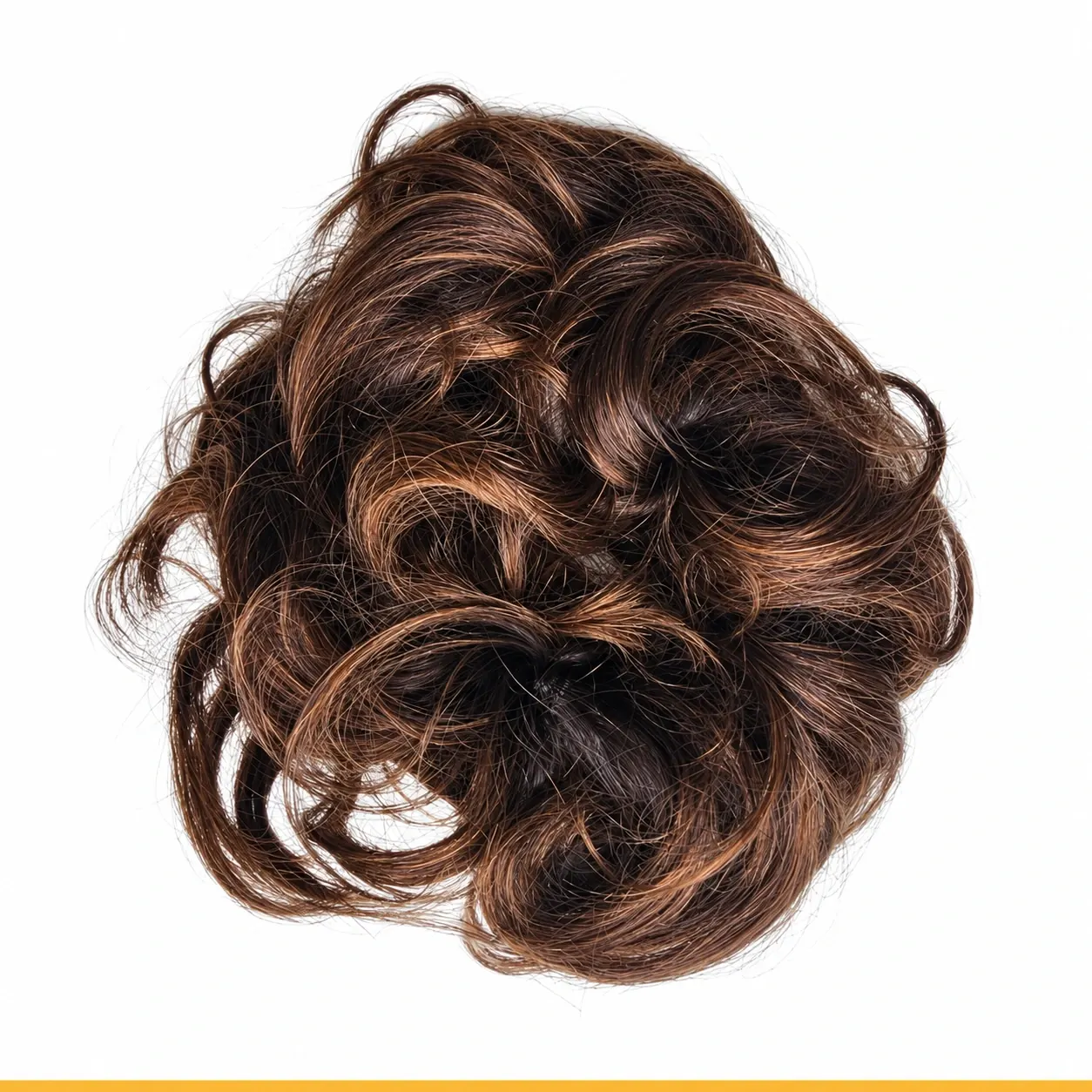
A hair bun accessory can look simple while hiding quite different attachments. Elastic wraps, cinch-style bases and clips each create a different opening and support arrangement. For a human hair product, buyers must also distinguish the manufactured shape from temporary salon styling: a photographed curl is not proof that the same shape returns after washing. Inspect the base and the hair separately before approving either.
Separate the style from the structure
A messy bun and a longer bun accessory are different visual starting points. Describe whether the approved style includes short loose strands, longer sections or a more contained outline. Use multiple photographs rather than one angle, because a top view may conceal the distribution at the sides. Identify which features belong to the product and which come from temporary styling.
Describe the approved bun shape
Identify the fastening with the accessory open. An elastic wrap passes around an existing bun; a cinch-style opening closes around it; a clip grips in a different way. Record the opening size in its relaxed state and the intended fitting method without stretching the component beyond normal use. Supplier terms vary, so attach a labelled underside photograph. Do not select a design solely because its finished silhouette resembles another product.
Choose hair length and distribution
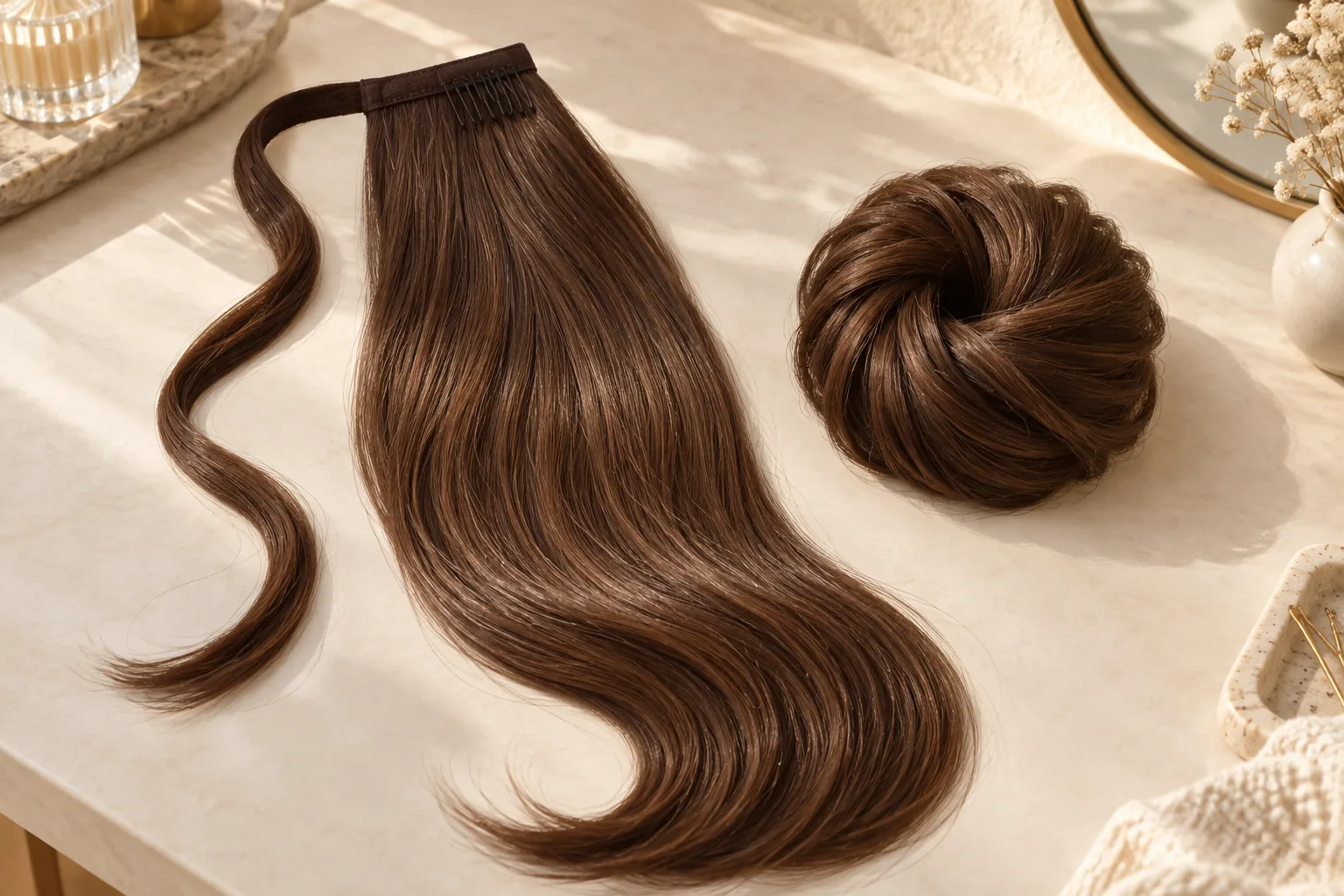
Hair length influences the finished silhouette, even when the accessory is arranged as a bun. Ask how length will be measured before agreeing a figure. Separate the length of any loose decorative strands from the general hair length where relevant. This prevents a supplier from matching one dimension while producing a different overall outline from the buyer’s reference.
A compact shape still needs measurements
Look at the bun from the top, back and both sides during a fitting trial. The opening should cover the intended natural-hair anchor without exposing a large area of supporting material. Note whether decorative strands fall evenly and whether the weight pulls to one side. A compact bun is not automatically lightweight. Check the complete assembly weight as well as the hair specification, especially when developing a larger or longer style.
Match colour and visible texture
Inspect colour through the bun’s visible surfaces and loose strands. For mixed colours, explain whether the shades should be evenly distributed or concentrated in specific sections. A swatch and neutral-light photographs give better guidance than a heavily edited lifestyle picture. Digital images help communication, but screen settings can change how warm or dark a shade appears.
Review the complete accessory in neutral light
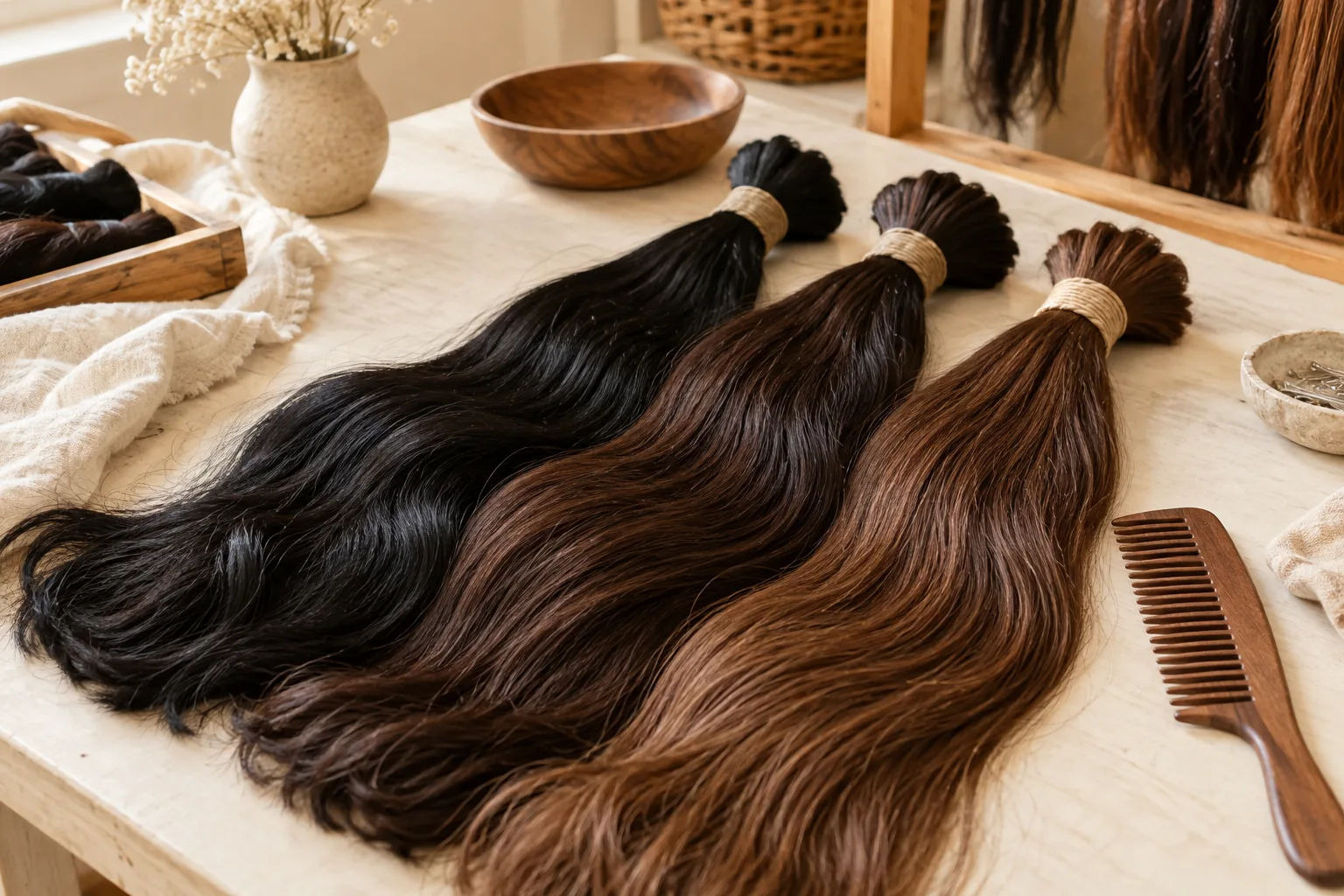
Ask to see the human hair sample both in its supplied style and after an agreed wash-and-dry check. A human hair curl may need styling to recover its presentation; care advice for a synthetic bun that retains a factory-set curl is not a substitute. Record the products and tools used to recreate the approved finish. This tells a future retailer what the customer must actually do to obtain the catalogue look.
Build a wholesale approval checklist
Royal Hair’s Hair Accessories collection includes a messy hair bun and a long hair bun. Review them as individual models and confirm the current specification with the sales team. Royal Hair coordinates sales in cooperation with Phuc Thien Toupee, which handles manufacturing. That arrangement benefits from clear written instructions and approved photographs attached to each order.
Keep style and attachment evidence together
Before approving repeat production, inspect seams, exposed supporting material, attachment operation and the appearance from several angles. Record the exact changes requested after the first sample and identify the approved revision. The linked attachment-check and colour-matching articles offer additional inspection questions. A detailed bun specification makes a compact accessory easier to reproduce than a broad instruction such as make it fuller or more natural.